⚠ COLORADO: Orders placed on or after July 23rd are not guaranteed to arrive before the August 1st deadline. Important State Notices for Virginia, Colorado & New Jersey - Read More Here
Out of stock online
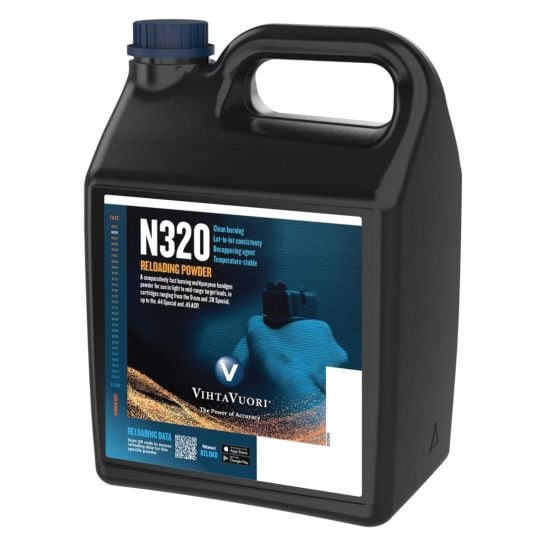
Vihtavuori N320 .32 Cal/.45 Cal Smokeless Handgun Powder, 4 lb
Out of stock online
Vihtavuori N320 .32 Cal/.45 Cal Smokeless Handgun Powder, 4 lb
| SKU | 51655206858 |
|---|---|
| Brand | Vihtavuori |
| MPN | T10057 |
| UPC | 06420615700746 |
CA WARNING (Prop 65) & Compliance Information
Please read before purchasing.
Please read before purchasing.
Product Details
Details
- Ecommerce Platform: Pistol
- Caliber 1: .32 Cal
- Caliber 2: .45 Cal
- Size: 4 lb
Features
Smokeless powders are specially formulated to combust rapidly and with intense energy when ignited, providing the necessary force for modern firearms to function effectively. One of the defining characteristics of smokeless powder is its self-contained oxygen, which allows it to burn efficiently without the need for external oxygen from the air. This makes it ideal for use in enclosed spaces, such as the chamber of a firearm, where air circulation is limited. When ignited, smokeless powder creates a large volume of high-temperature gas. If the powder is confined, the pressure from the expanding gases can cause the surrounding container or structure to be subjected to stress. However, the rate of gas generation is designed to remain at a safe level as long as sufficient space is available for the gases to escape, ensuring that the pressure remains manageable. In contrast to high explosives such as dynamite, smokeless powder burns at a controlled rate, making it far less dangerous and more predictable. High explosives are designed to detonate rapidly, transitioning from a solid state to a gas and releasing massive amounts of energy in the form of shock waves. These shock waves propagate through any medium they contact, causing significant damage to everything in their vicinity. Smokeless powder, on the other hand, burns in a controlled manner, allowing it to produce pressure that is manageable within the confines of a firearm. While smokeless powder may contain some ingredients found in explosives, it does not possess the same detonation properties, making it safer for use in reloading and firearm applications. When comparing smokeless powder to black powder, the differences are significant. Black powder burns at a constant rate regardless of the conditions, and when ignited in open air, it produces a visible orange flame, copious amounts of smoke, and leaves behind a substantial amount of ash and unburned residue. This inefficiency results in increased fouling and makes black powder more difficult to clean after use. Smokeless powder, on the other hand, burns cleanly, producing little to no smoke and leaving behind minimal residue when ignited under pressure. This makes smokeless powder the preferred choice for modern firearms, as it provides cleaner operation and reduces the need for frequent cleaning. In the unlikely event that smokeless powder is ignited in a confined space, the pressure generated can cause the container to rupture. However, this rupture is far less catastrophic than the detonation of high explosives. The Department of Transportation (DOT) ensures that smokeless powder is transported and stored safely by setting strict specifications for its packaging. These containers are tested under simulated fire conditions to ensure they can release the gas and powder at a safe, low-pressure level. DOT-approved containers are designed to allow the seams to split or the lids to pop off when exposed to heat, safely venting the gases and preventing the risk of a full-scale explosion.
- Efficient combustion
- Consistency across different lots
- Copper removal agent
- Temperature remains constant
Reviews
Q & A
Retail Stock
Compliance
Shipping Restrictions
It is the customer’s responsibility for understanding state laws regarding all purchases made. For a comprehensive list of all Shipping Restrictions, please refer to our Shipping Restrictions By State Page found Here.
All NFA Rules Apply
These items are controlled by the U.S. Government and authorized for export only to the country of ultimate destination for use by the ultimate consignee or end-user(s) herein identified. They may not be resold, transferred, or otherwise disposed of, to any other country or to any person other than the authorized ultimate consignee or end-user(s), either in their original form or after being incorporated into other items, without first obtaining approval from the U.S. government or as otherwise authorized by U.S. law and regulations.