
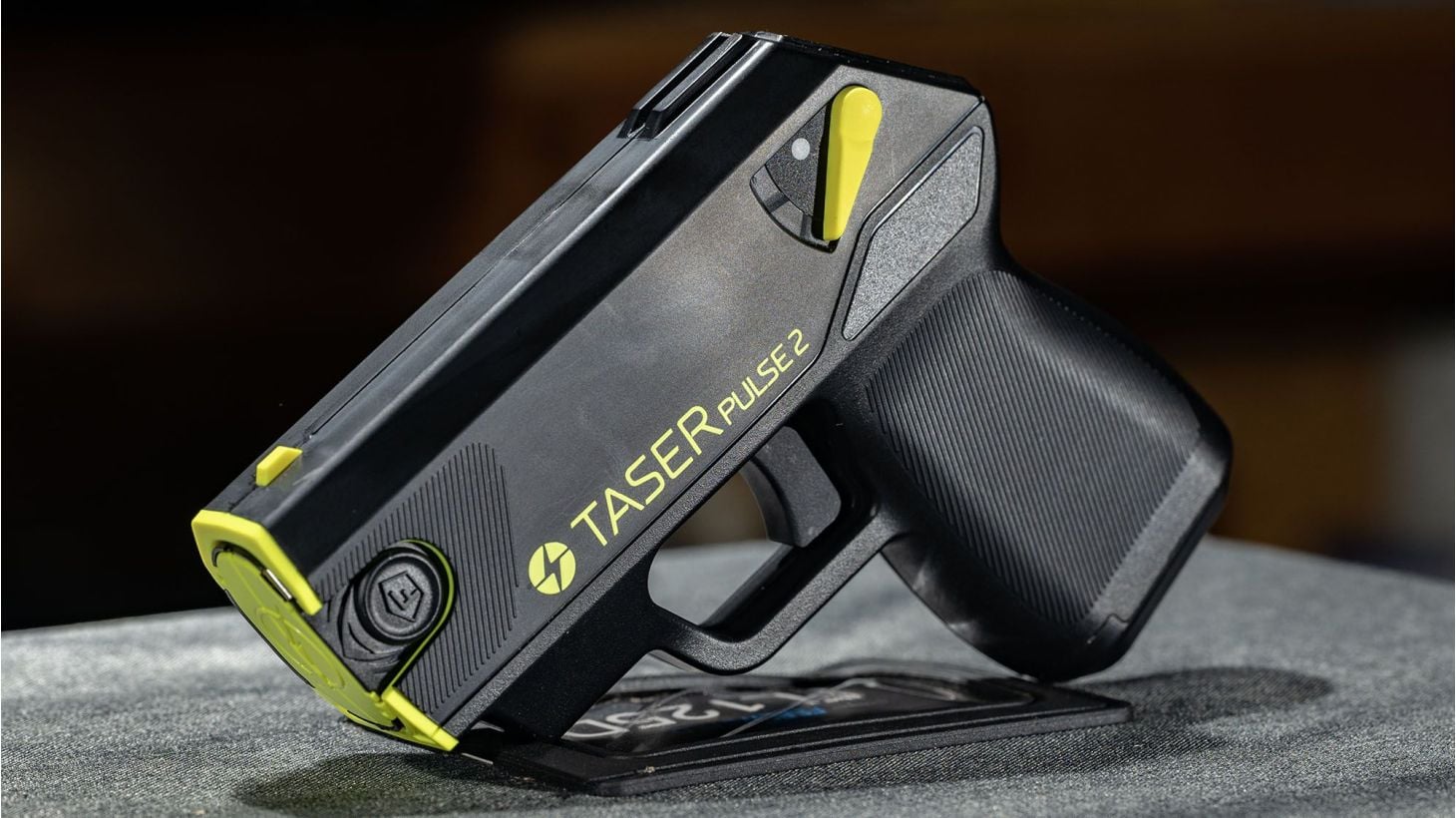
I’ve been carrying a firearm daily for nearly two decades now, but I had never considered adding a TASER energy weapon to my EDC until recently. Sure, I’ve considered integrating less-lethal options like OC into the mix, but their inconsistency always kept me from taking the plunge. After all, mace or pepper spray might dissuade some attackers, but not those under the influence of powerful narcotics. And with the rise of fentanyl in the United States, I wanted to have the option of a less-lethal tool that I could have confidence in, even if my would-be assailant was hopped up on powerful drugs. So is a TASER device the answer? Furthermore, does it really work? Let’s take a deep dive and find out.
What is a TASER Device?
If you are inexperienced with these devices, like I was, you likely believe they electrocute a target until they’re incapacitated. But the reality is far different than some pocket-lightning gun. The way a TASER device disables an attacker is by inducing neuromuscular incapacitation. Think of it as a short-term full-body Charlie horse where an assailant’s muscles can tense up significantly, making it difficult for them to control their body.
TASER energy weapons accomplish this by propelling two prongs towards a target and running a pulse between them. I had erroneously believed that these prongs had to make contact with the target’s skin to function, but after talking to the engineers at TASER, I discovered that they simply need to be in close proximity to the skin. This is important because if you live somewhere very cold, your target could be bundled up in heavy, thick clothing, such as denim or leather. What’s fascinating is that even if they are, for some odd reason, wearing ancient Greek leather armor, modern TASER devices can often penetrate enough to function as intended. If this seems like an unnecessary feature, consider that you accidentally shoot low and hit a leather belt.
With this much power, I assumed the probes were launched with an explosive like gunpowder, but I was totally wrong. While the engineers behind TASER devices like the Pulse 2 could have made their probes launch using explosives, they instead chose a small nitrogen capsule. This was done presumably for two reasons. The first is that, unlike CO2, Nitrogen is more stable and less affected by ambient temperature changes. So if you’re deploying your TASER self-defense tool in Tulsa in the middle of August, or Fargo in the dead of Winter, you can expect relatively consistent performance.
The second reason concerns the United States' gun laws. Most states legally categorize anything launched by an explosive charge (like gunpowder) as a firearm. And depending on the state, this could lead to some serious consequences when the device is used or even drawn. While we might scoff at the thought of pulling out a TASER device to deter someone from being legally treated the same as brandishing a firearm, it would be a very real possibility if the unit used gunpowder to launch its probes. With nitrogen, the discharge of the TASER cartridge is relatively quiet (especially compared to a gunshot) and generally not treated the same as discharging a firearm in a public setting.

Civilian Pulse TASER Devices vs Law Enforcement Models
More than 18,000 agencies across the United States issue and deploy TASER energy weapons as a less-lethal alternative to firearms for de-escalating a bad situation. Being hit with a TASER probe certainly doesn’t feel good, but it’s generally less likely to result in severe injury than being shot. And that last part is precisely why law enforcement agencies equip their officers with TASER devices, because not every dangerous suspect needs to be shot, but they do need to be incapacitated, and the threat they pose neutralized. The same technology used in these police models is employed in civilian TASER models, but there are some distinct differences.
Law enforcement models send out a short five-second pulse, which must be re-engaged with additional trigger pulls; the civilian model is different. The civilian model can deliver a longer pulse into the target, giving the wielder additional time to attempt to escape or disengage. But just because the duration of the civilian model’s pulse is longer doesn’t mean it’s only single-use. The Axon TASER device allows multiple pulses, so long as the prongs are still attached to the target. So if you have the one-in-a-million experience of a target standing up and continuing an assault, the wielder can simply pull the trigger again in an attempt to re-incapacitate the target.
But what about users who want a self-defense tool that does not look like a firearm?
The TASER Bolt 2
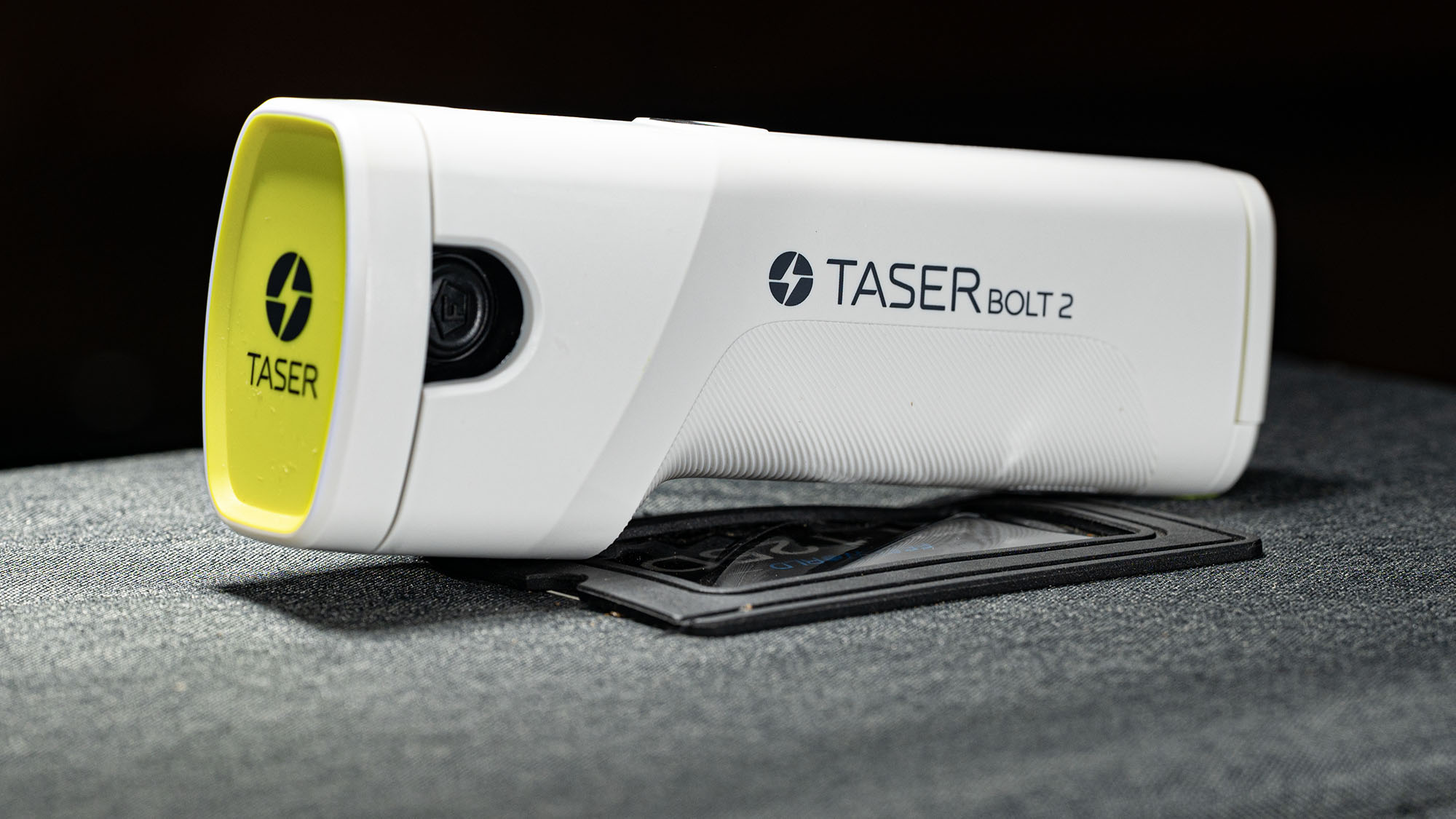
This model is a personal favorite of my wife. While she enjoys shooting recreationally and frequently carries a gun (The only time she doesn’t is when I am, and the weather simply doesn't permit it with her wardrobe), she prefers the Bolt 2. The reason? The Bolt 2 has all the same functionality and power as the Pulse 2, but looks like a flashlight. Not just in shape, but it’s also bright white - a color/shape combination that looks nothing like a firearm. This allows her to hold the device in her hand under her coat while walking to the car in a bad neighborhood without drawing unnecessary attention, while having it at the ready.
I personally was worried about the ergonomics of the Bolt 2, given that my wife has hundreds of hours at the range, and virtually none with a TASER device. But it was a non-issue; The Bolt 2 points like a flashlight, or TV remote, and is relatively intuitive to “point aim”. Even if this weren’t the case, the Bolt 2 features a built-in 210-lumen LED that can function as an aiming aid - much like the old-school flashlight-equipped MP5s used by the SAS.
The only other concern I had about the Bolt 2 was the effective range. I assumed she had to be roughly on top of an assault to employ it, but that isn’t the case. With a 15-foot range, this little unassuming energy weapon can give her some room to stay out of the attacker’s grasp. Plus, the 30-second neuromuscular incapacitation it causes can continue whether the trigger is held or not. So she can fire the probes at the would-be assistant, drop the Bolt 2, and attempt to run for safety. And since TASER will replace any device used in legal self-defense, she doesn’t have to worry about the cost of a replacement unit.

Should You Add a TASER Device to Your EDC?
While this is obviously a very personal question, in my expert opinion, the answer may be “yes” for some users. I love firearms - I write about them and shoot them every day. But I also understand what Uncle Ben said to Peter Parker:” With great power comes great responsibility.” Not every person is mentally prepared to take a life, no matter how morally and legally justifiable it might be.
I’ve always believed and taught that carrying a gun is a tremendous responsibility. Any conflict can turn into a gunfight, so I preach de-escalation until it is no longer feasible. This might seem weak or cowardly to some people, but I’ve spoken at length with dozens of armed self-defense survivors, and many were not prepared for the legal or emotional aftermath. Don’t get me wrong, there are times when a bad guy has to be neutralized with a firearm, no matter the cost, because the alternative is unspeakably grim. But for those instances where taking a life isn’t necessary, it’s nice to have options. Especially if you live in an area where the DA is on a vendetta against all legal firearms owners. It can be a nice reassurance to have a non-lethal option that may reduce the likelihood of being dragged through the courts.
Ultimately, I don’t believe an energy weapon can replace a firearm in an EDC setup. But it can be a nice addition that allows for situational flexibility. Plus, if you end up getting attacked by the one man on the planet who isn’t dissuaded by a 30-second full-body charley horse, you still have your firearm as a last-resort option.