

Most shooters' first foray into the world of NFA (National Firearms Act) is the purchase of a sound suppressor. Sleek, sexy, and utilitarian suppressors have an allure that is driven by equal parts facts and Hollywood-fueled fiction. But once a shooter has decided to buy their first can, many feel daunted by the massive array of options, nomenclature, and data. Thankfully, we’ve shot tens of thousands of rounds through hundreds of suppressors and can give you the info you need to buy the perfect suppressor for your needs.
Picking a Host Firearm
Before a shooter begins their journey down the suppressor rabbit hole, it's important to decide first on a basic firearm type they want to suppress. There are three main types of firearms, and which one a shooter chooses will dictate which calibers and suppressors they can pick from. Each has its advantages and limitations. For the sake of brevity, we'll stick to traditional designs in traditional calibers.
Pistols
-
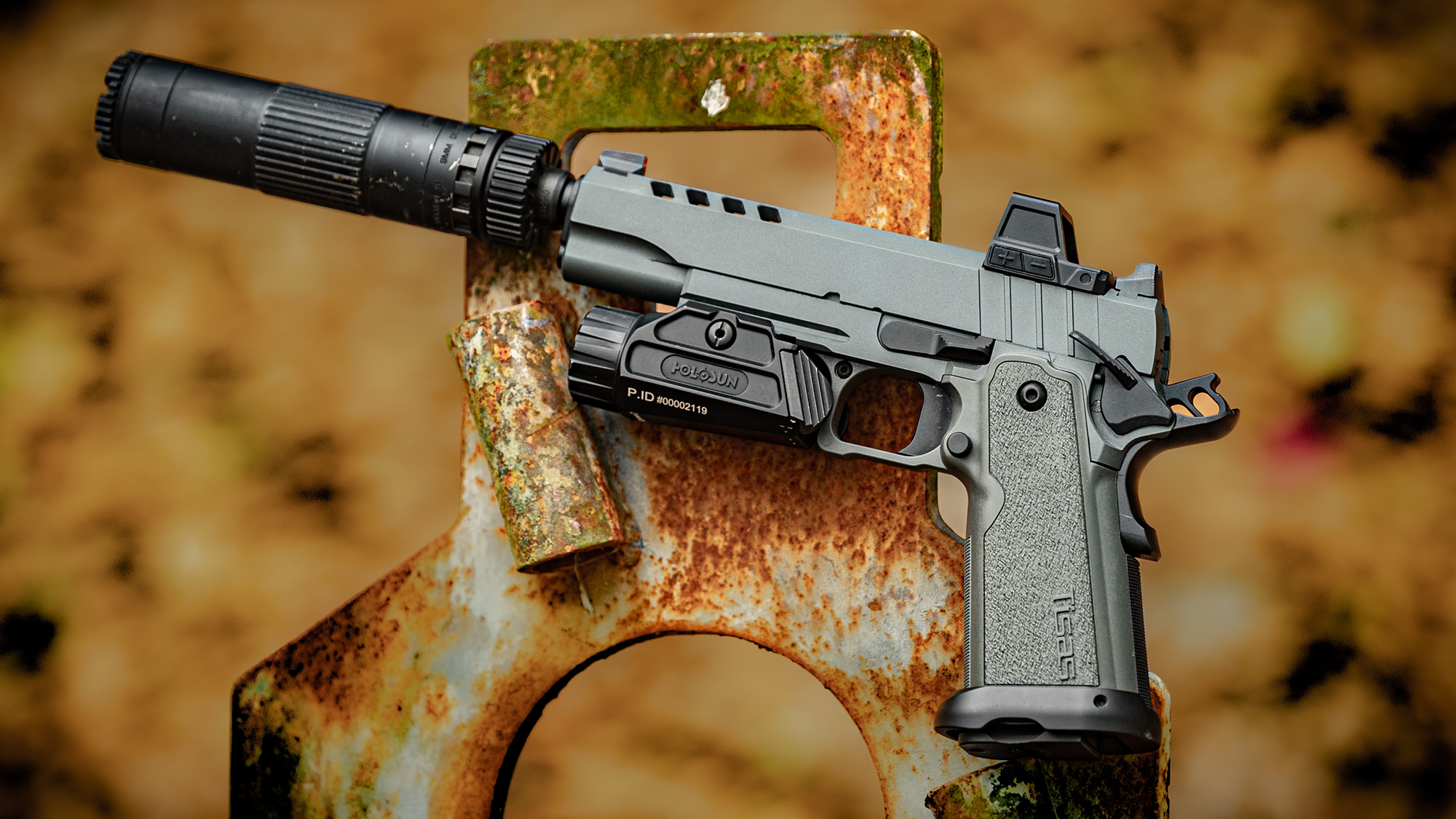
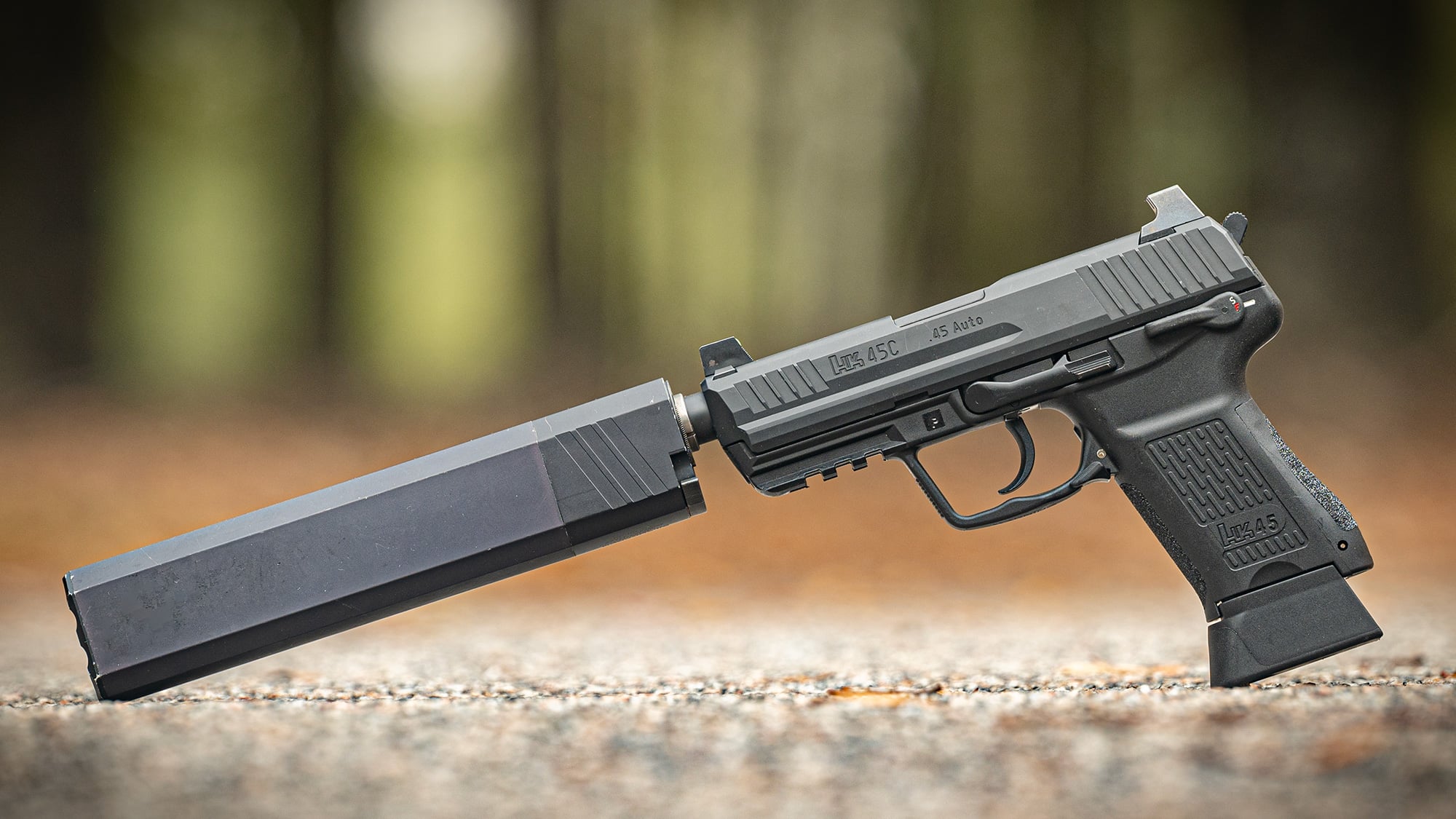
- Pistols are typically the quietest firearms a shooter can suppress, but they're also the most complicated. They're so quiet because the three most prolific handgun calibers in use - .22lr, 9mm, and .45 ACP - all have subsonic factory loadings available. The complicated portion of suppressing them comes from how most semi-automatic handguns function. Except for blowback-operated pistols, all handguns have a barrel that moves when fired and acts as a piston to push the slide rearward.
- When a shooter adds a suppressor to that barrel, it changes the velocity of the barrel and, thus, the timing of the action. This is why rifle suppressors won't function on a handgun unless specifically designed to do so. To counteract this, a booster or Nielson device must be added to the suppressor to boost the barrel's recoil and accelerate it to its normal, unsuppressed velocity.
- The good news is that most handgun suppressors include this device in the box. As a side note, if a shooter has a pistol caliber carbine they want to run their handgun suppressor on, they should remove the booster and replace it with a fixed spacer to prevent potential damage to the suppressor.
Rifles
-
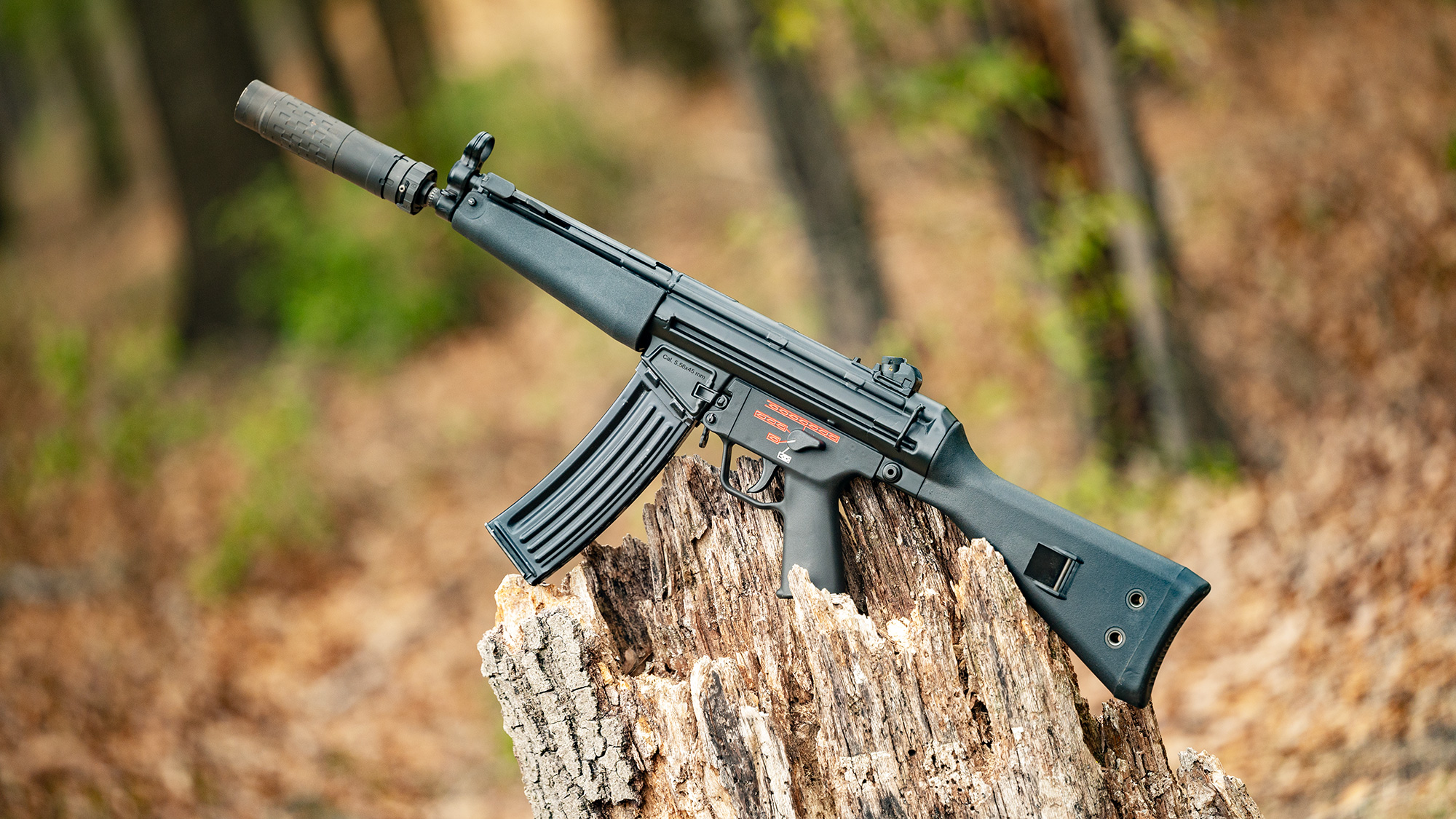
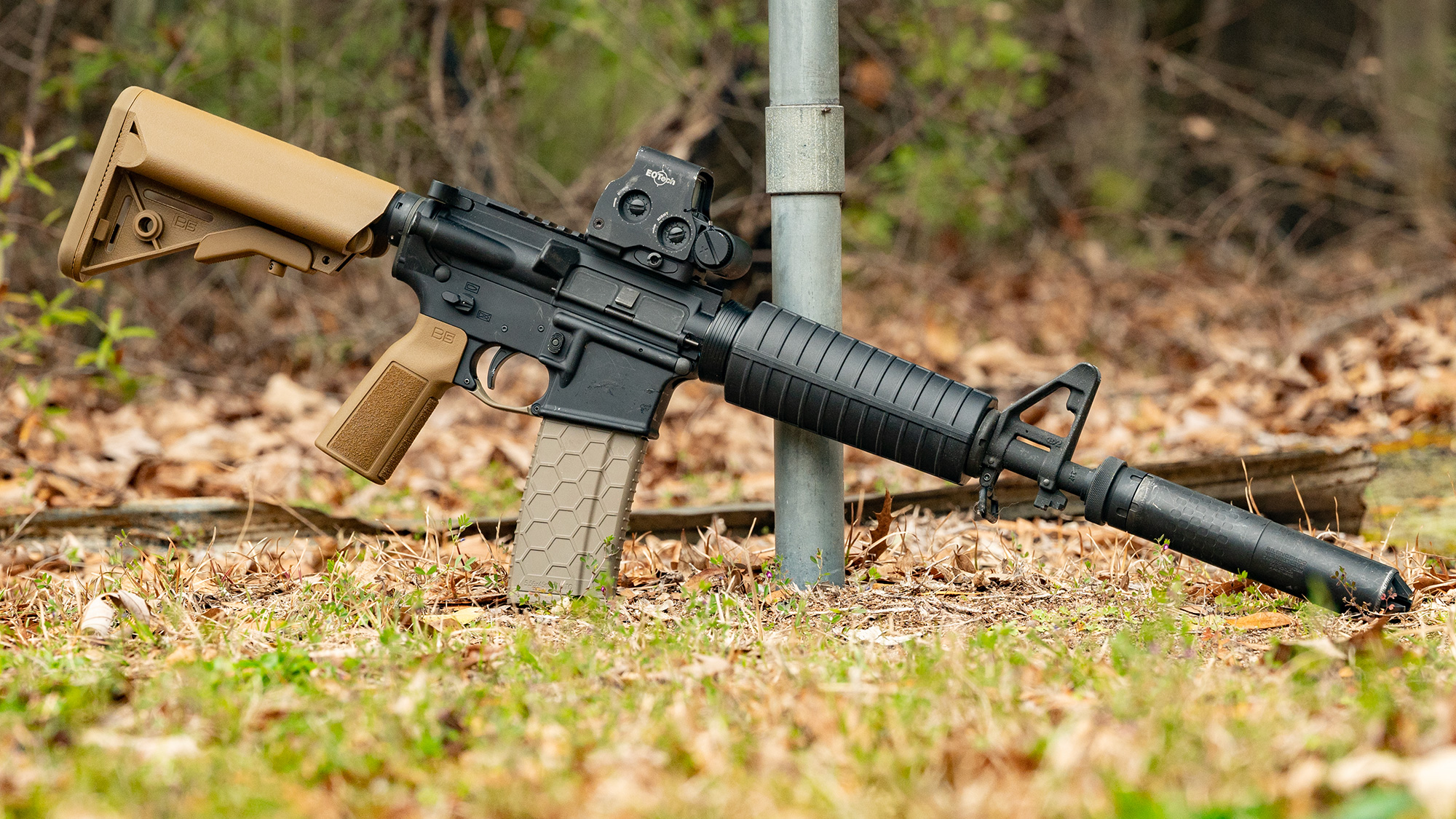
- Rifles are the simplest firearms to suppress. To do so, a shooter must pick a suppressor with the same thread pitch as the gun's barrel. All modern sporting rifles bought in free states will feature a factory-threaded barrel. Where these cans differ is in the mounting method used.
- Basic suppressors will be direct-thread only, meaning they screw on the end of the muzzle once the muzzle device is removed. More advanced models will feature QD or quick detach mounts that allow a shooter to install or remove the suppressor rapidly.
- The downside of suppressing a rifle is that it shifts the center of balance towards the muzzle and makes the gun feel much heavier. Shooters can mitigate this by picking a suppressor made of lightweight material like titanium or Inconel or by choosing a rifle with a shorter barrel.
Shotguns
-
- As far as cool-factor goes, it's tough to beat a shotgun as a suppressor host. But unfortunately, they aren't the best suppressor hosts for a few reasons. While some exceptions exist, most semi-automatic shotguns will struggle to function reliably with a suppressor attached.
- Secondly, shotguns tend to have long barrels since NFA regulations require a barrel of at least 18in. Add a massive shotgun suppressor to that 18-inch barrel, and you suddenly have an unwieldy weapon that handles like a cinderblock on the end of a broomstick.
- These issues can be remedied with manually operated shotguns like pump-actions and by converting a shotgun into an NFA-regulated Short Barrel Shotgun (SBS), but that will reduce the speed and range of the host gun. That said, for a home defense setup that is unparalleled in efficacy, a suppressed shotgun will reliably deliver quiet fight-stopping power.
Choosing a Caliber to Suppress
Before deciding on a suppressor, first, a shooter must pick a caliber (and then a host firearm, but that comes next). The best way to do so is to determine what your needs are for the gun and what aspect of suppressing this caliber is most important to you.
If you're looking for pure sound performance and want the quietest setup possible, your solution will look very different than someone who wants a hearing-safe big game hunting round.
Additionally, the role your suppressed firearm will serve will affect which suppressor is best for your needs. For example, a long-range shooter won't be as concerned with suppressor weight or size as someone looking to build a home-defense carbine or pistol. Here are a few things to consider before picking a caliber to suppress.
- Performance
- How does the caliber perform when suppressed? This can mean both how quiet the round is and how effective it is in its given role. A great example is the .22lr round. It can be very quiet when suppressed, but in terms of terminal efficacy, it leaves much to be desired. A fantastic round to suppress is one that is inherently subsonic in standard loads like .45 ACP but still packs a punch. Another solid option is .300 blackout AAC since it has both supersonic and subsonic loadings, making it a versatile round for hunting and home defense.
- Cost/Availability
- How affordable is a round, and how easy is it to find? Ever since shooters started loading their own ammunition, there have been wildcat cartridges or, basically, one-off calibers. These often push the limits of a caliber or firearm to produce previously unheard-of performance. Some of these rounds may find limited commercial success, but unless a shooter intends to reload their ammo, it can be too cost-prohibitive to dedicate an entire firearm to. A great example is the new 8.6 Blackout - it provides a shooter with an immensely powerful round that suppresses well due to commercially available subsonic loads with ultra-heavy projectiles.
- The main issue with this round is that the cheapest available load costs roughly two dollars a cartridge. This might not be a deal-breaker for hunters, but for recreational shooters, this high cost of ownership can make shooting too expensive. Two great options for affordable suppressor-friendly rounds are .22lr and 9mm para. Both are very affordable, have commercially available subsonic loads, and can be found in any shop that sells ammo.
- Firearm Compatability
- Not every gun can be chambered in every round. This seems like common sense, but in the golden era of the AR-15, many shooters are accustomed to being able to chamber their favorite black rifle in any caliber that will fit in the magazine well. Regrettably, this isn't the case - especially with older designs and handguns. For example, after a ton of research, a shooter determines that .357 Magnum is the perfect pistol round for them to suppress. They can use .38 specials for quiet performance and .357 Mag rounds for superior terminal ballistics.
- So they start researching online only to find that only a very select few semi-automatic handguns are chambered in .357 Magnum, and even fewer can be suppressed. This narrows their selection to a gun they might not be interested in owning. If you're wondering the solution to the above problem, it's either a Desert Eagle in .357 Mag or Coonan 357 - neither of which has commercially available threaded barrels.
Budget vs Features
Suppressors are unique in that price is less an indicator of quality and more of material cost and features. A basic steel rifle suppressor may be just as quiet as one made of a pricier material like Inconel but will set a shooter back for a fraction of its cost.
Five significant factors influence a sound suppressor's price: material, construction method, modularity, mounting method, and user serviceability. Let's examine all five to better understand what each entails.
- Material - This one is straightforward; if the material used is expensive, the suppressor will be expensive. Ultralight metals like Inoncel and titanium are ideal for pistol and carbine suppression because they don't affect the weapon's handling characteristics as much. If you're shooting a long-range benchrest rifle, a heavier steel suppressor is an excellent, affordable alternative.
- Construction Method - Most suppressors are made from either aluminum or steel. With aluminum, this typically means taking an extrusion, milling out the internals for baffles, and threading both ends. For steel cans, steel portions are welded together, and the ends are machined. Where things get interesting are with titanium cans - some modern titanium suppressors use 3D-printed titanium baffles.
A high-powered laser melts titanium powder together to form baffles in shapes impractical to machine. These often look like they're made from an ultra-fine mesh and offer shooters the lightest, most effective baffles possible since those tiny spaces between the titanium cast further decelerate hot expanding gas. Since the machines required to make these are several million dollars, the added cost is tacked on to the suppressor's price tag. - Modularity - In the world of suppressors, this can mean two things: a suppressor with an adjustable length and multi-caliber compatibility. Some modern suppressors ship with an additional suppressor segment threaded to the end of the can to give the shooter a choice between better performance and lighter weight.
Additionally, some suppressors have interchangeable end caps that reduce the endcap bore diameter to squeeze extra sound reduction from smaller calibers. Both of these require more machining, which increases the suppressor's price. - Mounting Method - Direct thread is the standard and most common mounting method for a suppressor. This is where the suppressor screws onto the host firearm's threaded muzzle. It's very secure but slow. More expensive suppressors will utilize dedicated muzzle devices that interface with a QD rear endcap mount. These are ideal for shooters with multiple guns or those who travel with the firearm and want a quick way to install/remove it in the field without having to use a wrench.
Adding a QD mount and requisite muzzle device requires additional materials and labor, increasing cost. - User Serviceability - One Way suppressor manufacturers can cut the cost of a can is by sealing the unit. This normally entails welding the endcaps to the suppressor instead of threading the ends for an endcap, which reduces machining time. The problem is that the buyer cannot thoroughly clean the inside of a suppressor built like this. This isn't as big of a deal for most suppressors as it might seem - they rarely need a more thorough cleaning than filling the suppressor with solvent and letting it sit overnight. And most experts agree that a suppressor only needs that level of cleaning every thousand rounds or so.
Shooters run into issues with rimfire suppressors. Because of its exposed lead projectiles and wax coating, rimfire ammo is dirtier than centerfire. This is why shooters should always opt for a user-serviceable suppressor for their .22lr hosts.
Choosing a Suppressor
Once a shooter has determined their budget, needs, caliber, and host firearm, they are ready to pick their first suppressor. It might seem daunting initially, but doing so is a straightforward process. Follow the list and narrow down which suppressors meet all your criteria. Then, look up reviews on those cans and make a decision.
The good news is that suppressors aren't a complex or new technology, and nearly every suppressor manufacturer makes a quality product. So, no matter what a shooter picks, they'll have a functional, safe piece of equipment to make their range sessions infinitely more enjoyable. Just clean your guns more often, as suppressors accelerate carbon accumulation inside a host firearm.

