

If you own an AR-15 and shoot more than ten rounds a year, you will run into these AR malfunctions at some point. In today’s lesson, you’ll see what they look like and how you can correct common AR-15 malfunctions. However, before we get into the malfunctions, let’s talk about a drill that can get you out of many tough spots.
The "Tap Rack Bang" Method
You may hear this occasionally, and TRB can get you out of a failure pickle. The idea here is that most malfunctions you encounter can be fixed by forcefully bumping/tapping the bottom of your AR magazine, racking the charging handle, then pulling the trigger again.
- Bumping your magazine makes sure that it’s fully seated into your rifle.
- Racking the charging handle will remove bad rounds, and in the case that a round wasn’t chambered because your magazine wasn’t fully seated, this will get a pill into the chamber.
- The last step is the apparent bang switch; Pull the trigger to see if you’ve cleared the issue; if not, you may have to take a knee and check further. This also works well for pistol malfunctions, but we’ll cover that later.
Failure to Feed
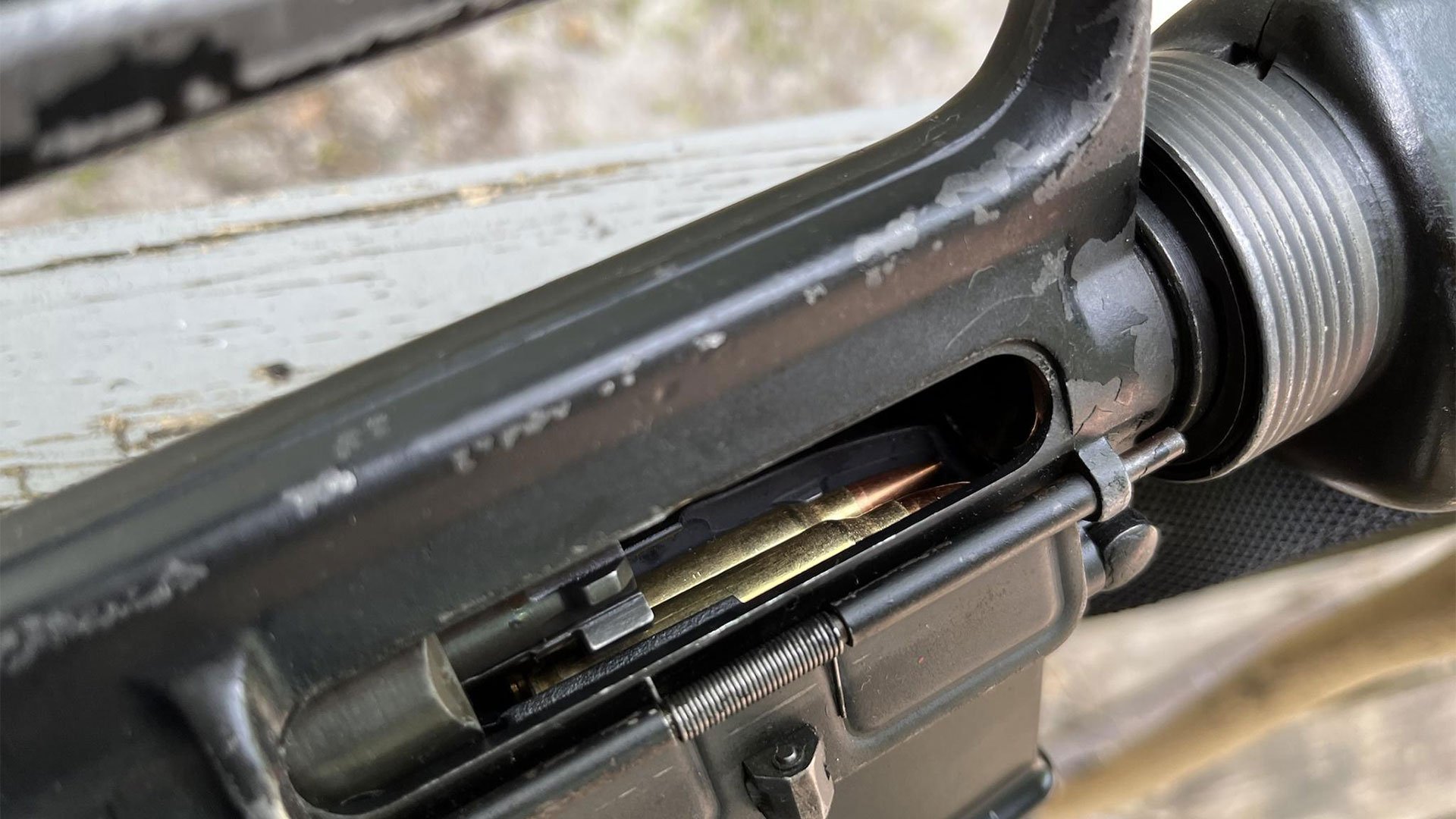
Many new shooters will gently press their mags into the magwell, which generally won’t seat it fully. A good rule of thumb is to not be gentle with your firearms; slam that magazine in until you hear a click and if you aren’t sure it’s fully seated, feel free to give it a nice downward tug. It’s also much easier to insert a full magazine when your bolt is locked back as you aren’t having to overcome the magazine spring pressure pushing the top round into the bottom of the bolt.
Try a new magazine if you know that your magazine is fully seated and a round still won’t feed. If that still won’t fix the issue, you may have something wrong with your bolt which can’t be fixed in the field. Now it's time for your pistol, “Remember - switching to your pistol is always faster than reloading.” Let’s see who gets that reference.
The Double-Feed

Let’s discuss a double feed next, as it’s something that you can still fix quickly in the field.
I know I said bump it hard before, but you won’t need to if the bolt is open. A tap and rack usually won’t fix this as both bullets are being jammed into the feed ramp. Lock your bolt back and turn your rifle clockwise until the ejection port is facing down, then give your rifle a good shake. As long as the rounds haven’t been repeatedly slammed into the feed, this will usually clear the malfunction.
If this doesn’t work, take a knee, drop your magazine, then use your booger hook to try to remove the two rounds. Another helpful tool here is a Leatherman; You can get a LOT more leverage from a metal multitool than you can with your fingers. Put your mag back in once the rounds are out and send the bolt home. If you continue to see double feeds, try a different magazine. If you find that it’s a mag issue, there are a couple of things you can check. See if the feed lips are bent if you have a metal mag. If you are using a polymer mag and find that the feed lips are losing their shape, toss it and get a new one. Magazines are a consumable that should be replaced when they wear out, though it usually takes a long time to wear out a good mag.
Failure to Eject/Extract
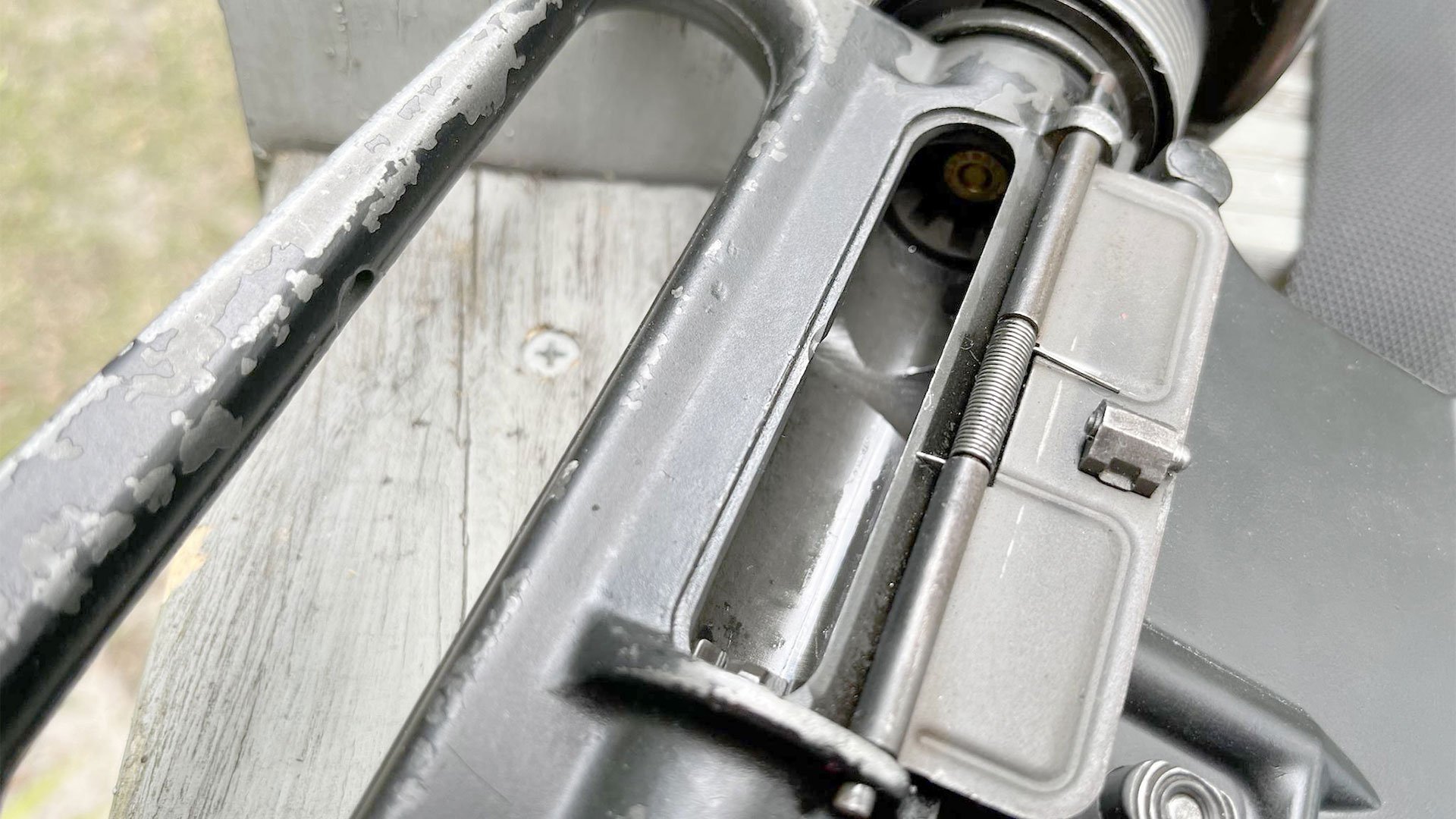
Failure to eject is the last of the main issues and can be a pain to fix in the field without the right tools. Every time I’ve seen this malfunction, it’s been because of a chamber issue. Usually, it’s just filthy or a chamber that doesn’t like steel cases.
The first thing to think about is:
- Is there a live round in the chamber?
- Did you get a click and a bang or just a click?
If a live round is stuck in the chamber, be extra cautious when remedying the issue. Keep the rifle pointed downrange when messing with the round if it decides to go off. If you have an empty stuck case, you are reasonably safe to go digging around; make sure your bolt is locked back, and the magazine is out.
You have two good options for clearing a stuck case:
- The first and best but unusually unavailable method is to run a cleaning rod down the barrel and smack the end to force the case out. I usually like to bump the muzzle with the rod into something steady like a tree or table; if something decides to go forward, your hand isn’t near it. I try to keep a nice steel screw together rod in my pack.
- The second option is to use a multitool to pry on the case’s rim. It’s tough to get leverage through the ejection port, but it can be done. Once the round is clear, make sure nothing is stuck in the barrel, we don’t want a squib load, then run a patch in the chamber to see if you can clean it out.
Closing
This leads me back to a couple of core principles. First, make sure your rifle is always cleaned after range trips; It can save you lots of hassle regarding malfunctions. AR Gun cleaning kits are inexpensive and are detrimental when owning a firearm. Secondly, always have a multitool on you. I carry a leather squirt everywhere and can’t tell you how often it comes in handy outside of shooting sports, but especially on the range. This should be part of man code, honestly. Share in the comments how you fix your stoppages so others can learn.