
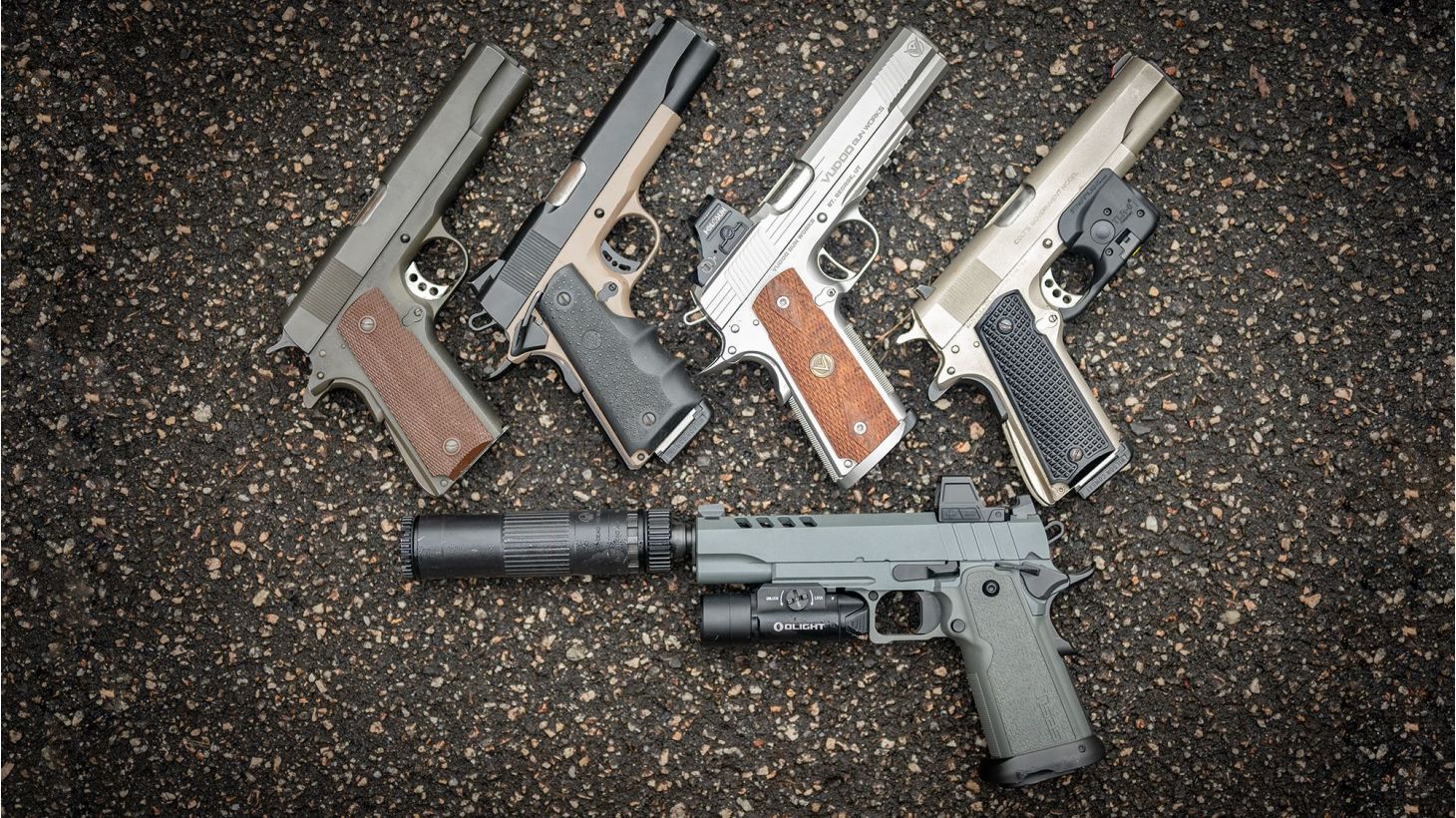
When John Moses Browning died in 1926 at the age of 71, he scarcely could have imagined that four of his designs would still be in everyday use nearly 100 years later: the Browning Auto 5 shotgun, the HiPower 9mm pistol he almost finished, the famous M2 “Ma Deuce” heavy machine gun, and the world-famous 45 caliber Model 1911 handgun, the subject of our article today. The man’s designs were so influential that nearly every auto-loading, center-fire handgun today is based on his short-recoil system, pioneered in the HiPower.
However, the Browning design most encountered by American shooters today is the 1911. But why? After 100-plus years, surely there’s something better on the market. So what makes the 1911 so special, and why does it persist in military, law enforcement, and civilian shooting circles today? Let’s take a closer look and find out.
Humble Beginnings of a Legendary Gunmaker
Born in Utah in 1855, John Moses Browning was one of 22 children fathered by Jonathan Browning, a local gunsmith. He began working for his father’s gunsmith shop at the age of seven, where he was taught engineering and manufacturing principles. During this time, his father encouraged John to develop his own unique designs and pursue experimental concepts.
John showed incredible promise in firearms design at a young age. He even developed his own falling-block rifle design at the age of 13. Ten years later, he would partner with his younger brother to form the John Moses and Matthew Sandefur Browning Company, which would later become the Browning Arms Company.
John got his first big break when his Model 1878 Single Shot Rifle design caught the attention of the Winchester Repeating Arms Company, which bought the design for $8,000—more than a quarter million dollars in current dollars. Not bad for a 28-year-old man with no formal instruction!
Browning went on to partner with Winchester for several years and produce multiple successful designs before parting ways and licensing his later designs to Fabrique Nationale of Belgium. Between these events, Browning worked to develop a domestically designed auto-loading pistol to compete with guns out of Europe like DWM’s C96 “broomhandle” pistol.
Eventually, he developed the Colt Pocket Hammerless chambered in .32 ACP (automatic Colt pistol). This design would be scaled up and refined into what became the Model 1911 during US Army trials for a new handgun. The new gun was subcontracted to multiple gun makers, and by 1917, a total of 68,533 M1911 pistols had been delivered to the US armed forces.
Why is the 1911 So Famous?
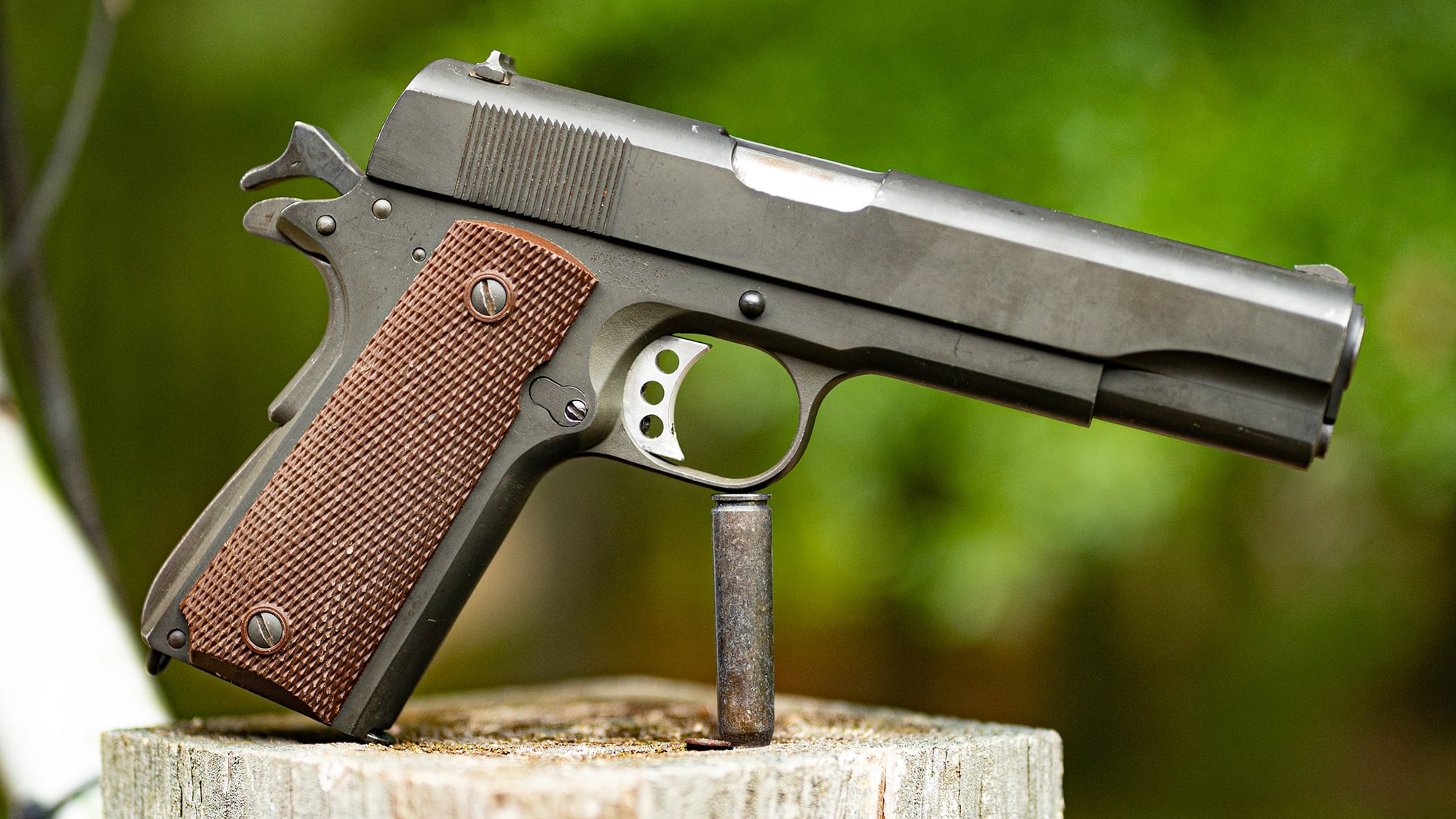
Browning’s handgun saw extensive service in both World Wars, but during the bloody trench warfare of the First World War, the design cut its teeth in a trial by fire. Despite its more modern reputation as unreliable, the M1911 served with distinction in Europe, where troops praised its reliability and fight-stopping capabilities.
This is because of two main factors: First, the original designs weren’t developed for maximum accuracy, and thus had a relatively loose-fitting slide to their frame. This meant the gun wasn’t as accurate as modern firearms, but could tolerate mud, dirt, and carbon and remain functional - a must in the muddy trenches of The Great War.
Its stopping power was the second aspect of its design that won over troops. Based on US munitions trials known as the Thompson–LaGarde Tests, following the lackluster performance of 38-caliber handguns in the Philippines, the Ordnance Department determined that a .45-caliber projectile capable of penetrating three one-inch-thick pine boards spaced one inch apart. The only submitted round to these trials that met these requirements was the .45 ACP cartridge.
In the field, soldiers found that the large 230gr .45 ACP round more reliably stopped enemy soldiers in fewer shots than the older .38 Colt and German 9mm parabellum rounds. Soldiers’ experiences in World War 2 further cemented this reputation for fight-stopping lethality. And it was these soldiers returning from WW2 who both brought back guns and purchased them stateside, that firmly established the M1911’s place in US firearms history.
Modern 1911 Pistols
Okay, so the 1911 was revolutionary for its time, but can it still hold its own more than a century later? In a world: Absolutely. But, not necessarily in its original form. The 1911 has evolved since Browning first imagined it in his workshop, and now has all the bells and whistles of a modern semi-automatic handgun.
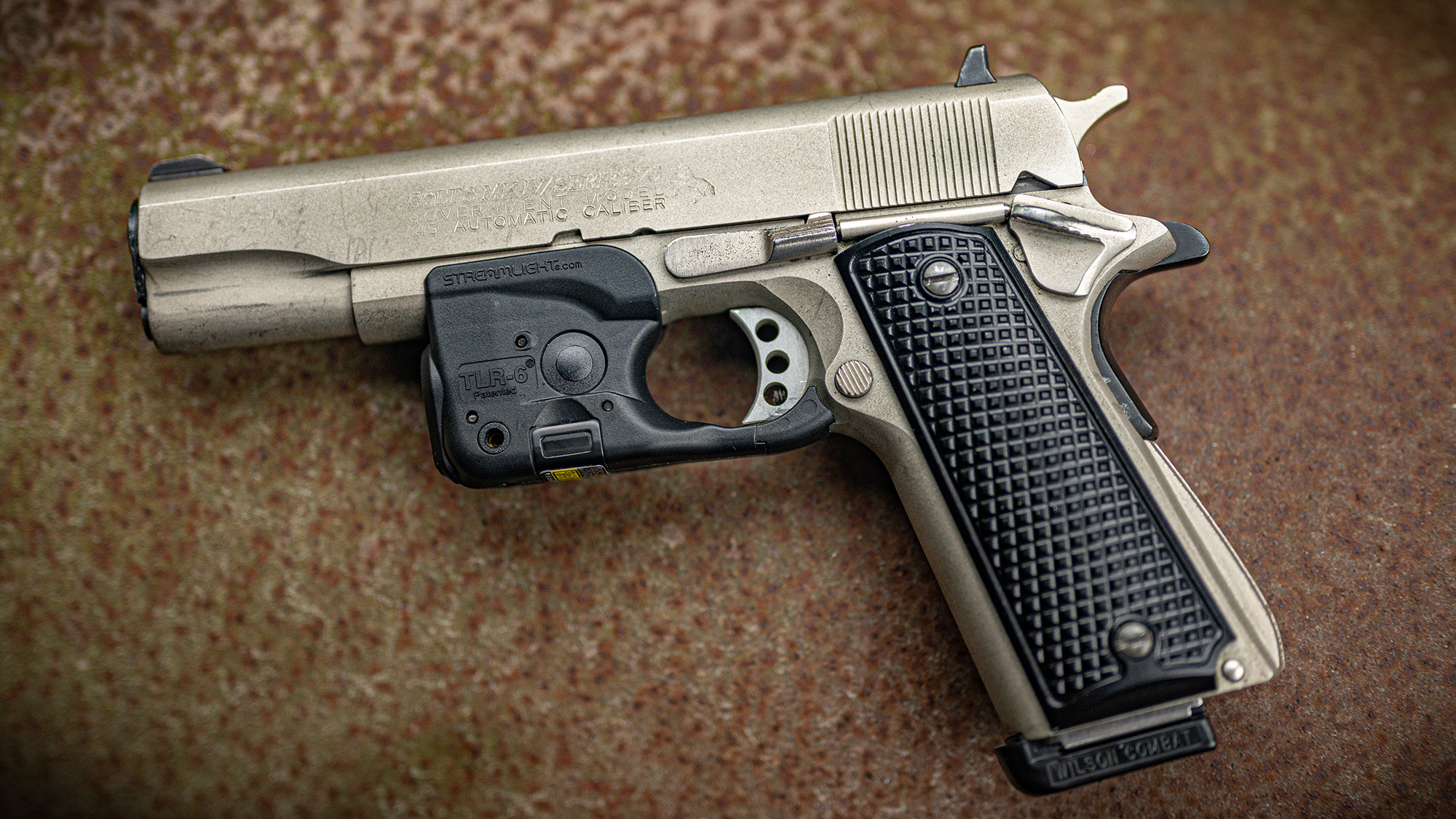
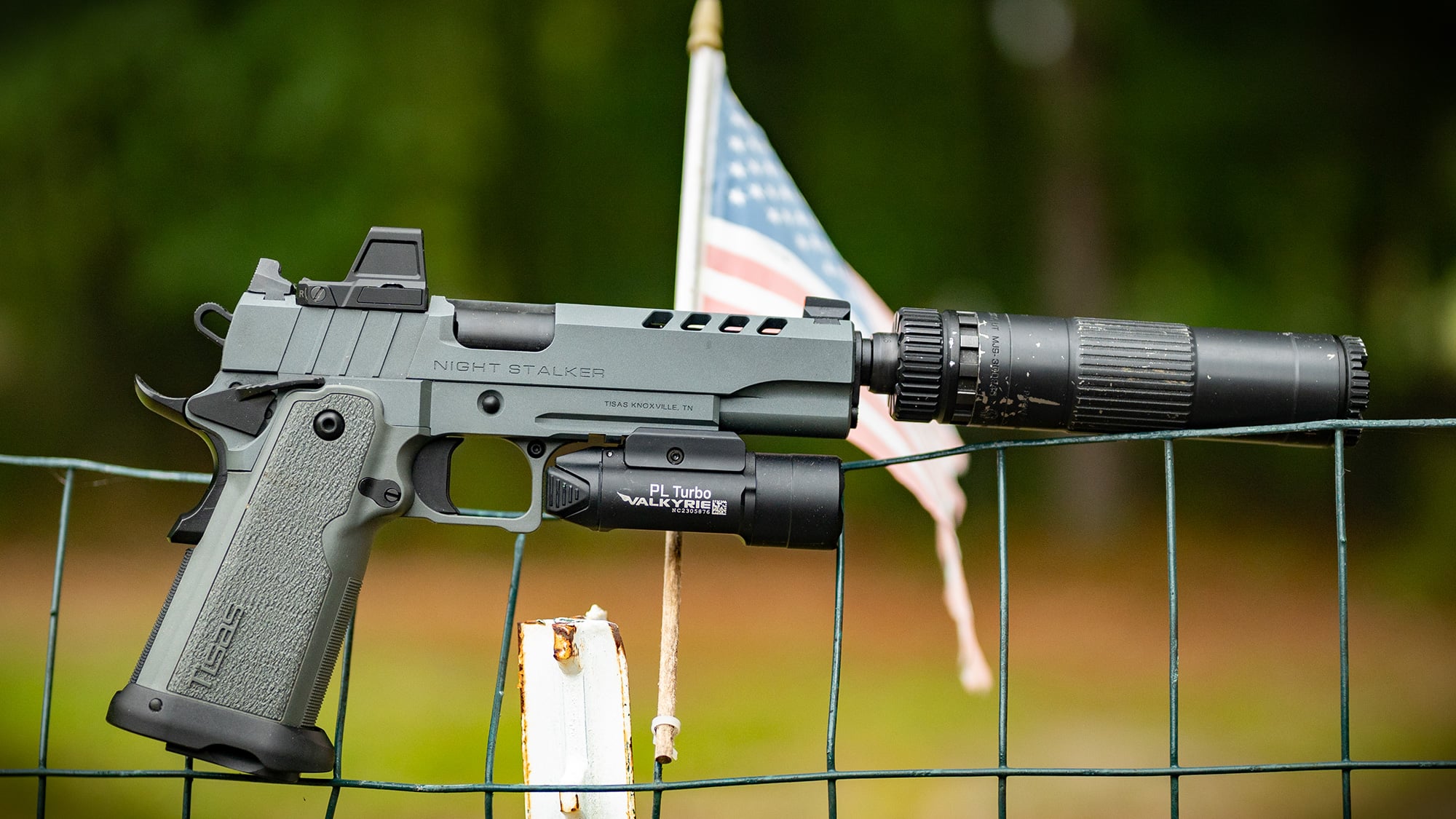
For instance, nearly every modern 1911 now features a railed dust cover. This means shooters can attach their favorite light or laser to give them an edge in a gunfight or against menacing soda cans on the range.
Additionally, most 1911 handguns now feature slides with sight cuts for the most common type of iron sights, like those from Novak or Hi-Viz. But the fun doesn’t stop there; several designs now incorporate an optic footprint for shooters who want to strap a reflex sight like an RMR to their favorite lead slinger.
But I haven’t addressed the elephant in the room - the largest limiting factor of the 1911 that makes shooters second-guess buying one for serious use - magazine capacity. The original 1911 utilized a single-stack box magazine that only held seven rounds of .45 ACP. How can a 7+1 handgun compete against the latest and greatest polymer-framed pistols rocking 20-round (or more) magazines?
Simple, by utilizing magazines just as capacious as its more modern counterparts. But this isn’t a new revelation. The now-defunct Para Ordnance introduced double-stack .45 ACP 1911 handguns back in 1989 with their P14-45. A few years later, STI came out with their now-famous 2011 handgun in the early 1990s. The only downsides to these guns are price and the extra thick grip necessary to accommodate such capacious magazines.
But that still begs the question: “Why use a modified older design when newer designs are less expensive?” Simply put: ergonomics. The M1911 uses a very unique trigger that, when properly tuned, puts every striker-fired handgun trigger to shame. And yes, I will die on that hill. The 1911 trigger pulls straight back and doesn’t hinge, making it extremely consistent, which in turn leads to exceptional accuracy.
Every shooter that I’ve instructed on one of these guns always comments on how nice the trigger feels and how the whole gun seems to fit them better. The latter, especially being the case with single-stack guns, which have grips so narrow that even small-framed shooters can comfortably hold them while still being able to reach all the important controls like the magazine release.
In my opinion, that trigger and the gun’s superb ergonomics, combined with the nostalgia for a piece of classic Americana, keep these guns flying off shelves more than a century after their inception. And if a shooter really wants to keep the original ergonomics without sacrificing capacity, they can opt for a 10mm Auto version like the old-school Colt Delta Elite, and have a 10-round hand-cannon that effortlessly punches out the bullseye on a target at 15 yards.
Plus, modern 2011 imports from MAC, along with more budget-friendly options from Springfield Armory, have lowered the cost of entry on a 2011 to blue-collar levels. Previously, the Staccatos and STI 2011s of the world were high-end race guns reserved for master shooters and those with deep pocketbooks.
Should I Buy a 1911?
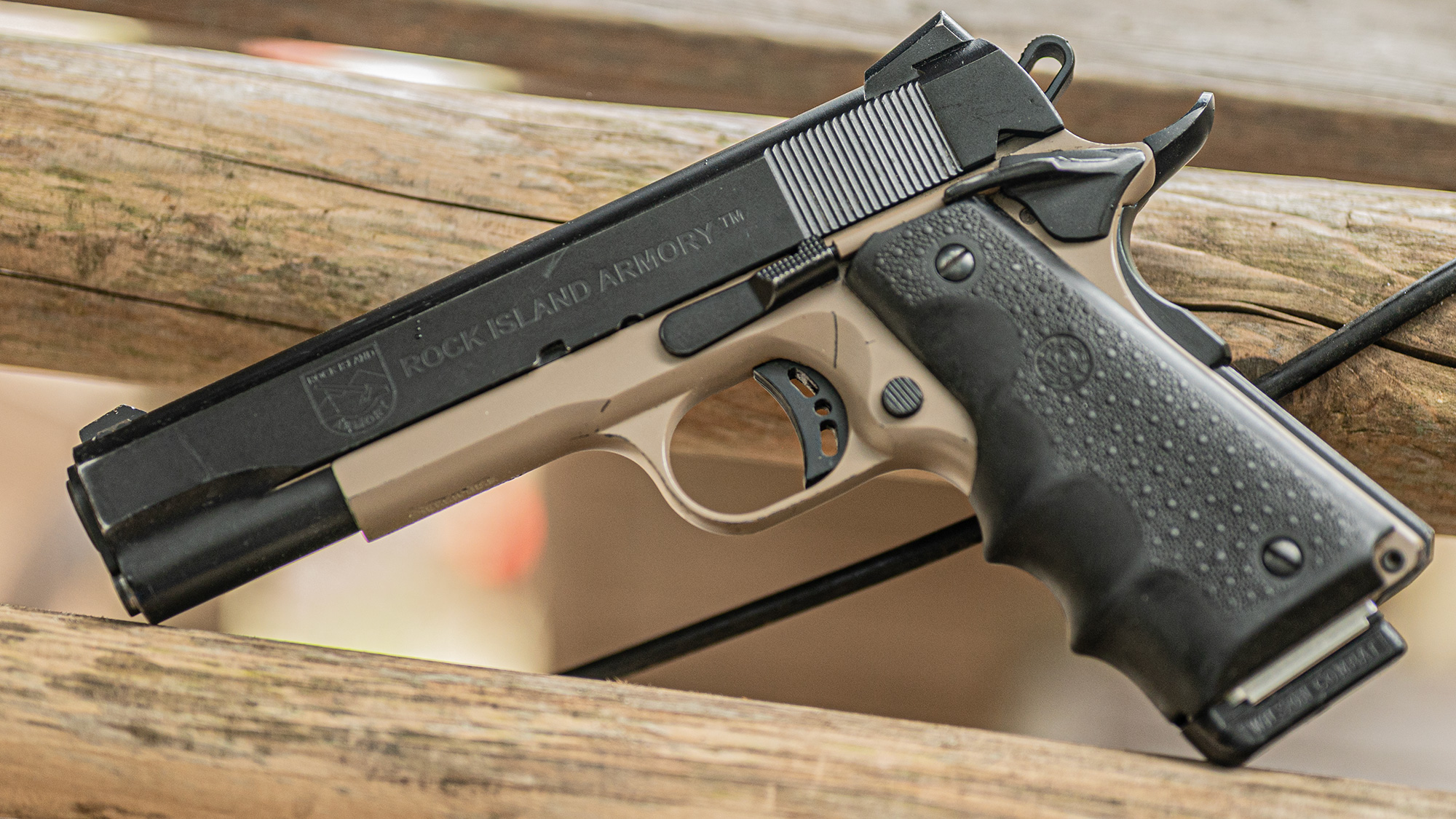
I’m very biased - my first handgun was a mil-spec 1911 - but in my not-so-humble-opinion, yes. The excellent ergonomics and gold-standard trigger alone should be enough to sell you on one. But if you want to feel like John Wick, the more modern 2011s can scratch that itch as well.
To me, the 1911 holds a special place in a collection, the same way an M1 Garand does. It feels like a gun should. It has a solid recoil impulse, but not too much to scare shooters away. It’s heavy, but balanced in a way that inspires confidence. It’s a pistol whose shape makes it feel like a natural extension of your body - like you’re pointing at a target with your arm, not muscling a machine to do your bidding.
It’s a classic design that is so well made that it doesn’t feel antiquated. And if you want a piece of history that still holds its own in the 21st century, few machines can accomplish what the 1911 has. Don’t believe me? How many people do you know who utilize a Ford Model T as a daily driver? Almost none. While several shooters still rely on this turn of the 20th century handgun to protect them and their loved ones.
