

ARIt's said that the AR-15 platform is America's rifle, with millions out there in use by the population for hunting, self-defense, and target shooting.
One of the significant aspects of the AR-15 platform is that shooters can tailor it to their exact needs. Whether you want a pistol, carbine, rifle, short-barreled rifle, or shotgun from your AR, you can have it. You can run calibers from .22 LR up through .50 Beowulf if needed. Few other platforms will allow you to do that by merely changing out one component: The upper receiver.
AR-15 Upper Receiver Options:
- 5.56 Uppers
- .300 Blackout Uppers
- .223 Wylde Uppers
- 6.5 Grendel Uppers
- 7.62x39 Uppers
- .22lr Uppers
- .45 ACP Uppers
- 9mm Uppers
What are the AR-15 Calibers?

When most people think of the AR-15, they think of 5.56 NATO ammo or .223 Remington ammo as the default caliber. This used to be true when less than a handful of companies made AR-15s from the 1960s through the 1980s. With the rifles being so adaptable and user-friendly, however, some hobbyists and manufacturers began to tinker with them and found out how versatile they were.
We have broken the rifle into three groups:
- Pistol cartridge
- Intermediate rifle cartridge
- Thumper rounds
Except for this last category that uses different-sized upper and lower receivers than the rest, the first three can be built on any standard AR platform lower receiver.
AR-15 Caliber list:
- 5.56 NATO
- .223 Remington
- .300 AAC Blackout
- 6.5 Grendel
- .350 Legend
- .450 Bushmaster
- .458 Socom
- .50 Beowulf
- .224 Valkyrie
- 9mm
- .22lr
- .45 ACP
- .40 S&W
The Pistol Caliber
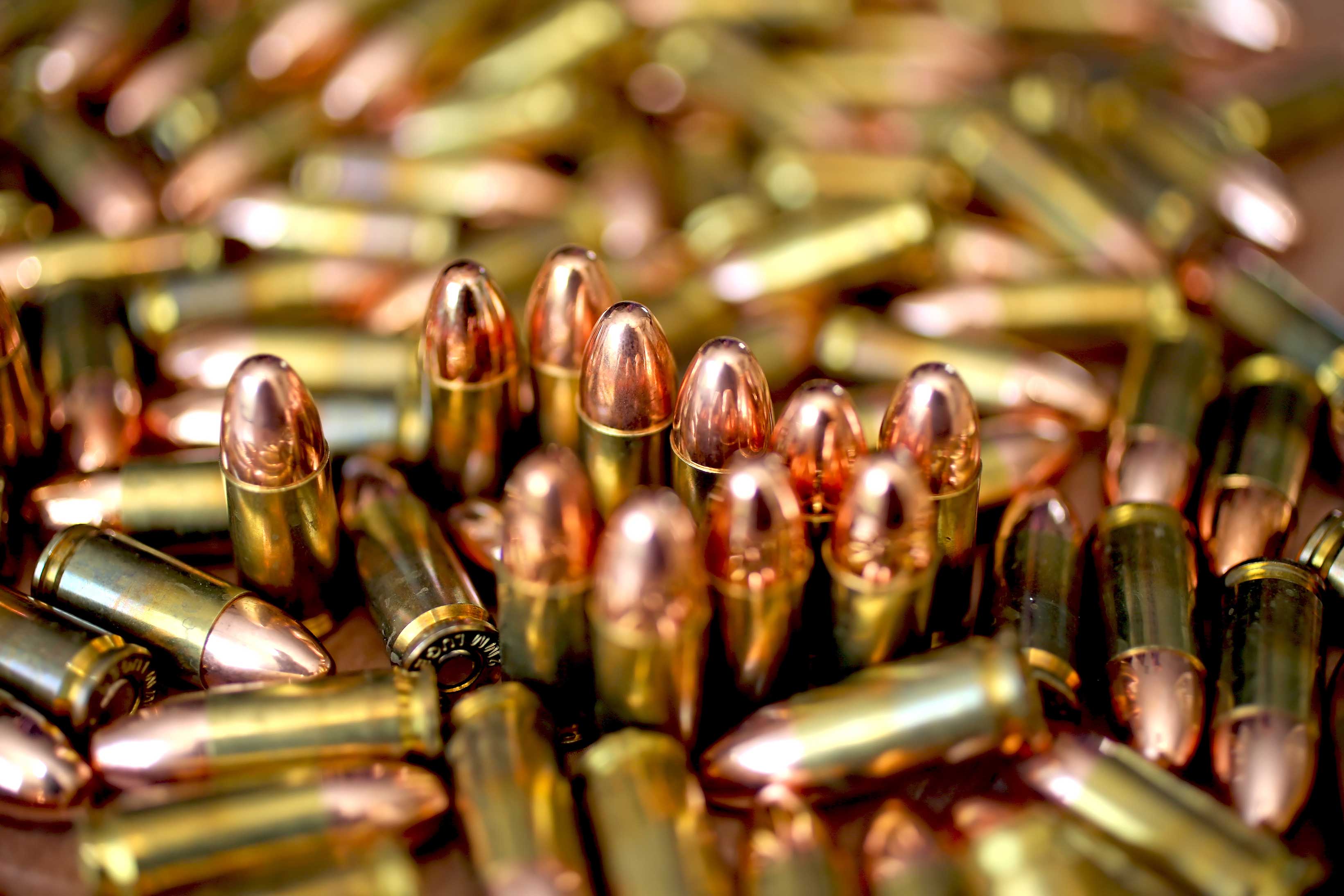
Some critics look down on the idea of a pistol caliber carbine, rifle, or braced pistol. Their line of thinking goes along the lines of, "If I need to solve a problem and grab a rifle, I want a rifle caliber to do the job." That may sound logical, but it eliminates a lot of fine pistol-caliber cartridges that offer benefits in their own right.
At one time, 5.56 NATO or .223 Remington was cheaper than most pistol ammunition, but those days seem to be in the past as the demand for ammo, particularly 5.56 and .223 Rem, has outpaced the cost of most quality pistol ammo in the past few years.
Running a pistol caliber in your AR-15 requires changing the upper receiver and bolt for a 9mm upper receiver and 9mm magazine.
The magazine type usually depends upon who manufactured the pistol caliber upper receiver. In 9mm, for example, the lower may take modified Sten magazines, Uzi magazines, HK MP5 magazines, CZ Scorpion magazines, or standard Glock magazines. Many companies manufacture 9mm magazines with the same profile as a standard AR magazine designed for .223/5.56 ammo.
In the case of uppers chambered in 10mm, .40 S&W, or .45 ACP ammunition, there are fewer options than there are for 9mm. M3 grease gun magazines and .45 caliber Uzi magazines used to be the only game in town for running .45 ACP ammo in your AR, but conversions have been made running double-stack Glock magazines for .45 ACP. Most of the 10mm versions use magazines designed for the Glock 20/40 to run 10mm ammunition.
Other common pistol caliber rounds for the AR conversion include 5.7mm and .22lr.
A conversion to 5.7mm ammunition requires a new 5.7mm upper receiver, barrel, bolt, and magazine. An older version used FN P90 magazines. These loaded on top of the upper receiver and locked in as they would on a PS90 but ejected straight down through the magazine well. Newer units typically run on one of the pistols that fire 5.7mm ammo, like the PSA 5.7 Rock, FN Five-seveN, or the Ruger 5.7 pistol.
The .22lr is technically a rimfire rifle round, but I included it here because it generally follows the pistol conversion route, only a little better. Usually, the only thing needed to convert your 5.56/.223 caliber AR to use 22 LR ammo is a kit that consists of a bolt and a magazine.
The bolt does not retreat into the stock like a typical AR bolt, and the bolt's nose feeds the rounds into the chamber and forms a seal. The only drawback the author has seen with this setup is that the accuracy could be better than a truly dedicated rifle chambered for .22lr ammunition, and some specialized triggers are not 100% reliable.
The benefits of running a pistol caliber round in an AR-15 are apparent.
- First, not everyone is a dedicated shooter, with hundreds of firearms in 40 different calibers. Some shooters are content with less than five firearms, and for reasons of economics or space, they often like consolidating calibers. Before you think this sounds like a terrible idea, consider that most pistol caliber ammunition will gain a boost in velocity and energy when fired from a barrel greater than 8" in length. Going a full 16" will boost this even more in most cases, particularly when firing 9mm, 10mm, .40 S&W, .45 ACP or any of the Magnum revolver rounds.
- Secondly, a rifle-sized platform is often superior to a traditional handgun because it gives the shooter more gun control. A rifle or carbine will always be more accurate with a buttstock, optic, and proper cheek weld than a handgun running iron sights. A rifle or carbine in a pistol caliber will transmit less felt recoil and allow the shooter faster follow-up shots. Pistol caliber ammunition is easier and cheaper to suppress than most rifle rounds. The construction of most pistol-caliber suppressors rated for 9mm or .45 ACP does not need to be as highly engineered as a silencer intended for use on a rifle that fires 5.56 NATO or .223 Remington ammunition.
- Lastly, pistol-caliber AR-15s can go places many traditional AR-15s cannot. In this case, I'm speaking of indoor urban shooting ranges. This varies by the range in question, but there are indoor shooting ranges that are not rated for full-sized or even intermediate-sized rifles.
The Intermediate-Sized Rifle Cartridge
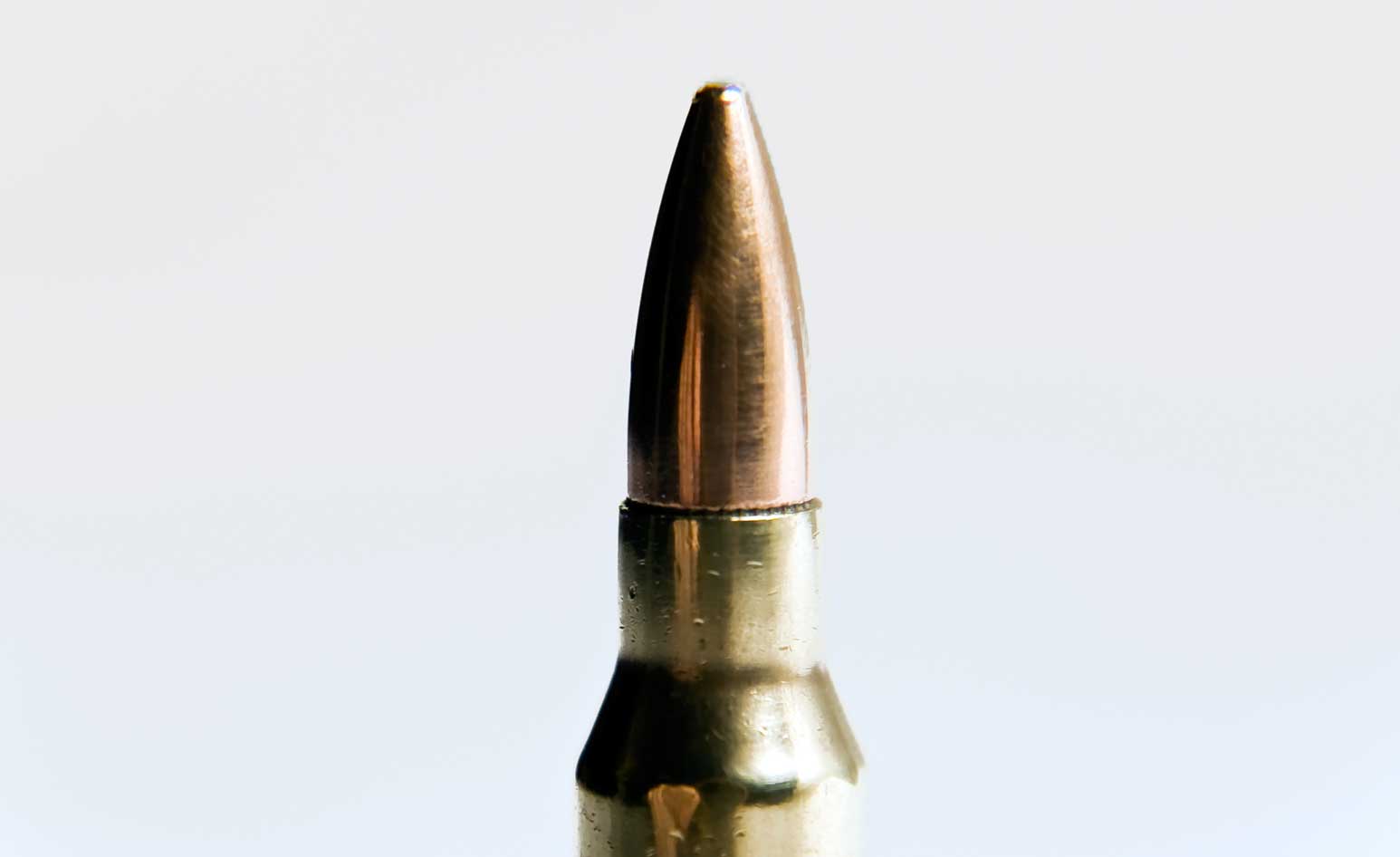
This caliber comes to mind when most think of an AR-15. The most common has to be .223 Remington or 5.56 NATO ammunition. However, other rounds have been catching up in recent years, such as .300 Blackout, 7.62X39mm, 6.5 Grendel, and there are other AR-15 cartridges appearing every year, like 6mm ARC, .338 Spectre, 6.8 SPC, and others. Although many of these rifle calibers wash out in attempting to answer a question that nobody asked, many develop a decent following and tend to stay around longer than most self-proclaimed experts give them credit.
Some would say that 5.56 NATO or .223 Remington ammunition is what the AR was designed for, and they would be right. Before the rifle was conceived, experts worked on a suitable cartridge.
According to the US Army's requirements, the round had to be .22" caliber, accurate to 500 yards and had to penetrate a military steel helmet at that range. Eugene Stoner of Armalite was tasked with scaling down his earlier AR-10 rifle chambered in 7.62x 51mm and worked with Remington and Winchester with this new round. A lengthened bottle-necked .222 Remington case allowed the round to generate 3,000 fps of muzzle velocity when used with a 55-grain Sierra bullet to meet the distance and penetration requirements of the US Army.
This round was known as .222 Special. Upon acceptance, it became known as .223 Remington in 1959 and, by 1980, was changed slightly as it was standardized by NATO and took on the moniker 5.56 NATO.
There is a bit of confusion between .223 Remington and 5.56 NATO. The NATO loading is loaded to higher pressures and was often considered inaccurate when fired from a chamber intended for .223 Remington ammunition as the bullet made contact with the barrel's lands and grooves upon chambering.
Bill Wylde developed a compromise to allow the safe chambering of either .223 Remington Ammunition or 5.56 NATO ammunition without generating unsafe pressures and by increasing the rifle's accuracy. This is known as the .223 Wylde chamber and is increasingly used by manufacturers.
Between anecdotal shortcomings with .223 Remington and 5.56 NATO coupled with shooters wanting more variety in their sporting rifles, several other intermediate caliber rifle cartridges were tailored for use in the AR-15 rifle as early as the 1960s.
One of the most common of these was 7.62x39mm. This was a Russian/Warsaw Pact chambering because 7.62x39 surplus ammunition was extremely cheap starting in the mid-1980s, and shooters wanted a bigger bullet in a slightly larger caliber. This required a new upper receiver or changing the barrel and bolt of a standard AR-15. One of the issues with this conversion was the magazines. 7.62x39mm ammunition is too long to fit and reliably chamber in an AR-15 GI magazine, and AK-47 magazines are incompatible with AR-15 rifles.
Several companies manufactured specific 7.62x39mm magazines for use in the AR-15. Palmetto State Armory offers a KS-47 rifle or pistol with a proprietary lower receiver to allow the shooter to use AK-47 magazines with no issue.
Other intermediate rifle cartridges chambered in the AR-15 include .222 Remington, 17 Remington, 6mm Bench Rest, 22 Hornet, 221 Fireball, 204 Ruger, 6.8 Remington, and a host of other wildcat-type cartridges. Most such conversions require a barrel change, and some require a different bolt, such as 6.8 Remington or 6.5 Grendel. Yet, one would emerge that changed how most people view the AR-15.
In the late 1980s, JD Jones of SSK Industries developed a dual-purpose round known as the 300 Whisper. This .223 Remington or 221 Fireball case increased to .30 caliber and maintained a similar overall length to 5.56 NATO or .223 Remington. The barrel was the only change needed to fire .300 Whisper ammunition through a standard AR-15.
This dual-purpose round could be loaded with light bullets as a supersonic hunting and target load or use heavier bullets for subsonic hunting and target round. SSK Industries offered ammunition, reloading components, and barrels for either the AR-15 platform or the Thompson Center Contender family of single-shot pistols and rifles.
Unfortunately, the United States was burdened with a misguided and unjust Federal Assault Weapon ban soon after its launch. In addition to curtailing importation and the manufacture of specifically named firearms, it prohibited specific characteristics such as threaded barrels—this adversely affected suppressors, which required a threaded barrel for attachment.
With the sunsetting of the 10-year ban in 2004 and the Global War on Terror in full swing, Remington Arms and one of its subsidiaries, Advanced Armament Corporation (AAC), experimented with this cartridge. As it was not a SAAMI (Small Arms Ammunition Manufacturer Institute) approved round and existed as a proprietary round by SSK, AAC standardized the cartridge and submitted it to SAAMI for approval as .300 Blackout.
The .300 Blackout round could be fired at supersonic levels and, in this configuration, was similar to the ballistics of 7.63x39 ammunition. In subsonic loadings, it fired a 160-180 grain bullet through a suppressor that proved superior to submachine gun ammunition such as .45 ACP or heavier 9mm loads.
Another recent loading would be a 6mm ARC (Advanced Rifle Cartridge). This bottle-necked cartridge was designed for the US Department of Defense as a long-range, accurate rifle cartridge and had been making inroads concerning competitive civilian precision rifle shooting. Conversion requires both a barrel and a bolt head compatible with 6.5 Grendel.
Thumper Rounds
Most shooters might think that the .300 Blackout is the pinnacle of AR-15 development and that nothing more can be done. However, dedicated shooters and ballisticians decided to take the platform further regarding performance on large or dangerous games.
In these instances, we are talking about ammunition that uses a .45 caliber or .50 caliber bullet. Like the 300 Whisper, many are dual-purpose loads using either a lighter supersonic bullet or a heavier subsonic bullet. Most performance of these rounds has been compared to rounds such as 44 Magnum or 45-70 Government.
The 458 SOCOM round is one of the more popular choices due to a wide variety of projectiles and its effectiveness on a sizeable dangerous game such as feral hogs. The most dramatic change apart from the barrel and bolt is that it converts a double-stack GI magazine to a single stack. A 30-round magazine for 5.56 ammunition will typically hold 12-15 rounds of .458 SOCOM. The modification must be made to the lips of the magazine in question, and dedicated factory magazines are recommended for better reliability.
Another Thumper round that achieved popularity was the .50 Beowulf. Aside from using much larger diameter bullets, this round often requires the removal of the ejection port cover and replacing the barrel and bolt on the conversion.
To address the limitations of certain East Coast and Midwestern states that prohibit bottle-necked cartridges for hunting, Bushmaster Firearms and LeMag Firearms developed the straight wall 450 Bushmaster round. A similar cartridge was designed by Marlin Firearms, known as the 450 Marlin, for effective one-shot stops on big game animals. Ballistics has been compared to 45-70 Government ammunition.
One company took this concept a step further and converted 45-70 rifle brass to a rimless rebated round to attempt more than mimicking 45-70 ammunition but making it a 1:1 conversion with near identical ballistics called the 45-70 Auto.
If variety is the spice of life, there is no platform spicier than the common AR-15 platform. Whether you opt for a pistol or a rifle version, you can run various cartridges using everything from .22 LR ammo through .223 Remington or 5.56 NATO ammunition out of the same firearm. Push out the two take-down pins, and you can fire 9mm ammunition or .45 ACP ammo in the same lower receiver. You can quickly switch to .300 Blackout ammunition or 458 SOCOM ammo. To step up to .308 Winchester or something like .338 Lapua ammo, you will need an entirely new rifle, but its smaller cousin's manual of arms and familiarity will be nearly identical.
Remember, if you use a rifle lower receiver to use rifle-length upper receivers instead of pistol-length upper receivers, you will violate the National Firearms Act (NFA). Upper receivers with a barrel length of less than 16 inches must be used on either lower receivers designated as a pistol or a registered short-barreled rifle (SBR).

