

Foregrips are among the most tactical accessories a shooter can attach to their favorite firearm. They look awesome, but more importantly, they can reduce felt recoil and increase how quickly a shooter gets back on target between shots. But they aren’t all created equal, and there are dozens of types on the market today, each either their own particular function. So, before you buy the latest and greatest grip, read on to figure out which grip is best for your situation.
⚖️ Legal snapshot — what you must know (don’t skip this)
- AR pistols: Do not mount a vertical grip on an AR-pistol — doing so can reclassify the firearm as an SBR/AOW under ATF rules unless registered as a short-barreled rifle (SBR) and obtain a $200 tax stamp.
- Angled grips & handstops: Generally acceptable on pistols and rifles.
- Carbines & rifles: You can install any grip type without SBR issues (assuming the rest of the gun complies with laws).
If you’re unsure about a configuration, check local/state law and the ATF guidance before installing.
Should You Put a Foregrip on an AR?
Not exactly a question for the ages, but an important one in our quest for the perfect foregrip. The two-word answer is, “it depends.” It depends on both what you personally need out of the gun, and a few legal hiccups for certain configurations.
For most shooters, the addition of a foregrip adds extra controllability to a host firearm. And while the degree of which is hard to objectively measure, one thing is certain - they don’t all perform the same. So, let’s dive in to a few of the main categories of foregrips and get a better understanding of which advantages they offer shooters
What is a Vertical Grip?
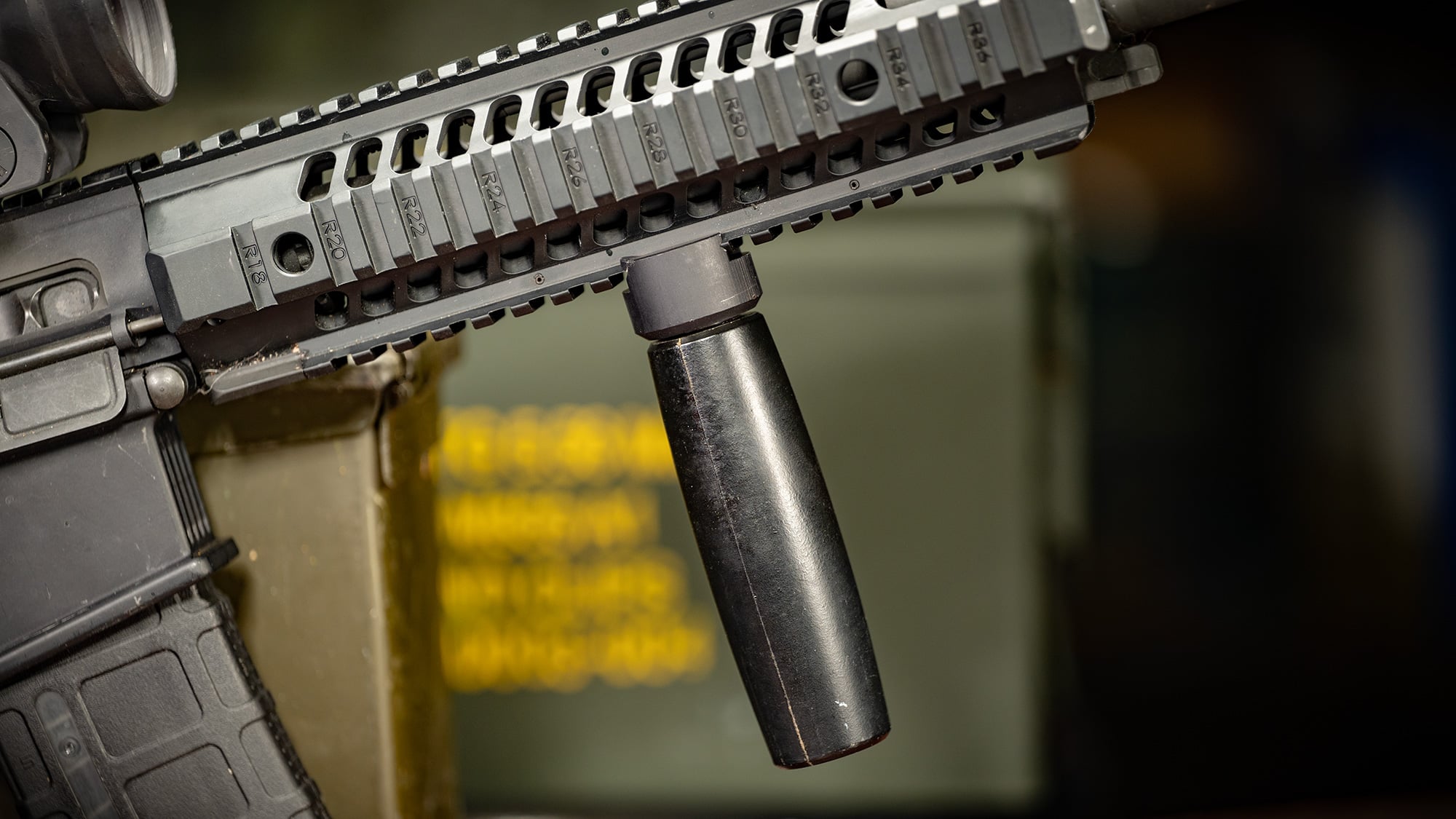
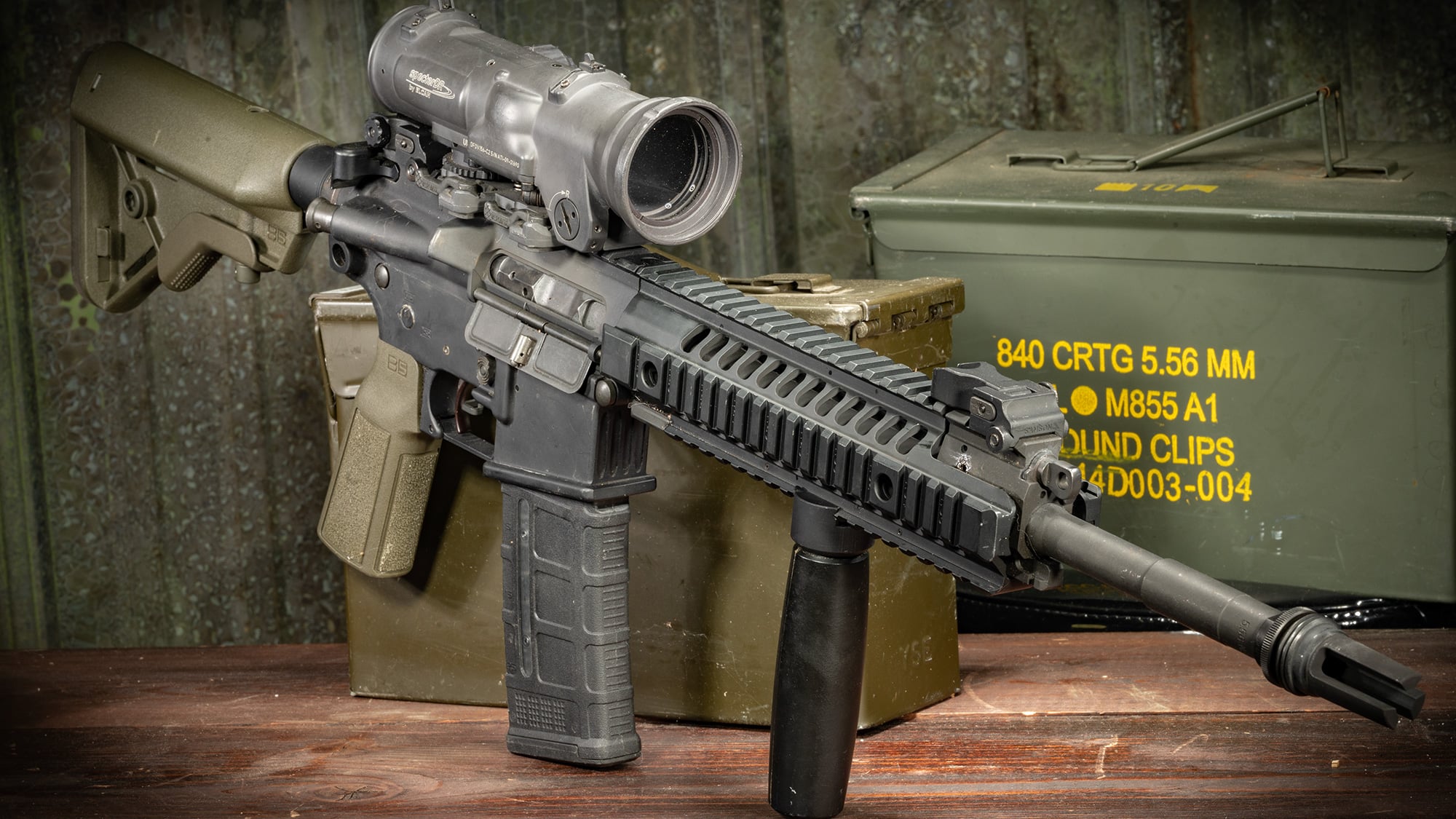
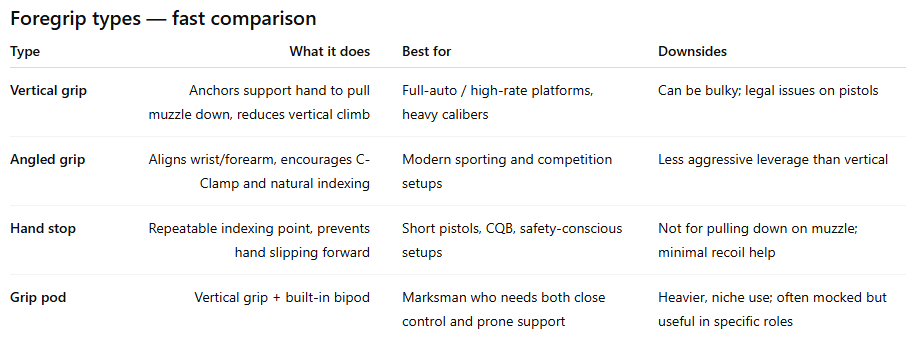
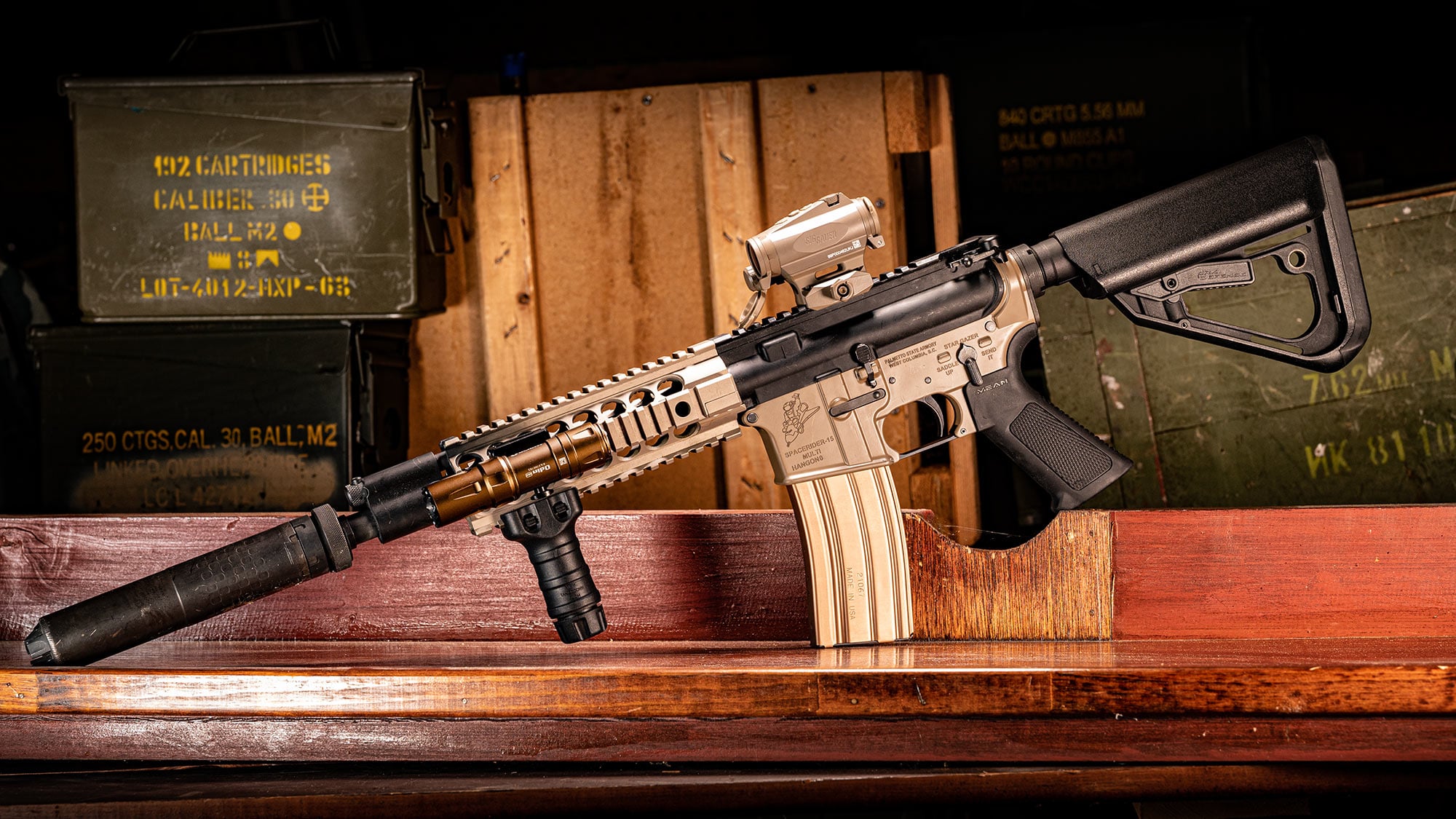
A vertical grip reduces vertical muzzle climb from recoil by giving the shooter’s support hand an anchor to instinctively pull down on the barrel. Vertical grips have been around for a very long time - either in a factory configuration, an impromptu add-on, or even repurposing of a different component of a firearm.
For instance, the American Thompson submachine gun in its early commercial variation featured not only an aggressive Cutts Compensator but also an integral vertical foregrip. This grip takes up the entire handguard space, so clearly, the engineers realized it was a superior choice to a standard handguard. Why didn’t the military use this vertical grip when they adopted the Thompson as the M1A1?
There were two big reasons.
- The first was cost. Milling a simple rectangular handguard for the military M1A1 required less time and material, which were in short supply during the Second World War.
- At least as I’ve been told by the biographer of Carbine Williams (inventor of the M1 Carbine), who asked the decision-makers themselves, was durability. Apparently, the protruding grip on the 1929 commercial Thompson SMG was prone to cracking when dropped on hard surfaces. And when you imagine the way soldiers in combat treat their gear when running between cover, diving into foxholes, and going room-to-room fighting, these guns will inevitably see hard use.
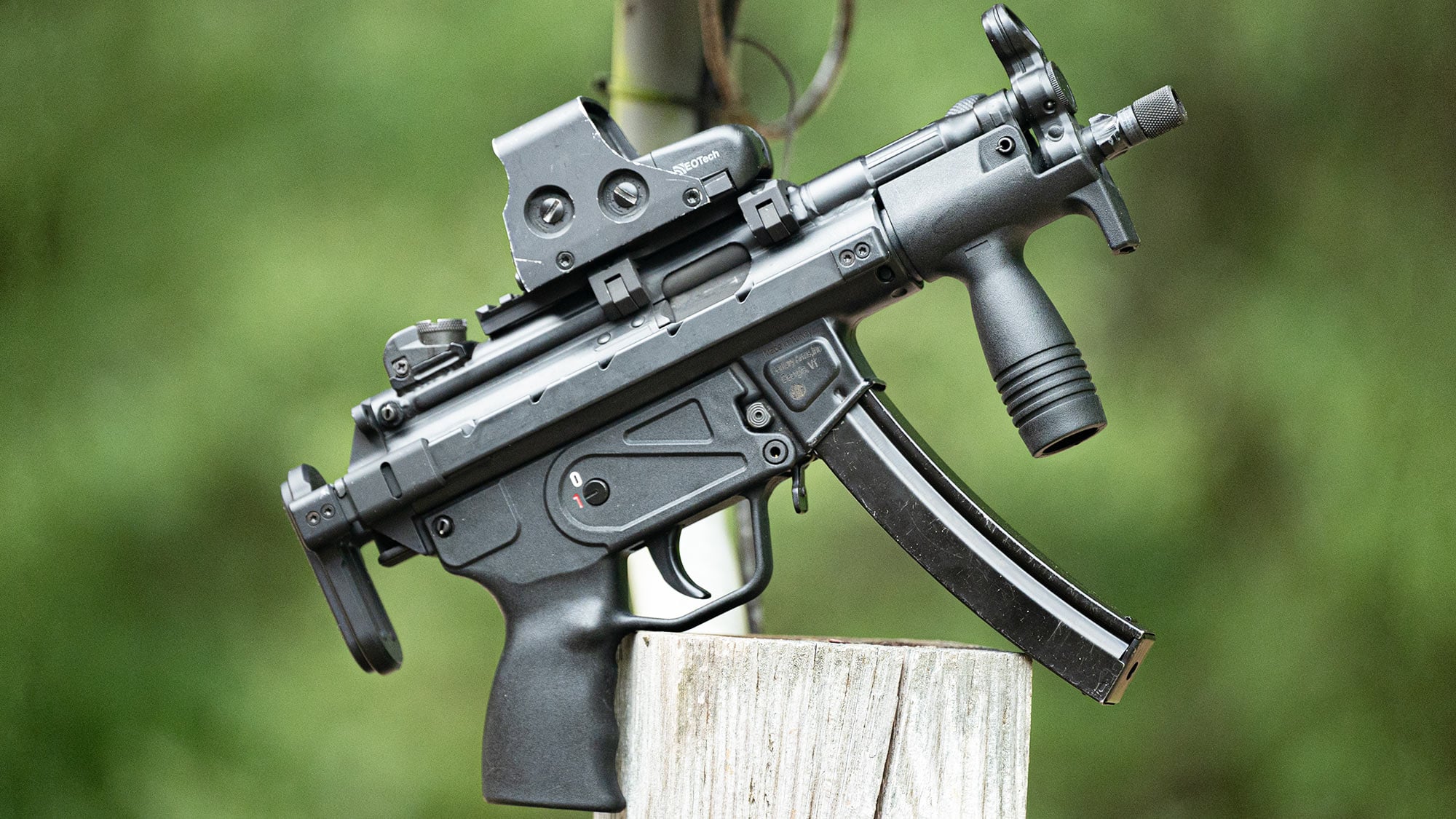
Another prime example of a firearm with an iconic vertical grip is the Heckler and Koch MP5K. Originally issued without a buttstock, the inclusion of a vertical grip was a very logical one. It didn’t just help reduce the muzzle climb caused by the MP5K’s high rate of fire, but it also gave an additional point of controllability on a gun that was never meant to be shouldered.
A more Eastern example is the infamous “dong” grip found on Romanian AKs. These guns are notorious for excessive muzzle climb in full auto. The addition of the wood vertical grip makes these guns vastly more controllable when firing in bursts. Plus, it keeps the shooter’s support hand extra far away from the blazing hot barrel and gas tube as they blast away.
So why would you want a vertical foregrip on your personal firearm? To be honest, if you’re using an AR-15 chambered in 5.56mm, you don’t really need one. The kinematics of that gun are such that the recoil impulse is directed back toward the shooter and not skyward. Plus, the caliber is very mild in terms of recoil.
That said, if your AR-15 is actually an M4 carbine and thus is select-fire, that’s a totally different story. Fully-automatic M4s do have a little bit of muzzle climb past the third of fourth rounds of a burst. When firing these guns in full-auto, the addition of a vertical grip really helps pull that muzzle down and get your rounds back down on the target.
What is an Angled Grip?
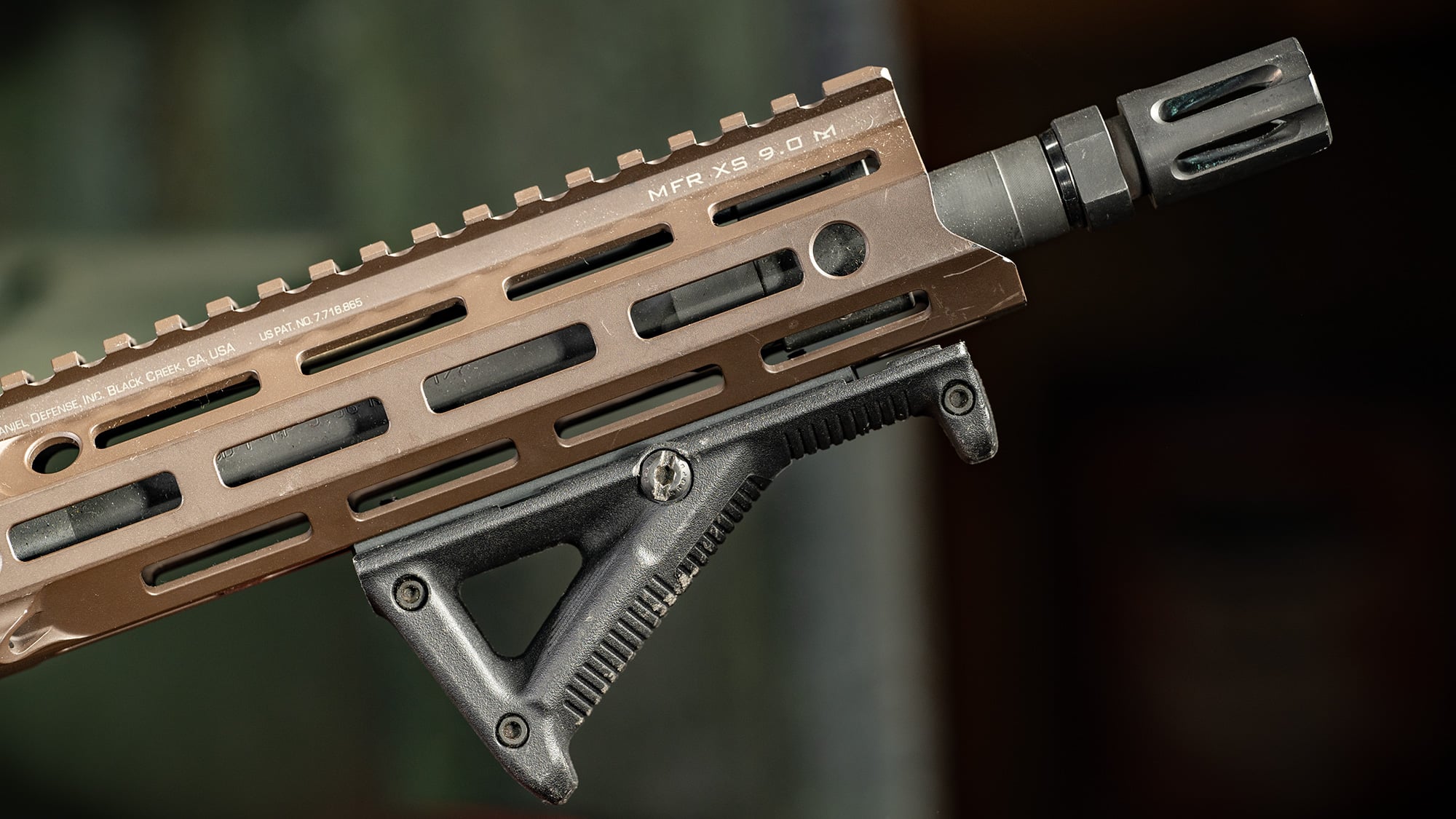
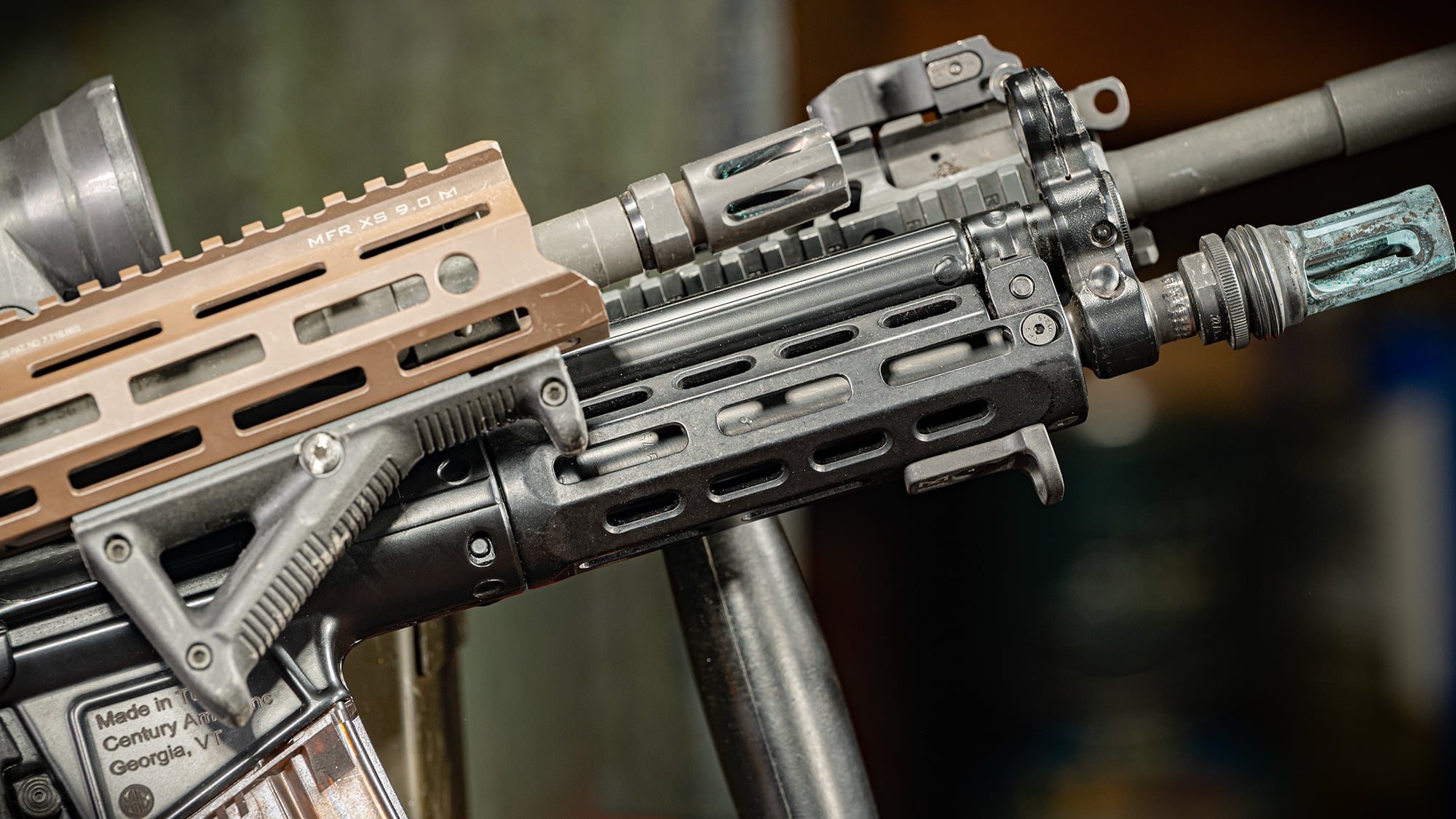
An angled grip gives better control over horizontal recoil by aligning a shooter’s support arm with the barrel. Introduced in 2010 by Magpul, the angled grip allows shooters to perform a more aggressive version of the “C-Clamp” technique, also known as thumb-over-bore. This technique involves a shooter’s support hand wrapping entirely around the handguard, with their thumb wrapping around the top and over the bore.
It’s a technique that utilizes bone for recoil control over muscle, and as such, it gives better control over the gun than simply holding that support hand at length. It does this by reducing the angle your wrist has to make when clamping on the handguard, which in turn lines up your skeletal system with the recoil impulse.
The other benefit of an angled grip is that it provides a consistent indexing point for your support hand. This consistent grip makes the host gun's recoil impulse feel the same every time, which in turn leads to more accurate shots.
What is a Hand Stop?
Hand stops serve two major functions.
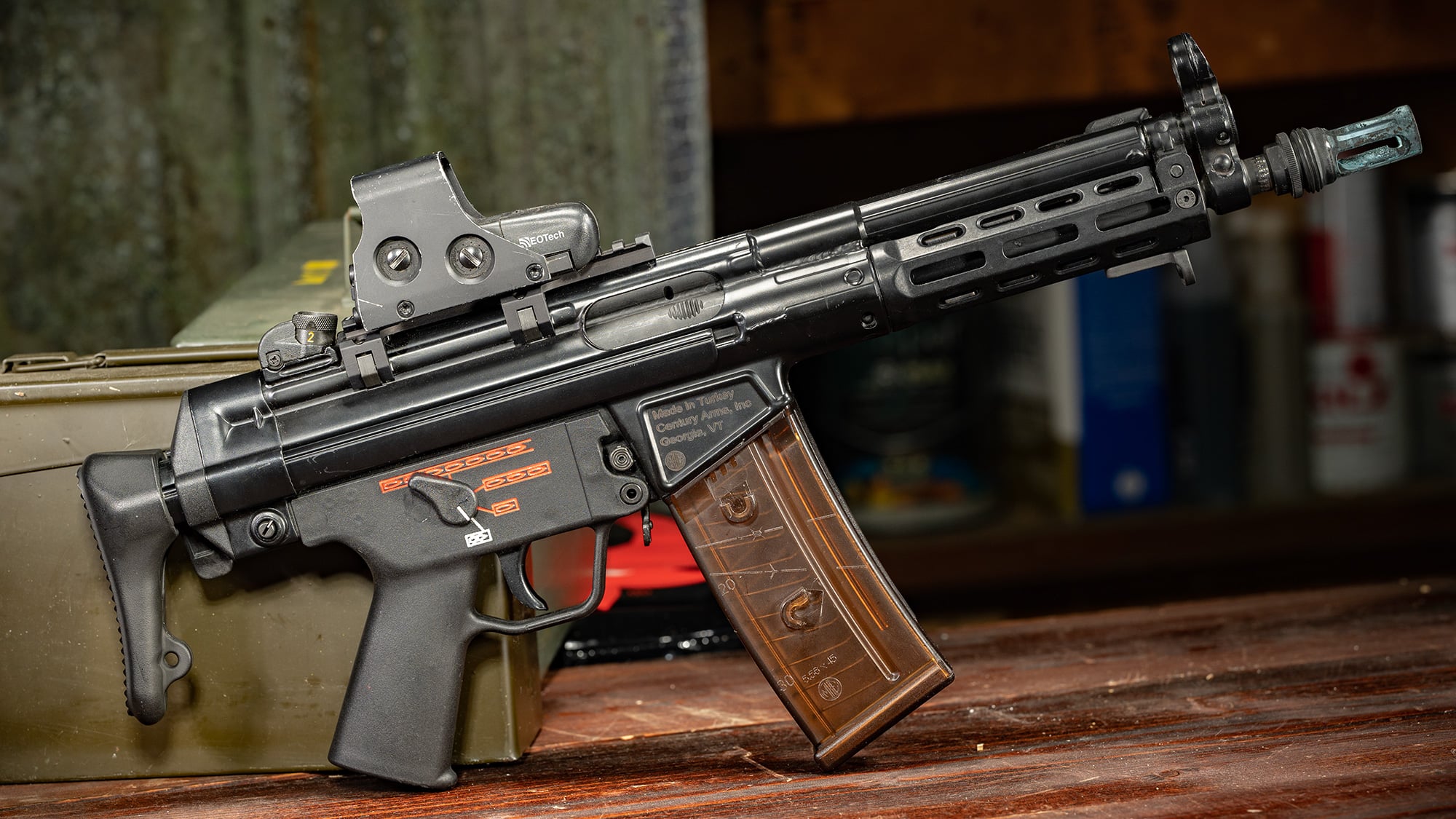
- They give better accuracy when quickly acquiring targets as they provide a repeatable indexing point, allowing the shooter not to break their shooting stance when transitioning between targets. Secondly, they stop the shooter’s support hand from reaching past a certain point.
- The second aspect there might seem questionable in turns of usefulness, but think about really short guns. Guns like an 8.5-inch AR-15 pistol or an MP5K pistol. In both of these instances, in the heat of moment, it’s very possible for a shooter to accidentally reach past the handguard and possibly place their support hand in a very dangerous location. In the best-case scenario, they get a mild burn. In the worst case, you shoot part of your hand off. Personally, I like using hand stops as a centric indexing point for my support hand. By this, I mean I place the raised hand stop between my middle and ring finger to give me a little extra purchase to pull back on the gun while simultaneously adding an easily repeatable grasping point.
What Are Grip Pods?
These are an oddity in the gun world. Something that quickly came into vogue and just as quickly left it. They were once seen as the most bad-ass tactical accessory when stapped to M4s in Iraq/Afghanistan, and just as quickly became nearly universally mocked as “mall-ninja” gear. But that’s not totally fair. Grip pods serve a very real, specific purpose, just one that most shooters won’t need. Regardless, let’s get into what they are and what they do.
A grip pod is a vertical grip that incorporates a bipod into the grip itself. The original models were simply bipods that were spring-loaded and clipped together. When clipped together, the two halves of the bipod formed a vertical grip, making them a great accessory for soldiers in the Middle East who needed the added recoil control of a vertical grip for close quarters and the stability of a bipod for engaging more distant targets.
Some variations of this are hollow vertical grips that can deploy a spring-loaded bipod from the bottom and others that also fold horizontally out of the way. It’s a very interesting concept and one that definitely has some value to it. That said, most shooters aren’t quickly diving into the prone position, desperately firing their weapon to suppress enemies like a make-shift squad automatic weapon.
Practical guidance — which grip should you pick?
Decision flow (quick):
-
Is it an AR pistol? → No vertical grips. Use angled grips or hand stops.
-
Do you need fast target transitions & a low profile? → Angled grip.
-
Do you shoot full-auto/burst or heavy calibers? → Vertical grip likely helps.
-
Do you need a repeatable index and safety from hot surfaces? → Hand stop.
-
Want to test without committing? → Buy inexpensive samples (most under $20) and try them.
Author’s pick: A half-sized vertical—it can act as a vertical or a stubby angled grip, offers a useful stand-off on barricades, and suits many shooters who want flexibility.
Quick tips for fitting & use
- Mount location matters: Mounting position changes leverage and feel. Move the grip a few slots fore/aft to fine-tune.
- Try before you commit: Cheap grips let you test ergonomics before buying premium hardware.
- Index consistently: Use the same hand placement for repeatable control and faster follow-ups.
- Consider accessories: If you run a light or pressure switch, plan cable routing and hand placement together.
Pros & Cons — short list
Vertical Grip
- Pros: Strong muzzle control, solid anchor
- Cons: Bulk, may be banned on pistols
Angled Grip
- Pros: Ergonomic, low profile, great for C-Clamp
- Cons: Less raw leverage than vertical
Hand Stop
- Pros: Safety, consistent index, lightweight
- Cons: Not helpful for heavy muzzle climb
Grip Pod
- Pros: Dual-purpose (grip + bipod)
- Cons: Extra weight, niche use
Final thoughts
Foregrips aren’t a one-size-fits-all upgrade. Match the grip to your platform and mission: safety and legality first, then ergonomics and role. If you’re unsure, try cheap options—most grips cost less than a dinner out and will quickly show you what works.
Shoot Responsibly.

