

The arguments surrounding steel-cased ammunition and brass-cased ammo have centered on the age-old debate of quantity versus quality. Steel-cased rounds were often lower quality but much cheaper than brass. But with the sanctions on Russian imports stemming from the conflict in Ukraine, this dynamic has shifted tremendously.
So let’s take a closer look at both and compare the advantages and disadvantages of both to help you make the best purchasing decision between them.
What is Steel Casing Ammo?
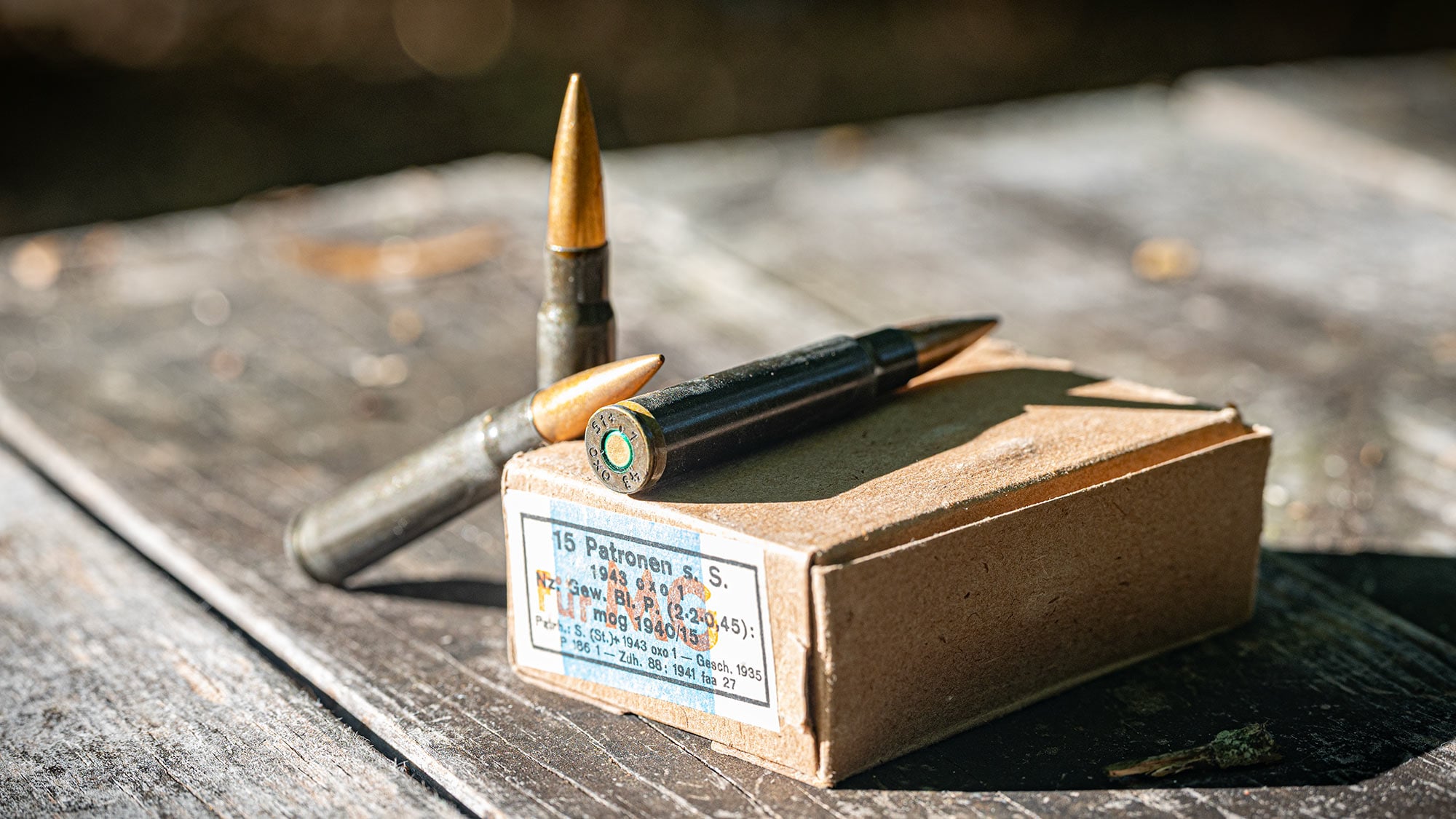
Steel-cased ammo is metallic cartridge ammunition that uses steel shell casings instead of the more popular brass casings. While often associated with Russian ammunition, multiple countries have used steel-cased ammunition in the past for logistical and economic reasons.
For instance, all World War 2 German military ammunition used steel casings. This was done primarily because of the relative scarcity of brass in Germany during both World Wars. More accurately, the copper used in the production of brass was being consumed in vastly larger quantities in the production of heavy ordnance like aircraft bombs and artillery shells.
Statistically, both types of ordnance inflict vastly more significant casualties on the enemy than small arms. In fact, this has been proven to still be the case in the Ukrainian conflict with Russia, where heavy artillery can make or break offensives in short order. As such, militaries engaged in full-scale warfare always try to shift manpower and materials to their production.
But that doesn’t answer the question, “What is steel casing ammo?” Metallic cartridge ammunition consists of four main components:
- Primer
- Casing - Reloading Brass or Steel
- Powder
- Bullet/projectile
The primer is an impact-sensitive explosive encased in a small metallic cup with holes. When the primer is struck, the explosive detonates and sends hot gas through the small holes in the primer into the shell casing.
This hot gas then detonates the gunpowder inside the casing, which simultaneously causes the casing to expand and form an airtight seal against the chamber and propel the bullet down that barrel.
Now that we understand the rounds, it begs another question - Why does the casing’s material matter?
The material used in the casing’s construction matters because it affects how the seal against the chamber is formed and how efficient it is. Brass is preferred because it is malleable, thus expands readily, and is self-lubricating against the steel chamber.
Steel rounds are less malleable, so they don’t form as well as seals and are more difficult to extract once they're spent. The less efficient gas seal has a negligible effect on the round’s velocity and ballistic performance, but the more difficult extraction is a different story.
Since the round is more difficult to extract, and the material used in the casing is more rigid than brass, it could produce accelerated wear on the weapon’s extractor. Not substantially more, but enough that in very high round count weapons like machine guns, it can lead to issues. That said, it’s important to note that the steel used in steel-cased ammo is mild steel and thus reasonably malleable. It’s much softer than the steel used in the gun’s construction so it won’t cause significant wear and tear on the gun from average amounts of use.
These issues are compounded when the gun is especially hot since steel has a higher specific heat than brass. This means that steel holds on to heat longer and thus expands more, potentially getting stuck in a host weapon not designed for it.
The Germans addressed this issue with the MP5 and G3 battle rifles by adding fluting to the chambers. These little indents on the side of the chamber prevent a total seal on the chamber behind where the gas is captured, making extraction easier. However, guns not designed for steel ammo can have decreased reliability during extended firing sessions.
Is Steel Cased Ammo Bad?
Objectively, steel-cased ammo isn’t “bad,” but it’s definitely inferior performance-wise to brass-cased munitions. As we mentioned earlier, steel-cased ammo can allegedly cause some undue wear on extractors and potentially chambers (though hardly noteworthy unless we’re talking about tens of thousands of rounds), but for reloaders and preppers there are objective downsides to steel ammo.
For starters, steel-cased ammo can rust in humid climates. This means that it isn’t great for long-term storage unless a shooter has the ammo in a hermetically sealed container or lives in a very low-humidity area like Arizona.
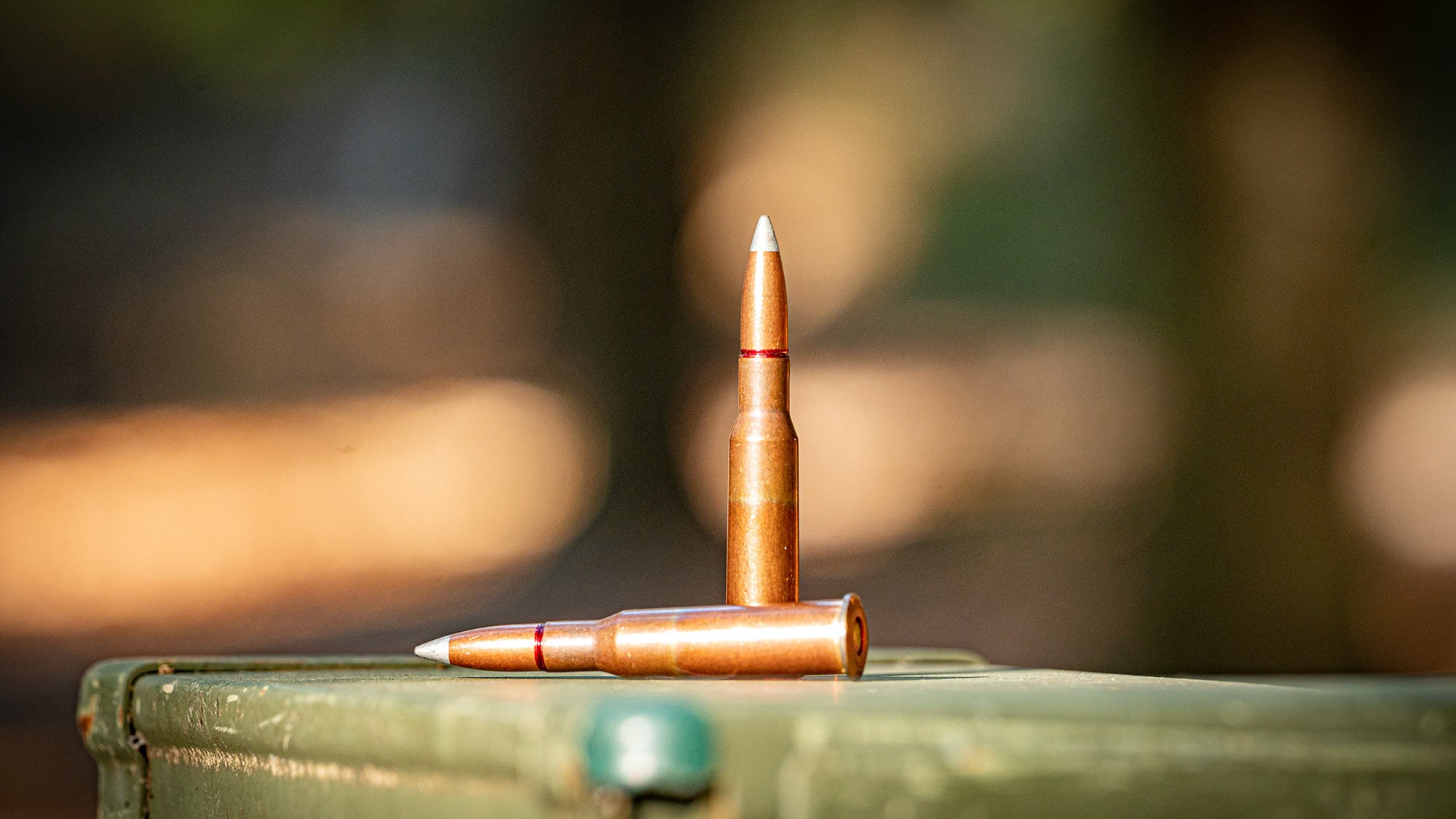
This isn’t to say that steel-cased rounds will readily rust if left in humid areas for a short time; most steel-cased ammo manufacturers apply a coating to the steel to prevent corrosion. For Russian ammo makers, this is either a powder-coast or a lacquer. The latter can build up inside a host firearm after a few hundred rounds and require extra cleaning.
The other downside of steel ammo is that it can not be reloaded—at least not easily. Once a steel-cased round has been fired, the casing is very hard to reform properly due to the material properties of steel. Also, since nearly all steel-cased ammo is Berdan-primed, reloaders will have to use a special tool to remove the primer, and doing so properly is very time-consuming.
One often-overlooked advantage of steel-cased ammo is that it’s slightly lighter than brass. While you’ll never notice the difference in a magazine, if you’ve got a bugout bag with 1,000 rounds of 9mm or 5.56mm, it can mean a few pounds cut off. This is because steel is less dense than brass, and steel casings have thinner walls.
Why is Steel-Cased Ammo Less Reliable/Accurate?
Here’s a gun myth that has its roots in reality. Steel-cased ammo, if loaded identically to brass-cased ammo, will perform precisely the same. So, where does this myth originate? Russia.
Russian-imported ammo is notoriously underpowered. It’s always within SAAMI specs, but it’s usually at the bottom of the acceptable power range. For modern AR-15 carbines, pistols, and rifles, this doesn’t matter at all.
Why?
Because manufacturers in the United States, like Palmetto State Armory, have taken the existence of this ammo into account and slightly over-gassed their guns, this was not the case for early 1980s and 90s Colt AR-15s. These guns were explicitly designed to function best with American-specified ammo to produce as much accuracy and as little recoil as possible.
Underpowered ammo and rapidly expanding steel cases covered in a lacquer that adheres to the chamber were the perfect recipe for countless malfunctions. This was doubly the case if you were running a match-grade rifle with very tight tolerances. Personally, my Bushmaster AR-15 I bought in 2000 would jam so tightly with any brand of Russian 5.56mm ammo that I would have to mortar the charging handle on a shooting bench to get the action open.
On the other hand, my Romanian WASR-10 AK carbine gobbled up steel ammo like it was starving and never had any issues. This lead me to believe all the old myths of the AR being unreliable and steel-cased ammo being junk.
But this all makes perfect sense: The AK was designed for Russian ammo with lacquered cases, while the American rifles were designed around the more lubricious brass-cased ammo loaded to hotter specs.
Steel-Cased vs Brass-Cased - Which Should You Buy?
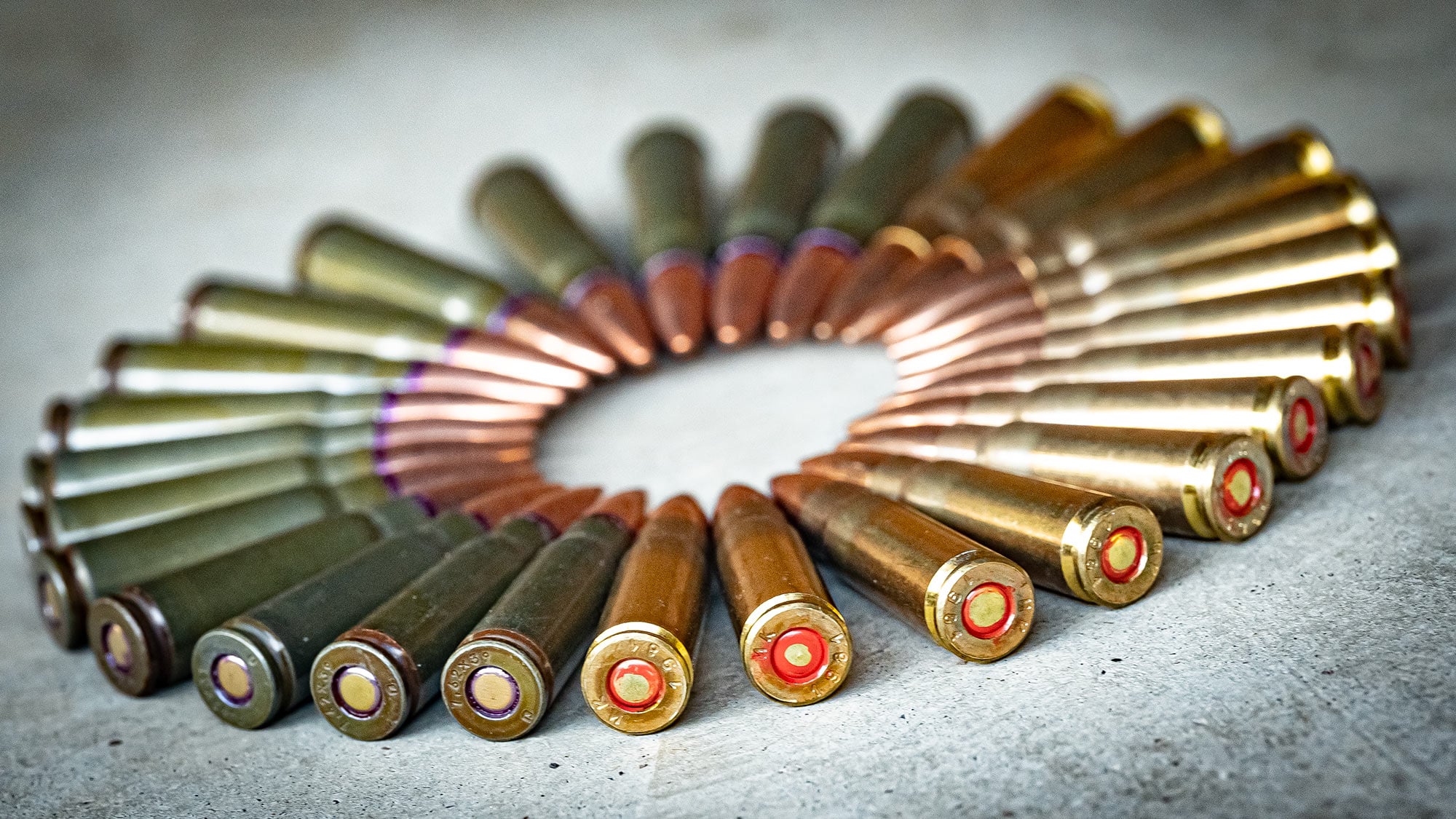
As a general guiding principle, I always relegate steel ammunition to non-critical roles. By this, I mean shooting paper or steel targets on a static range or doing recreational shooting. While steel-cased ammo isn’t inherently worse than brass-cased rounds, most steel-cased ammo is foreign-made and not made to the same standards as American-made ammo.
That said, there are some exceptions to this rule. Hornady’s 5.45x39mm V-MAX rounds designed for the AK-74 platform are fantastic rounds loaded by Hornady that just happen to use imported steel casings.
The best ammunition for serious use is either brass-cased or nickel-plated. Both types of casings have more natural lubrication and will feed more reliably in a given firearm (provided that it is already in working order).
Yes, brass-cased ammo is more expensive, but if you’re hunting or competing in a shooting competition, the extra cost is 100% worth ensuring a bang instead of a click. This is especially the case with home-defense or self-defense firearms, where reliability is paramount.
Overall, if you can afford brass-cased ammunition, I would always pick it over steel-cased ammo unless you’re using a gun specifically designed for steel casings, like AK or SKS carbines. While it might cost you more to stockpile, fully functional ammunition is vastly more valuable than inconsistent rounds.
But keep in mind this is just a general rule: Do a little research before buying ammo in vast quantities.
While every gun is unique and some like different ammo better than others, searching for your firearm and what ammo other shooters have had great success with is always a good idea. If nothing else, buy a small quantity of various types of ammo first, test them out in your personal firearm, and use whichever ones are the most reliable and accurate.