

The AK-47, or Avtomat Kalashnikova model 1947, is the most prolific rifle on the planet. From guerilla fighters in far-off corners of the globe to The War on Terror and Ukraine, you're never far from the universal carbine. Semi-automatic versions are extremely popular in the United States, and they're available in countless calibers and configurations. So which Avtomat is best for you? Let's take a closer look at the top five AK calibers and find out.
What Calibers Does an AK-47 Come in?
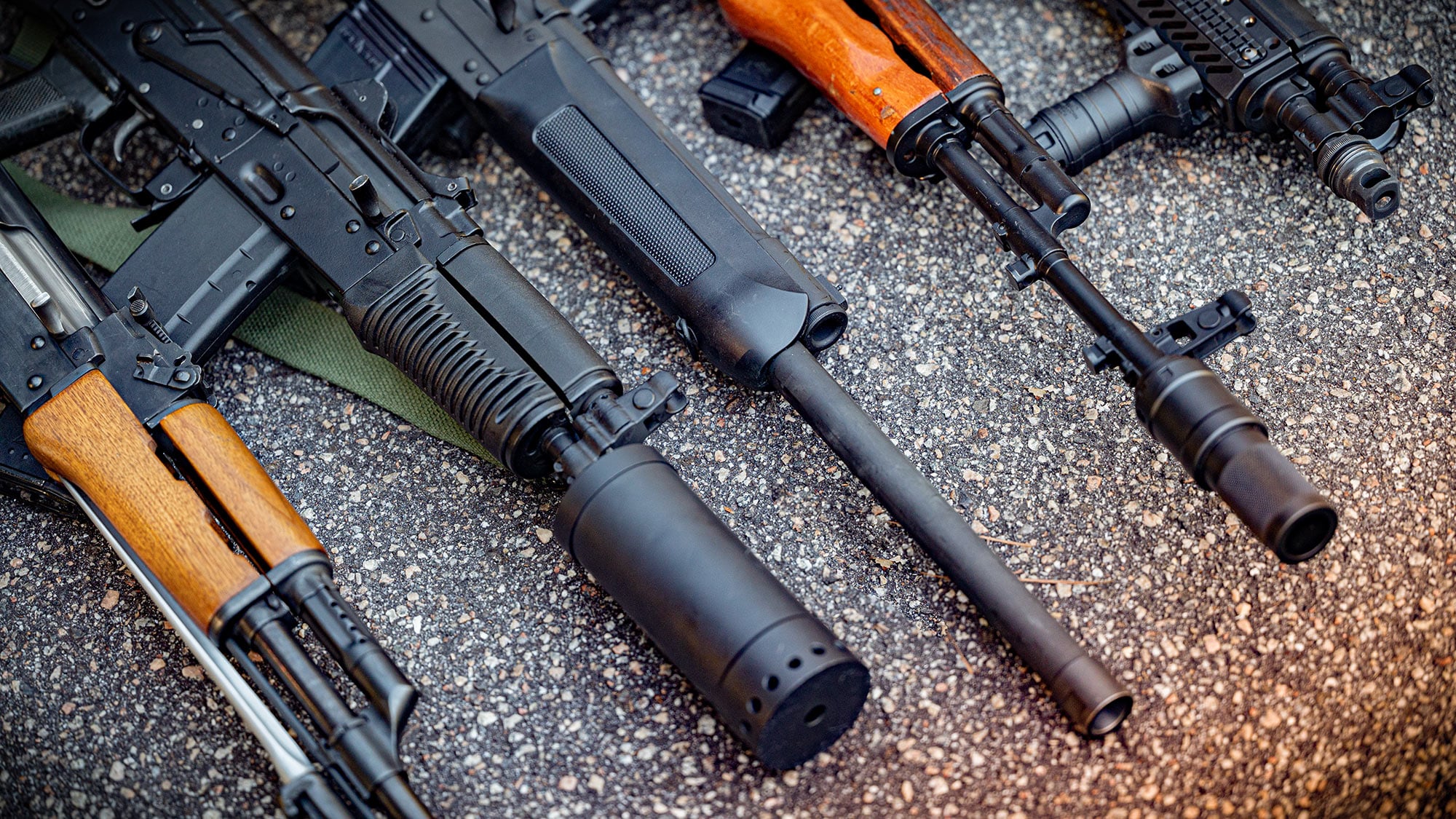
"What calibers does an AK come in?" is a tricky question. We have to establish what an AK is before discussing variants of the gun. From a purist perspective, any gun that is a direct derivative of the avtomat is an AK. This means the AK-74, the 100-series AKs, and possibly the RPK light machine guns (LMG) built by Molot. All of these guns function by means of a long-stroke piston and feed from detachable stagger-column magazines.
But if we expand that definition to AK-adjacent firearms like the Saiga shotgun and the 9mm Vityaz, several additional calibers can be added to our list. For the sake of the article, I’m going to limit the list to any AK-style firearm. Meaning it has the same or similar controls as an AK and looks like an AK. I’m excluding the CMMG Mutant, the PSA KS-47, and the IWI Galil ACE. Yes, these guns serve a similar function, but for the sake of simplicity, we’ll limit ourselves to more traditional-looking AK firearms. So with that, below is a comprehensive list of calibers in which the AK is available.
- 12 gauge
- 20 gauge
- .22lr
- .30-06 (7.62×63mm)
- 410 bore
- 5.45x39mm
- 5.56x45mm
- 6.5 Grendel
- 7.62x39mm
- 7.62x54r
- 7.62x51mm
- 9x18mm
- 9x19mm
- 9x39mm
As you can see, the AK comes in just as many calibers as an AR-15 and is incredibly versatile. From subsonic 9x39mm rounds used in the VSS and the Russian Groza to more common US calibers like 5.56mm, there's potentially an AK suitable for virtually any role a shooter needs to fill. But with so many different chamberings available, how does a shooter narrow down the right one for them? By focusing on the need or role a shooter needs to fill with their AK and narrowing it down further based on additional factors.
With that out of the way, let’s dive right into the top five AK calibers.
12 Gauge AK Shotguns
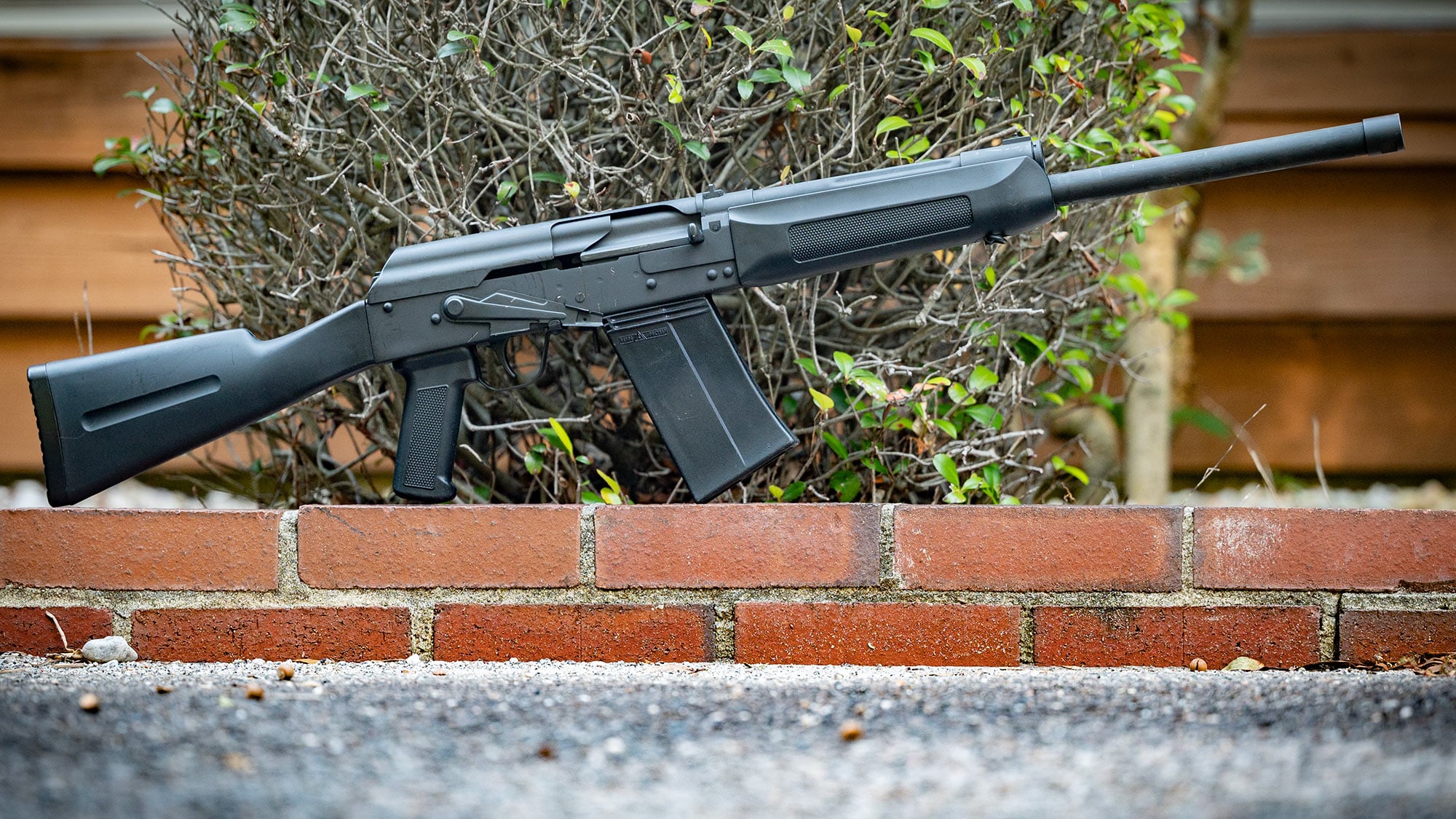
Twelve-gauge shotguns are among the most versatile firearms on the planet. Fill your magazine with birdshot, and the shooter can hunt birds or smash clay pigeons with ease, buckshot to turn your beloved 12 gauge into a serious home-defense weapon and hunting platform, or load up with slugs and harvest large game at short range. The only limiting factors to a shotgun's versatility are reliability, cost, and reloading speed.
Twelve gauge AKs tackle these factors using the ultra-reliable long-stroke piston system and capacious, fast-reloading detachable magazines. When properly tuned, an AK12 shotgun is a variable force of nature, able to dispense incredible amounts of lead on a given target. It sounds perfect, but there's always a catch.
The biggest issue with AK shotguns is that virtually all are designed to work with full-power combat loads. This means expensive high-brass buckshot and slugs. This isn't to say AK shotguns can't be made to function with cheaper birdshot, but it does mean that none of them will run with cheap ammo out of the box.
The other issue with AK shotguns is the same with all detachable magazine shotguns - reliability. Magazines are the lynchpin of any auto-loading firearm. Given the wide variety of ammunition loads available for 12 gauge, not every round will fit and function in these magazines. Furthermore, not all AK shotgun magazines are created equal. Cheaper, more capacious polymer mags, like those from SGM Tactical, aren't usually as reliable as the factory steel-reinforced polymer magazines. One good solution I've arrived at is heavy-duty steel magazines made by CSSpecs. These magazines use the same construction techniques employed by centerfire AK magazines and are much more robust but heavier. Surprisingly, they aren't more expensive than higher capacity (greater than five rounds) factory magazines. That said, they're still about three times as expensive as the AR-15 Magpul PMAG.
In summary, AK shotguns are excellent, but they could be better. Their ammunition and magazine sensitivity keep them from being the best caliber for an AK. But if you want the ultimate race-gun shotgun, buy a Saiga 12 or Vepr 12 and bring it to a specialized gunsmith to have it properly tuned. You'll be able to sling lead faster than John Wick.
9mm AK Pistol Caliber Carbines
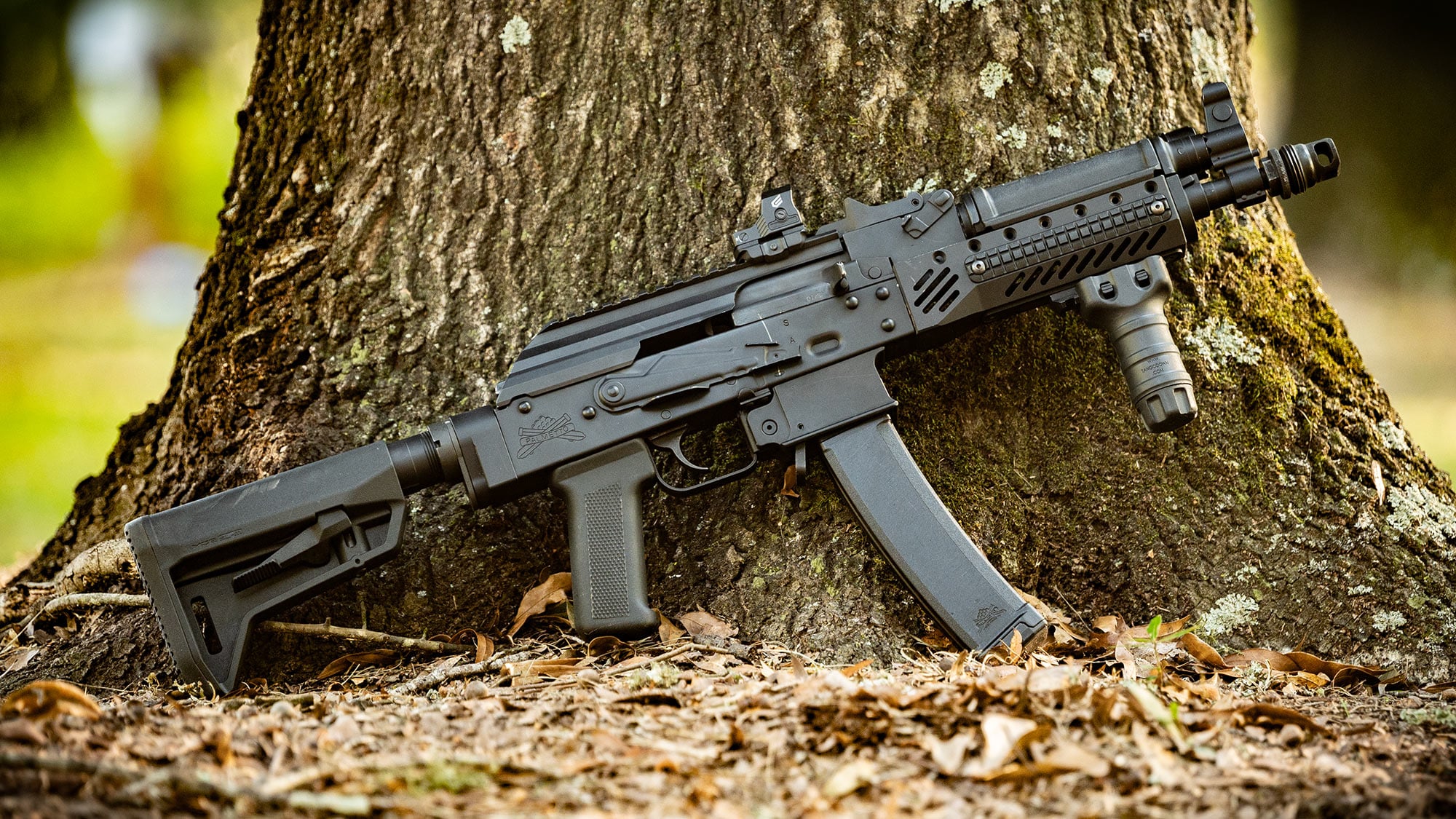
The concept of a 9mm AK is a genius one on paper. Combine the ultra-reliable avtomat Kalashnikov platform with the soft-shooting, affordable 9mm parabellum cartridge. In practice, these guns are tremendously enjoyable to use and make excellent home defense and competition guns.
Until a few years ago, the biggest drawback of these guns was the cost and availability of magazines. Before the introduction of the PSA AK-V, 9mm AKs consisted of Russian Vityaz clones, and Romanian AKs converted to take Glock magazines. While Glock magazines are ubiquitous and inexpensive, Vityaz magazines used to cost upwards of $50 each. Sure, the now-defunct KUSA made their KP9 with new production magazines that were reasonably inexpensive, but their production levels never really matched up with demand.
As far as the Glock magazine conversions, they were hit-or-miss with reliability and, if we’re being honest, looked extremely strange.
PSA changed all that with the introduction of the AK-V, which fed from universal CZ Scorpion-pattern magazines. These polymer magazines are available in several capacities but still lack the gold-standard steel reinforcement that military polymer AK magazines feature.
Once again, it’s Palmetto State Armory to the rescue. Not long after the introduction of the AK-V, PSA released its steel-reinforced polymer AK-V magazines, which have proven to be just as reliable as the CZ mags and even more durable.
So, what’s the drawback of 9mm AKs? Two issues inherent in the design of all 9mm AKs prevent them from being world-class weapon systems. The first is limited effective range. This one can’t be helped since 9mm parabellum was designed as a handgun cartridge from inception. As such, any gun chambered in this caliber will only have a fraction of the effective range of a dedicated rifle caliber firearm.
The other issue with these firearms usually comes as a surprise to shooters the first time they use one - felt recoil. Please make no mistake: a 9mm AK doesn’t have a ton of recoil, but it does have more than it could. This is because all 9mm AKs function VIA direct blowback. This means the action doesn’t lock when in battery and, as such, is only delayed by a heavy bolt and heavy recoil spring. The increased recoil shooters feel isn’t so much a product of the caliber as the heavy reciprocating bolt carrier group.
However, the use of this method of operation isn’t a design oversight. Direct blowback firearms are famously very reliable and inexpensive to build. They’re also less ammunition sensitive than piston or roller-delayed guns like the MP5. Because of these factors, I’m placing the 9mm AK below any rifle-caliber example.

5.45x39mm AK Rifles
When the Soviet Union saw the success of the American M16's 5.56mm lightweight cartridge, it immediately set to work designing its own take on the concept. Instead of designing an all-new weapon system, it modified the traditional stamped-steel 7.62x39mm AKM into the AK-74. This gun shared many of the same components as the original AK while utilizing the new lightweight, high-velocity 5.45x39mm cartridge.
For years, American gun enthusiasts jealously read about these guns in publications like Soldier of Fortune, hoping to one day get their hands on some. And in the early 2000s, thanks to Romania unloading millions of tons of arms and munitions, they got their chance.
The 5.45x39mm AK is basically a hybrid of the AK and AR-15 - at least in terms of performance. It combines the nearly unstoppable reliability of the AK’s long-stroke piston action with the soft-recoil and flat-shooting properties of the new 5.45x39mm round.
For years, my go-to recommendation for any shooter who asked me what caliber to buy an AK in was “5.45”. Most would scratch their heads and ask me why I wanted a smaller bullet for an AK.
My answer then was a combination of cost and practical accuracy. While most 5.45mm AKs aren’t much more accurate than 7.62x39mm guns, the guns' flat-shooting nature and light recoil meant that shooters didn’t have to significantly adjust their hold to hit a target out to 300 yards. The second element was cost. Prior to the ATF reclassifying 7N6 surplus 5.45 ammo, it could be had for as little as seven cents a round!
Because of the light recoil and affordable cost of ownership, the 5.45mm AK was a fantastic first gun for a shooter to learn good shooting habits. But that all changed when the importation of surplus 5.45mm stopped more than a decade ago. Now, the rounds are more expensive than 5.56mm and 7.62x39mm, which is what limits the 5.45x39mm AK from being a top pick.

7.62x39mm AK Rifles
7.62x39mm - The original AK caliber is renowned worldwide for its dependability and hard-hitting nature. Derived from the Russian 7.62x54r rifle round of the First World War, the new round was the first widely adopted intermediate cartridge.
For frame of reference, 7.62x39mm is ballistically similar to a lower-powered .30-30 Win or a supersonic .300blk round. Featuring a 123gr FMJ bullet traveling from a standard 16.1-inch AK barrel at around 2,200 fps. It's not slow by any measure but markedly slower than the AR-15's 55gr 5.56mm round, which has a muzzle velocity of 2,800 fps.
Still, the 7.62x39mm AKM is essentially a supersonic .300blk AR-15 with worse accuracy and inferior ergonomics. Speaking of ergonomics, the manual of arms for all of the AK firearms in this article will be vastly different from that of an AR-15. I strongly recommend dedicated practice with unloaded magazines to solidly master reloading and manipulating the guns under pressure.
The most significant advantage of 7.62x39mm AKs is the abundance of affordable components and massive aftermarket support. Surplus and new production magazines are plentiful and inexpensive. They might not be available at your local sporting goods store, but any decent-sized gun shop will carry some, and countless websites sell every accessory you could ever want online.
Hard-hitting, incredibly reliable, and affordable, the 7.62x39mm AK is, in many ways, the perfect AK. The only drawbacks of the design are accuracy and the cost of ammo. Prior to the war in Ukraine, Russian-imported 7.62x39mm was very affordable and roughly half the cost of 5.56mm. Now, that same ammo is nearly just as expensive as 5.56mm.
Regarding accuracy, the combination of lousy barrel harmonics inherent in the design of the AK and a round with a more dramatic ballistic arch means that hitting distant targets will be challenging for most shooters. That said, if your target is within 300 yards, the 7.62x39mm AK is a severe threat. It also makes one hell of a hunting rifle for medium game like whitetail deer. The only things holding this gun back from being the best AK caliber are accuracy and the cost of ammo.
5.56mm AK Carbines
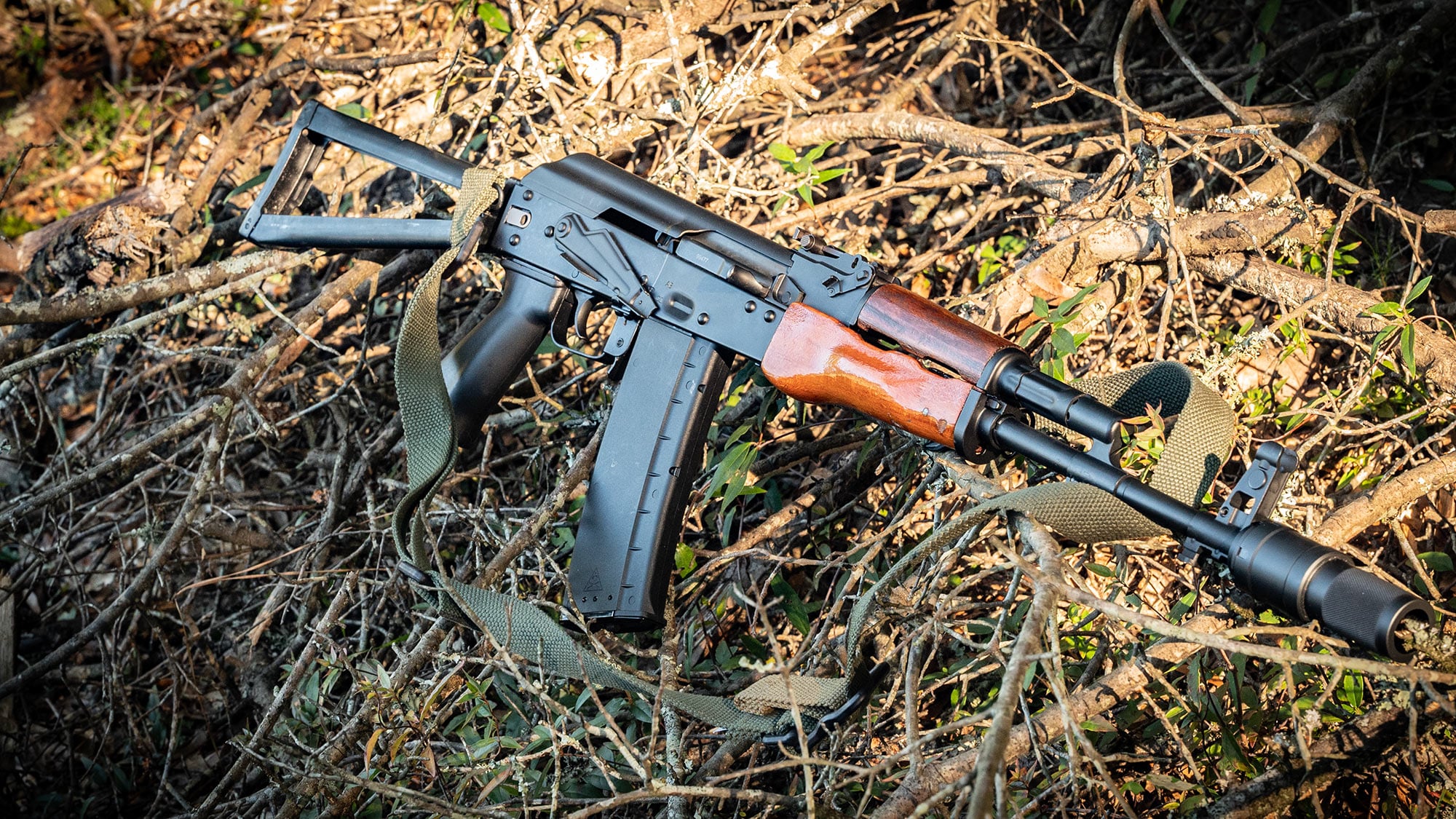
Historically, 5.56mm AK rifles have been snubbed by AK aficionados due to their unreliability, pricey ammo, and expensive proprietary magazines. But the gun world of 2024 is a very different animal than that of the early 2000s, when the only mil-spec 5.56mm AK was one from Arsenal, and its magazines were even more expensive than those from Heckler and Koch.
Now, two major companies produce affordable, reliable 5.56mm AK magazines, and multiple manufacturers build mil-spec AKs in that caliber. Companies like AC Unity and PSA make great 5.56mm polymer AK magazines with steel reinforcements.
A 5.56mm AK is a more affordable 5.45mm AK with a much larger variety of ammunition loads available. Regarding reliability, with good ammunition, 5.56mm AKs are every bit as reliable as the original 7.62x39mm guns. Combine this dependability with the low-recoil, high-velocity nature of 5.56mm, and you’ve got a recipe for an ultra-dependable carbine effective out to 500 yards.
Yes, the long-stroke piston will reduce accuracy compared to an AR-15, but 5.56mm AKs are still more than combat-accurate out to realistic ranges.
What is the Best AK Caliber?
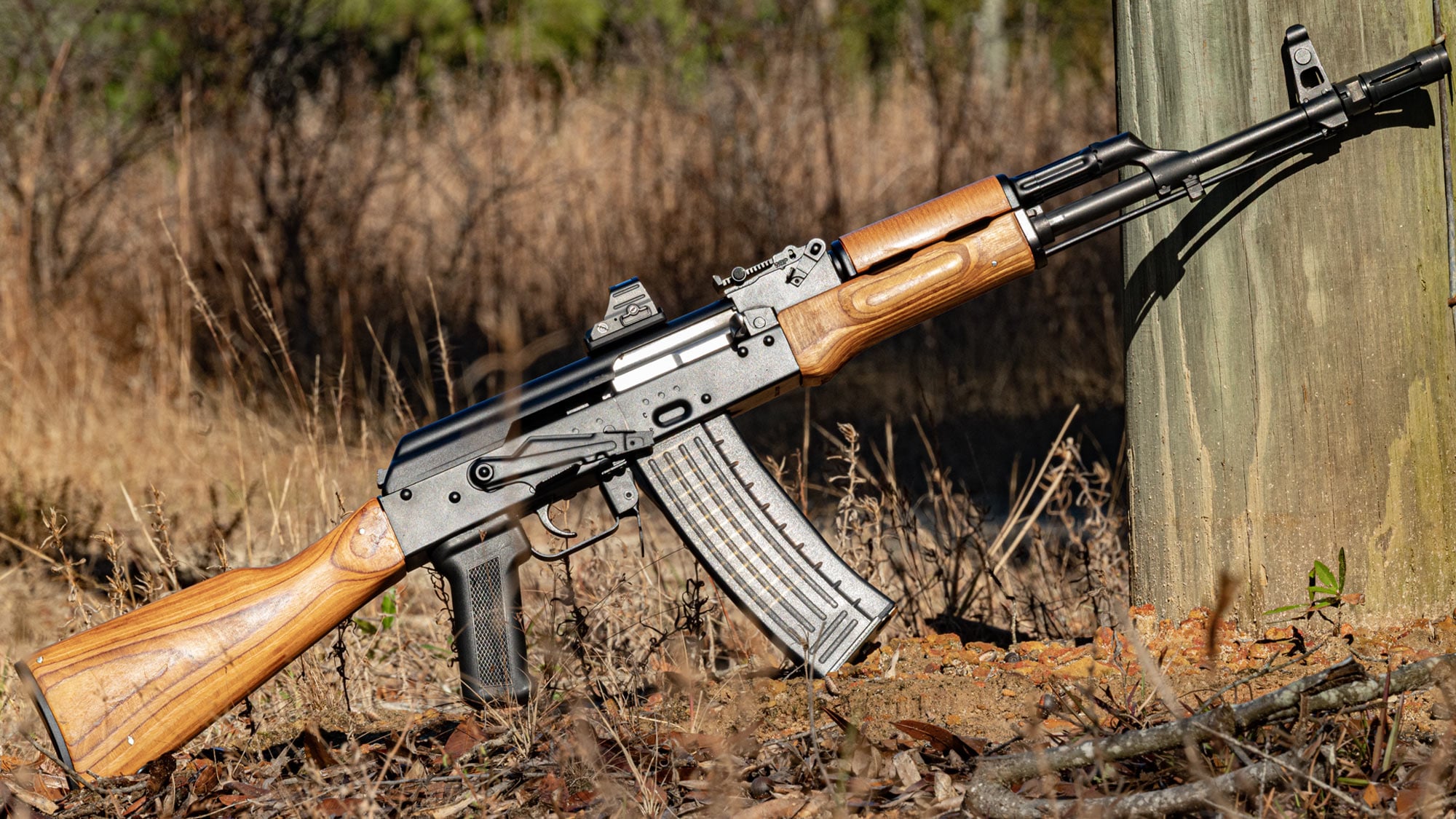
What is the best AK caliber? It depends on the shooter's needs, budget, and whether or not they have a solid stock of ammo. For shooters like myself who go into calibers like 5.45mm and 7.62x39mm before they became prohibitively expensive, the cost of ownership on these guns is still low. But 5.56mm and 9mm are vastly more affordable options for new shooters looking to get into AKs.
Regardless of which caliber a shooter chooses, they can rest easy knowing they're using one of the most reliable firearms ever made to fire them. Ultimately, understand the limitations of your chosen caliber and yourself. A 9mm is a better choice for hunting, and a 12-gauge AK will just waste ammo trying to hit targets at 200 yards.