

One of the key aspects of the AR-15’s design that enables it to be so lightweight and have such minimal felt recoil is the buffer system. But most shooters don’t truly understand how it works, or which buffers they should choose, or the direct impact each type has on the rifle.
From a physics standpoint, it can seem daunting to those of us who didn’t get straight A’s in school, but thankfully, the pragmatic aspects of AR-15 buffers are pretty simple and straightforward - but only if you have all the information. This is precisely why we put this guide together: to give you the information you need to make the best decision and understand exactly what the buffer system does.
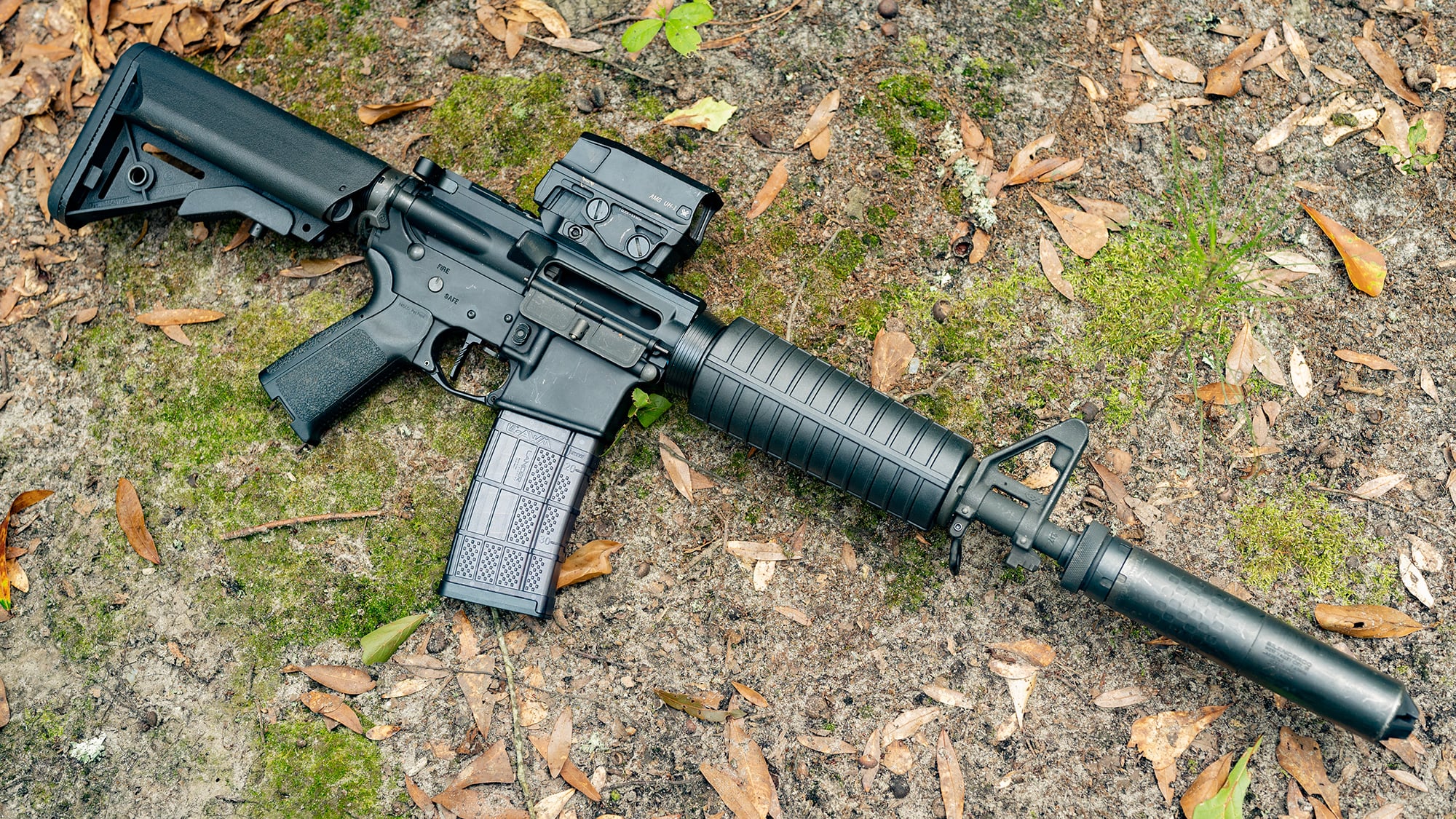
What Is an AR-15 Buffer System?
At the heart of the AR-15’s smooth recoil impulse is a deceptively simple mechanism: the buffer system. It consists of three core components — the buffer, the buffer spring, and the receiver extension (commonly called the buffer tube).
Together, these parts perform three critical functions:
-
Slow the bolt carrier group’s rearward movement
-
Drive it forward to chamber the next round
-
Serve as the mounting platform for the stock or brace
Unlike most semi-automatic firearms developed before it, the AR-15 does not house its recoil system entirely within the receiver. Earlier designs typically placed recoil springs either forward of the action or fully contained inside the receiver itself. The AR-15 instead relocates this system into the receiver extension behind the rifle.
That design shift matters.
By moving the recoil system rearward, the AR-15 shifts the center of gravity closer to the shooter. The result is a rifle that feels lighter, better balanced, and easier to control — one of the defining traits that helped cement its popularity.
The Trade-Off: Why Folding Stocks Can’t Fully Function
The buffer system’s biggest limitation is also what makes it work so well: it depends on the buffer tube to function. Because the recoil components live inside that tube, the rifle cannot cycle without it.
This is why AR-15s equipped with folding stock adapters, such as the Law folder, cannot function normally while folded. In some cases, the rifle may fire a single round while folded, but it cannot cycle. Without the buffer system in place, the bolt carrier group has no mechanism to travel rearward, extract the spent casing, and return forward to chamber the next round.
In short: no buffer tube, no cycling.
Why Barrel Length Changes Everything
If you’ve ever noticed that different AR-15 configurations use different buffers and springs, that’s no accident.
The original 20-inch rifle-length AR-15 uses:
-
A relatively mild buffer spring
-
A buffer that is approximately sixty percent longer than carbine versions
This combination — a longer, heavier buffer paired with a lighter recoil spring — produces an exceptionally soft-shooting rifle, even by AR-15 standards.
The tradeoff? Size.
A 20-inch barrel adds nearly four inches of overall length compared to carbine setups, making it less practical for home defense or vehicle transport. While rifle-length systems are widely regarded as some of the smoothest shooting AR-15 configurations available, their overall length limits versatility.
Now that the fundamentals of the buffer system are clear, the next step is understanding how changing buffer weight or spring strength can dramatically influence reliability, recoil, and overall performance.
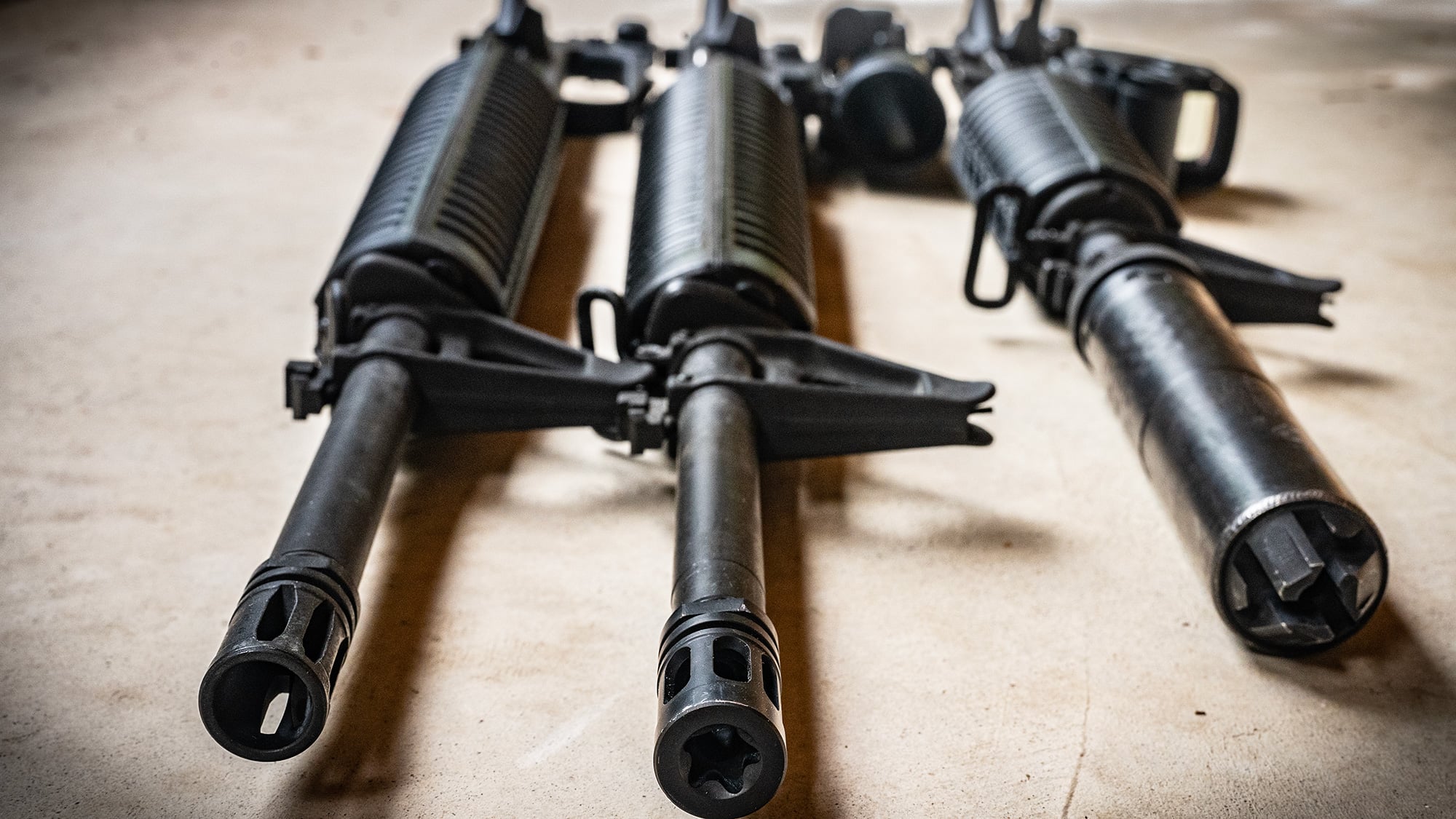
How the Buffer and Spring Affect Cycling
The buffer and buffer spring do more than just absorb recoil — they directly control how fast your rifle cycles.
If a rifle feels sluggish, or if recoil feels unusually sharp and violent, the issue often comes down to buffer weight or spring strength. Both components influence bolt speed, which determines how smoothly and reliably the action runs.
Changing One Part Isn’t Always the Answer
Many shooters swap in a heavier recoil spring instead of upgrading to a heavier buffer. In some cases, that decision comes down to cost — springs are typically cheaper than buffers.
However, simply replacing one component isn’t always the complete solution. The buffer and spring work together, and changes should be considered as part of the overall system.
Why Would You Need to Change Buffer Components?
This isn’t just something AR-15 custom builders deal with. Several real-world factors can make adjustments necessary.
For starters, not every AR-15 is built to run “perfectly tuned” from the factory. That may sound surprising, but it’s often intentional. Many manufacturers slightly overgas their rifles to ensure they function reliably with weaker ammunition.
Years ago, this was especially important due to the widespread availability of lower-powered imported ammunition.
A strong example is Tula .223 Remington. Compared to military-spec 5.56mm, it is noticeably underpowered. In rifles designed strictly around full-pressure mil-spec ammo, Tula often caused reliability and accuracy issues.
That isn’t theoretical.
An older pre-ban Bushmaster AR-15 with a match-grade chamber and barrel serves as a good illustration. Purchased in 2003 for $1,000 while on a tight college budget, ammunition costs mattered. Instead of buying a small amount of higher-quality Federal or Winchester ammunition, twenty boxes of Tula were purchased.
The savings quickly disappeared in the form of constant malfunction clearing — and during an NRA high power match, even a damaged rotator cuff.
The issue stemmed from two factors:
- Underpowered ammunition
- Steel casings, which lack the coefficient of friction advantages of brass
The result was frequent cycling problems. With proper brass-cased ammunition loaded to specification, the rifle immediately performed as expected — demonstrating the accuracy and mild recoil the AR-15 is known for.
The Bottom Line
A rifle’s cycling behavior isn’t determined by one component alone. Ammunition type, gas system setup, buffer weight, and spring strength all interact.
Understanding how the buffer system influences bolt speed is key to diagnosing whether a rifle feels sluggish, harsh, or unreliable.
Now, back to the buffer system itself.
Understanding Buffer Weights
There are four major buffer types available for the AR-15, and each has a specific setup it was designed for.
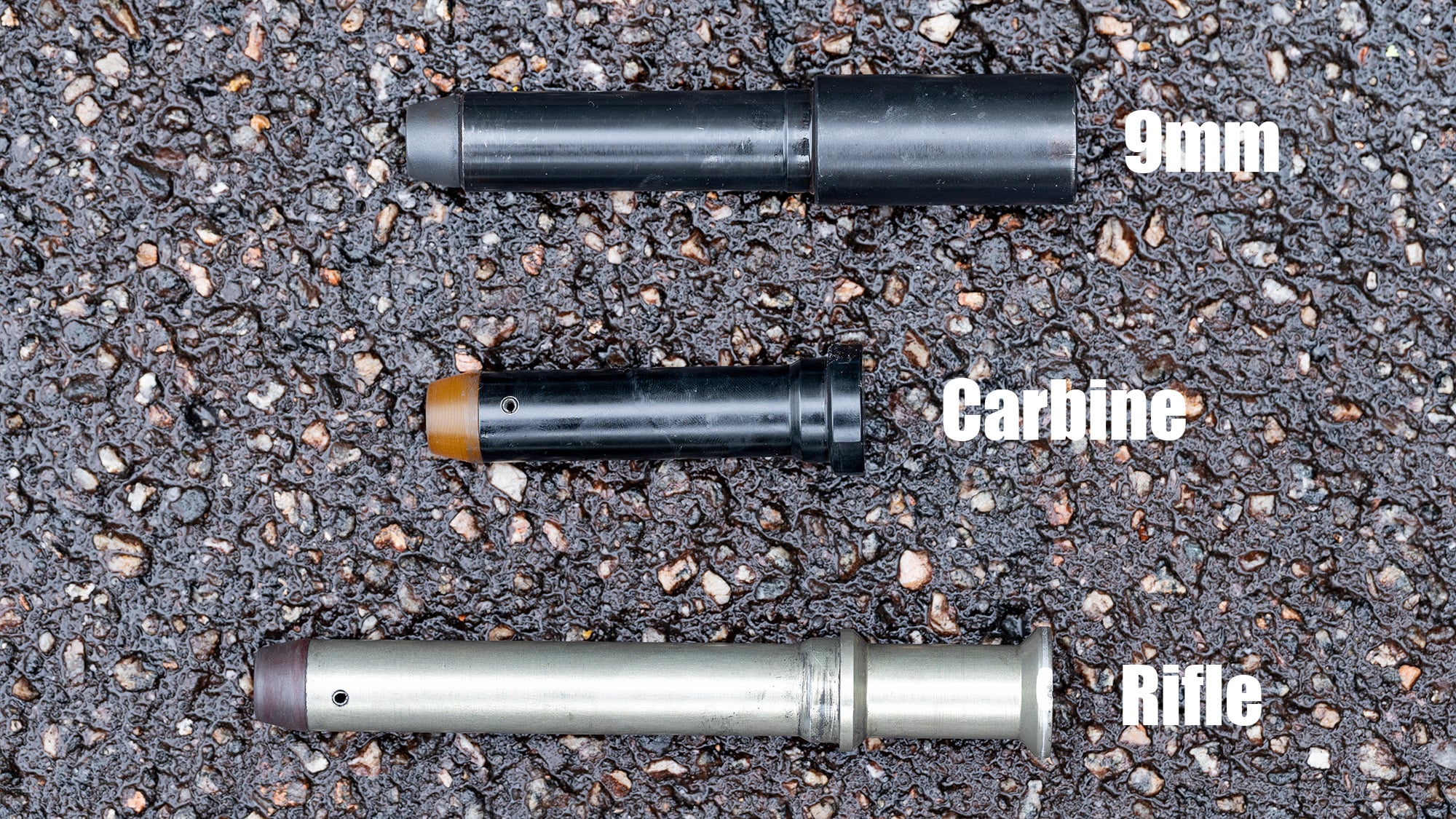
- Rifle Buffer: The oldest is the rifle buffer we mentioned earlier. It measures 5.9 inches and weighs 5.2 ounces. This buffer will only function in a fixed stock rifle with a rifle-length gas system. It is simply too long for use in a carbine.
- Carbine Buffer (H1): The default buffer for carbine-length gas systems is referred to as a carbine buffer or H1. This buffer measures only 3.25 inches and weighs in at three ounces even. Shooters should utilise this buffer with both carbine and mid-length gas systems on AR-15s with barrels ranging from 14.5 inches to 18 inches.
- H2: The H2 is a variant of the standard carbine buffer, and while dimensionally identical to the H1, it is more than 50% heavier at 4.6 ounces. Shooters should choose this buffer for carbines with a 14.5 to 16-inch barrel if the gun is suppressed, or a 10.5-inch barrel if unsuppressed.
- H3: The heaviest buffer available for the AR-15 is the H3. Again, externally it is identical or the standard carbine buffer, but kicks up the weight even more than the H2 to a whopping 5.4 ounces. This is ideal for more violent gas systems like those found on super short guns, like those with barrels under 10 inches, and for both the suppressed and unsuppressed 10.5-11.5 inch guns.
Keep in mind, these are simply the most common buffer types available. There are several speciality buffers, such as hydraulic ones or ultra-heavy buffers, for use with direct blowback AR-9 pistol-calibre carbines.
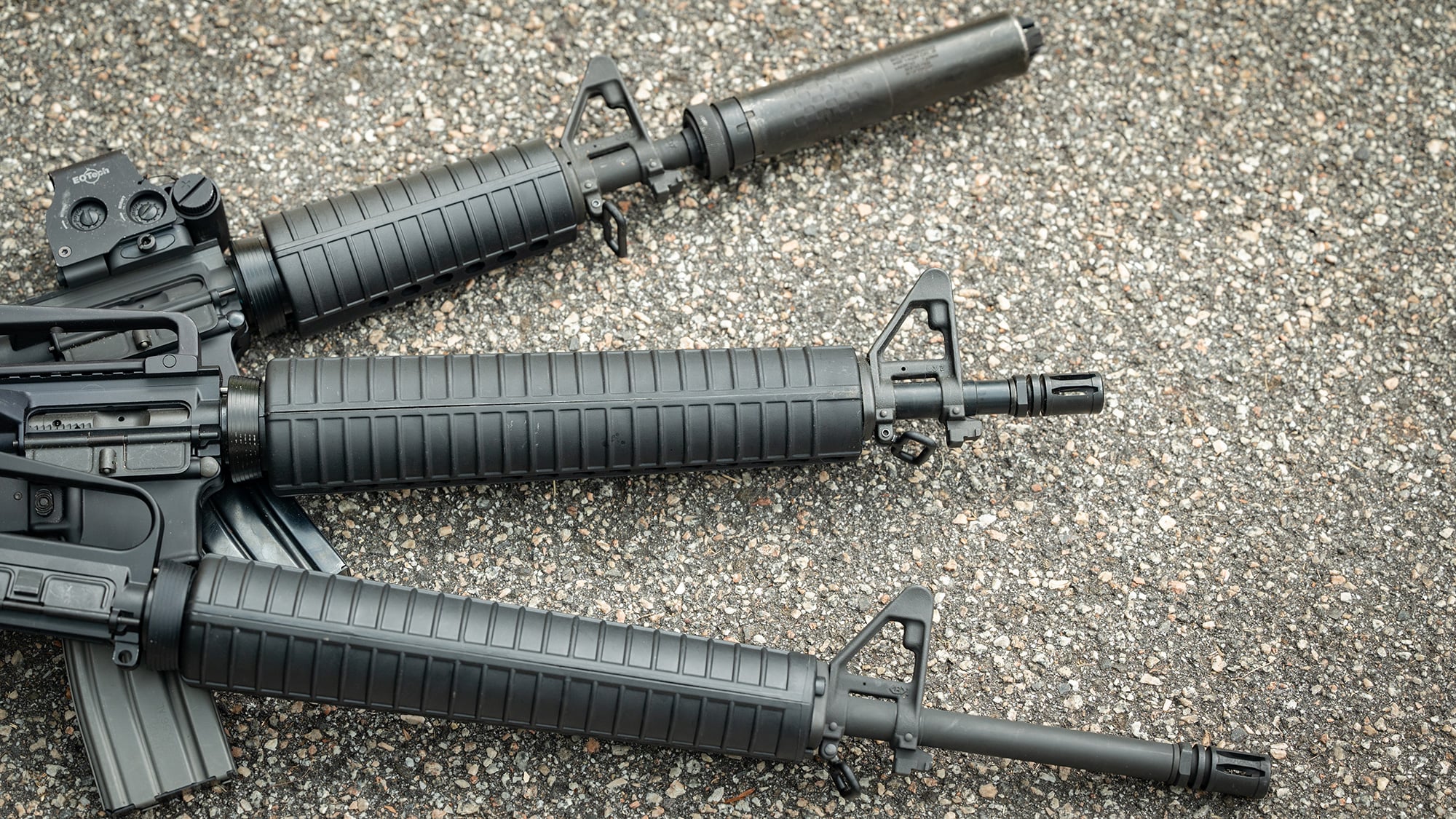
How Gas System Length Impacts Buffer Selection
The shorter the gas system, the heavier the buffer needs to be.
Why?
Shorter gas systems vent gas to the bolt carrier group sooner. That earlier gas impulse increases bolt speed. Faster bolt speed requires more resistance to keep the rifle cycling reliably.
Rifle-length gas systems are the longest and slowest. Because gas is delivered later and more gradually, they use lighter buffers and lighter recoil springs.
Pistol-length gas systems can be as short as four inches. Gas hits the bolt carrier much sooner, dramatically increasing bolt speed. To slow the carrier down enough for reliable operation, a heavier buffer and spring are required.
What About Suppressors?
Suppressors increase backpressure. That added backpressure forces more gas into the bolt carrier group’s gas key, accelerating it even further.
Because of this increased bolt velocity, suppressed rifles typically require heavier buffers to maintain proper function.
In simple terms:
More gas and faster bolt speed mean more weight is needed to keep everything running smoothly.
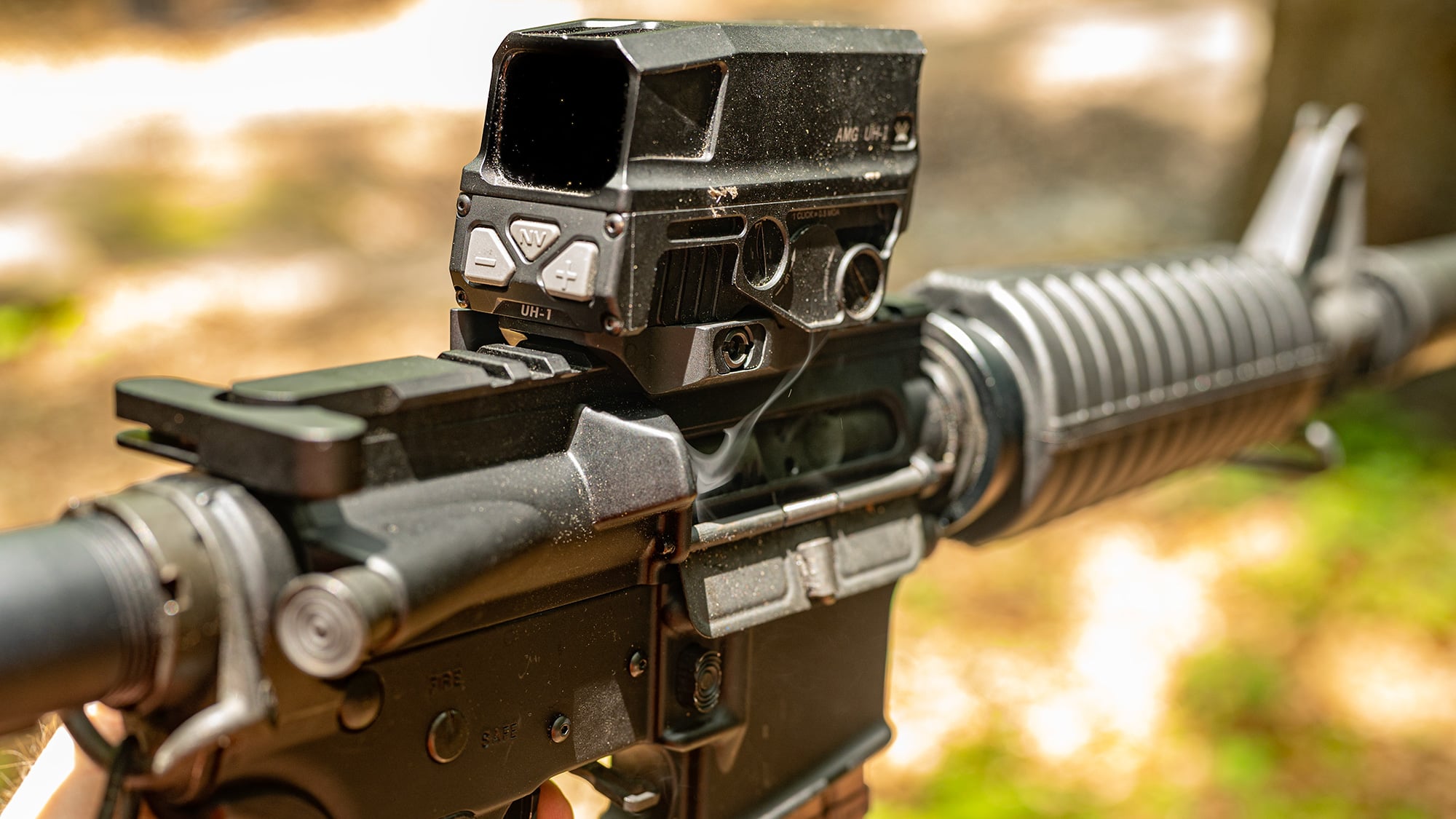
Signs Your AR-15 is Overgassed or Undergassed
What happens if you don’t follow this guide and just buy whatever is on sale? You might get lucky, or you might find that your setup is overgassed or undergassed. But how do you tell? Follow our little guide below, that’s how!
- Signs of Overgassing: When an AR-15 is overgassed, the bolt carrier’s speed is operating at too high a velocity to reliably function. There are some pretty obvious signs if you know what you’re looking for. First off, the ejection pattern with be far forward (between 12:00 and 3:00 o’clock, and the casings will be launched very far from the ejection port.
Other signs include short-stroking, excessive fouling, and sometimes even gas blowback through the charging handle gap into the shooter’s face. These are most apparent when adding a sound suppressor to an otherwise balanced gas system. - Signs of Undergassing: Undergassing has the opposite issue of overgassing. When a rifle is undergassed, the bolt doesn’t have enough force behind it to positively eject, and the velocity of the bolt will be too slow, often feeling sluggish when returning to battery.
Look for ejection patterns between 4:00 and 6:00 o’clock, and a gun that fails to lock open on an empty magazine. If you find this hard to do, head out to the range and prepare your rifle to fire, following all safety precautions. Then load a magazine with a single round, chamber it, and fire it in a safe direction. If the bolt locked open on the empty magazine, your gas system is fine. If it closed on an empty chamber, something is wrong.
Takeaway
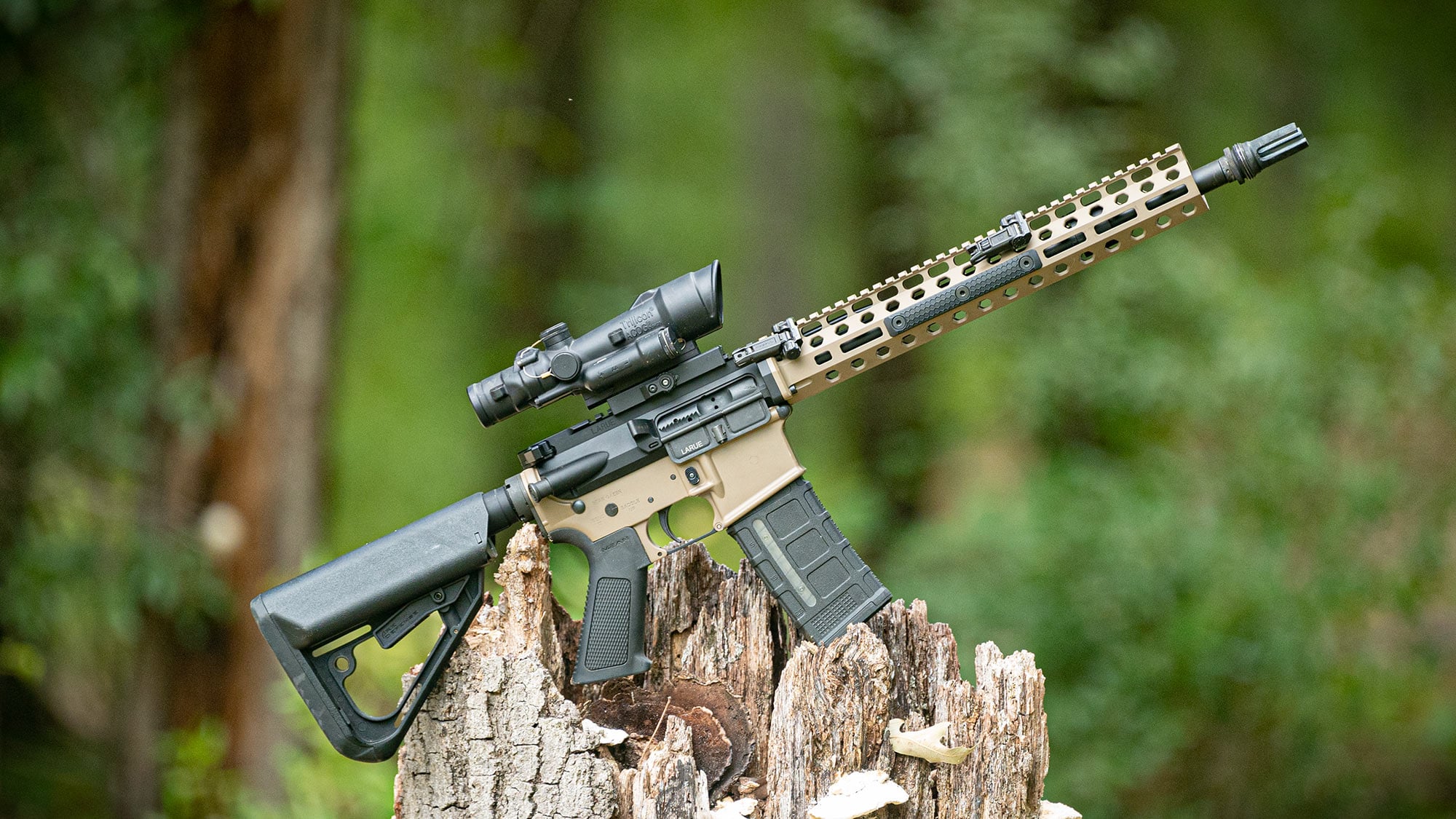
There is no “best” buffer system for every use, but there are a few rules you can follow to ensure proper, reliable operation of your AR-15. For shooters with a fixed stock on a rifle-length gas system with a rifle-length barrel, use all rifle buffer components.
For carbines, stick with the H1 or H2 unless you’re running a super short gun or a suppressed one. If you currently have a gun that functions flawlessly, leave it alone. The old adage of “If it ain’t broke, don’t fix it” holds water. Wait until you start seeing issues before trying to tweak your setup.