

Have you ever looked at a box of ammo and saw the acronym NATO after a caliber’s designation and wondered what the North Atlantic Treaty Organization has to do with bullets? You’re not alone; most shooters don’t give a second glance to this designation in their favorite box of ammo, but they absolutely should. Ammunition with the label NATO often carries very specific characteristics that can make it an excellent choice for some firearms and a poor one for others.
What is NATO Ammunition?
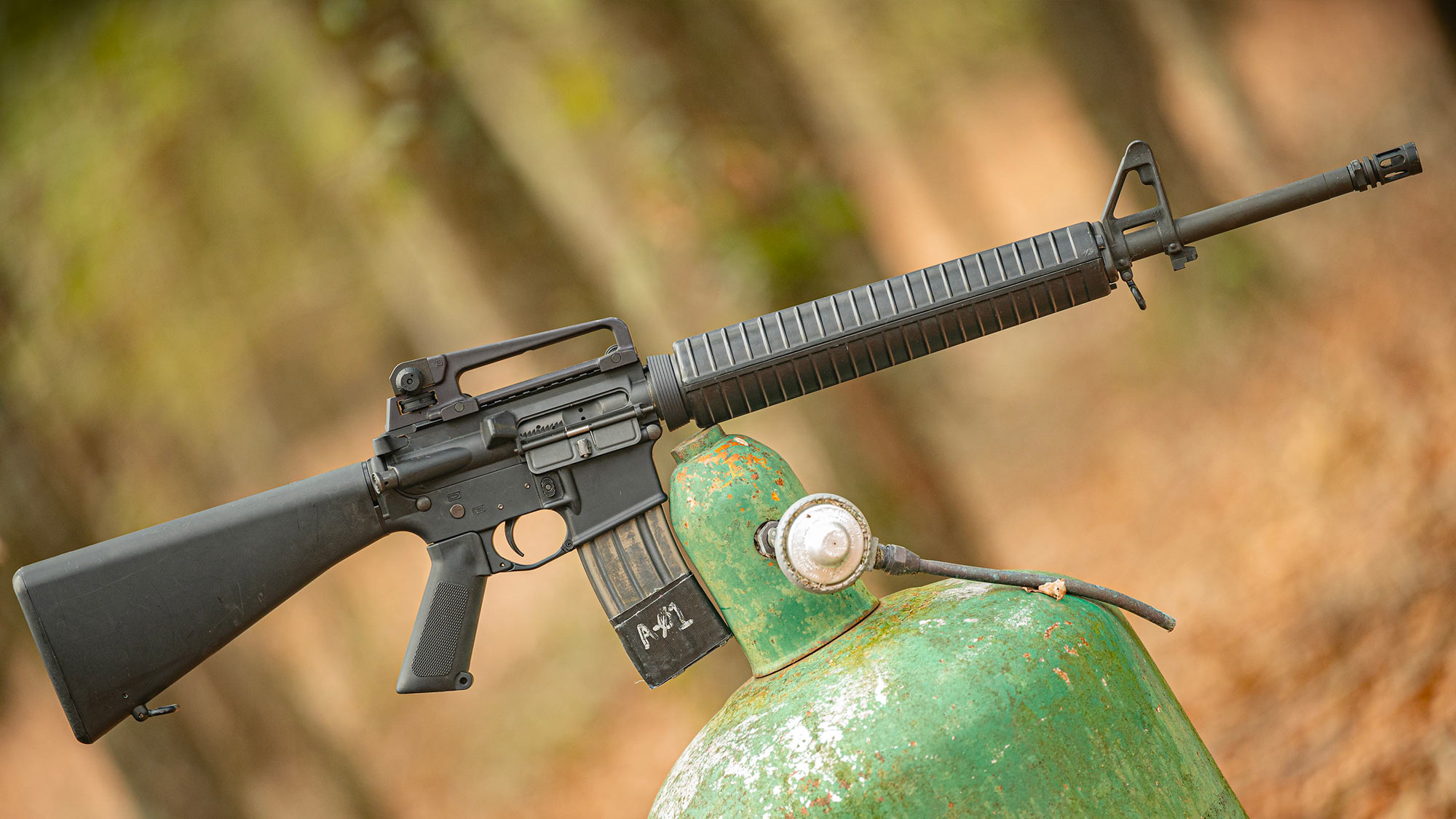
NATO ammunition is any round that meets the criteria set forth by NATO for the standardization of arms and ammo.
This was done to simplify logistics in the event of a global conflict. Similar logic was a large driving force behind the United States Armed Forces’ adoption of 5.56mm and elimination of .45 ACP and .30 carbine in decades past.
Think of it this way: if Russia invades Germany tomorrow and NATO decides to deploy peacekeeping forces to the region from France, the United Kingdom, and the United States, it would be a logistical nightmare if each country had its own calibers. Instead, the combined resources of other NATO member countries can be easily pooled and delivered to Germany to support the war effort without having to worry about which guns use which ammo.
More than just caliber, NATO designation means a total standardization of all ammo components, at least in terms of performance and power. For example, 9mm NATO spec follows the STANAG 4172 specification. While these specs include cartridge and projectile dimensions, they don’t include velocity or bullet weight.
That’s because the only things that matter for these rounds are terminal ballistics, accuracy, and pressure:
- Terminal ballistics because soldiers should have a universal understanding or expectation of what kind of damage a round can do against specific targets. STANAG 4172 states that the round must be capable of landing a lethal blow against a target wearing a standard WW2 US steel helmet at 23m.
- Accuracy is self-explanatory, but again, a soldier using the round should expect it to be able to hit a common target of reasonable size within reasonable distances. You don’t want ammo with such terrible aerodynamics/ballistic coefficient that the rounds are only capable of ten MOA at ten yards - especially if other loads can produce groups one-quarter of that size.
- Pressure is especially important, as it ensures that if a gun is designed to fire one nation’s load for a given round, it can fire any other NATO nation’s version of that same cartridge.
If France’s 5.56mm ammo was loaded extra hot and its weapons were presumably designed to function reliability with that ammo, less potent ammo from other countries could render these guns useless on the battlefield. Conversely, these extra-hot 5.56mm rounds might function fine in other countries' small arms, but they cause undue wear and tear, causing their maintenance schedules to be employed sooner before parts need replacing.
Furthermore, with different grain or velocity rounds, scopes with built-in bullet drop compensating reticles, like the Trijicon ACOG, will be inaccurate. Potentially enough so that a unit’s combat effectiveness could be compromised and cause allied soldiers to fall in battle. Since many units zero their guns with the ammunition supplied, even the baseline zero on the guns could be totally off.
What NATO Ammunition is Not
One mistake I’ve seen shooters make is the assumption that all NATO ammo is loaded hotter than civilian spec rounds. This isn’t the case at all. Presumably, this myth stems from the fact that 9mm NATO ammo uses a heavier round than the most common 9mm civilian FMJ round (124gr vs 115gr), and it loaded roughly four percent hotter.
In fact, NATO spec 62gr 5.56mm ammunition, AKA SS109, is actually weaker than the United States’ spec (and extremely common civilian-loaded) M855A1 green tip ammo. They both use the same grain bullet, but the US specification has a more powerful charge and, thus, greater muzzle velocity and energy.
Again, NATO spec ammo is simply an agreed-upon set of performance standards for a specific caliber of ammunition. If NATO successfully votes tomorrow to standardize a new pistol round that is only lethal to field mice at five feet and must function in a SIG P320, then whatever load meets that criteria is the current NATO spec.
But rather than harp on hypotheticals, let’s look at three common NATO spec rounds that shooters are likely to encounter in a gun shop or when buying ammo online.
9mm NATO
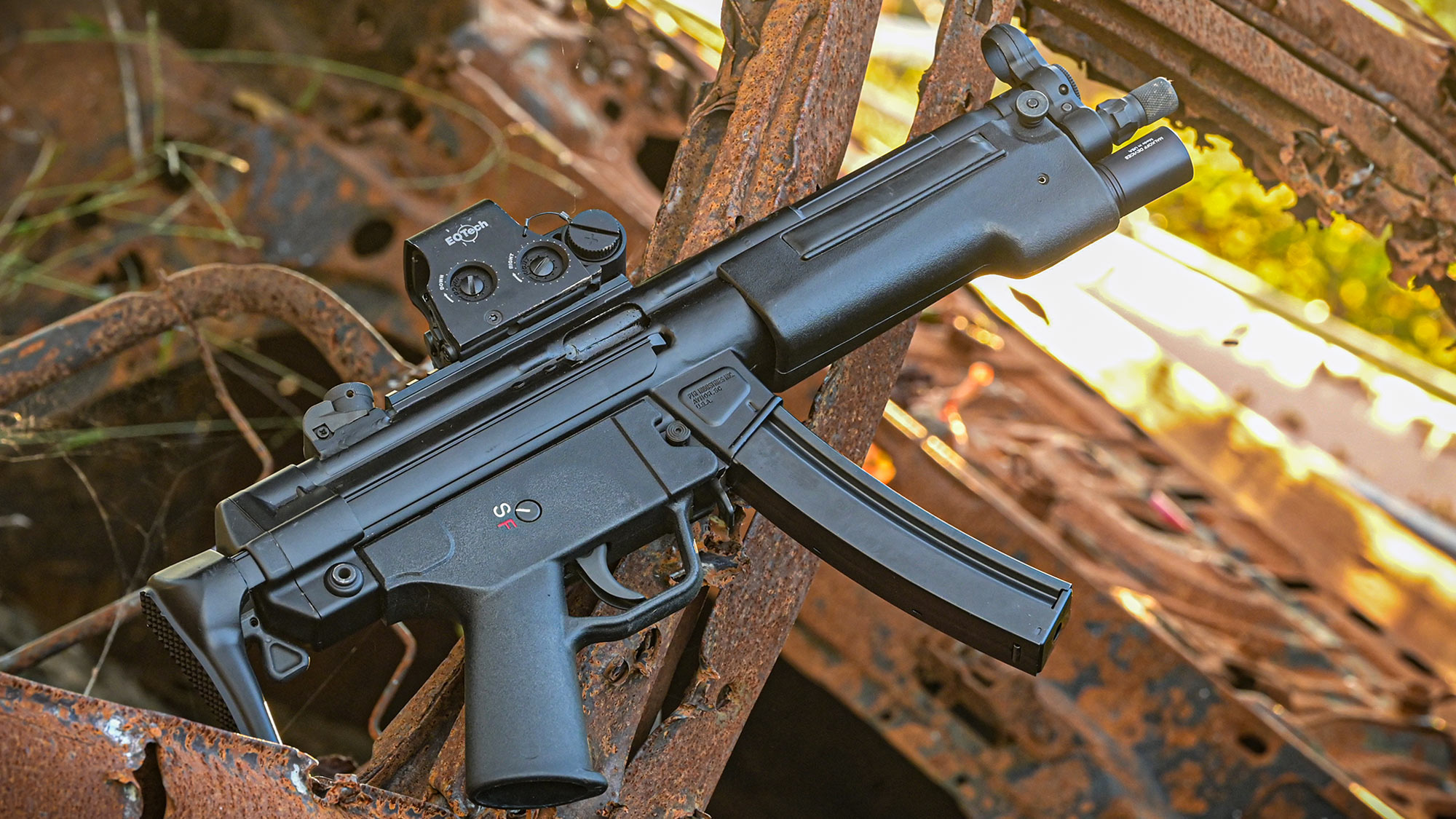
Although NATO specification guidelines only stipulate performance and dimensions, NATO spec 9mm has become totally standard across the world. Namely, 124gr FMJ with a muzzle velocity of around 1,140fps. Yes, there are different grain loadings that mimic this round’s performance, but virtually all NATO-spec 9mm commercially available today are 124gr FMJ loads. For you ammo geeks out there, the SAAMI specs on these rounds fall between standard and +P 9mm loadings.
Should you buy 9mm NATO versus regular 9mm? Honestly, that depends on several factors. For instance, if you have an older mil-spec gun, many of them run better with this ammo than commercial loads. However, for very old guns like Mauser C96 pistols, this ammo might be a little too hot for continued use. Although German wartime ammo was loaded very similarly, it’s a 100+-year-old gun, so if you can get the lighter stuff to run, I would suggest you use it.
Some guns that I’ve personally found that perform extremely well with NATO-spec 9mm are Glock 17/19 pistols, the Beretta M9, and both my UZI SBR and MP5 SBRs. Yes, the ammo is a little hotter than the standard 115gr FMJ, but that also means that it will run the gun better if it's dirty.
For self-defense, 9mm NATO is pretty terrible. Remember, the STANAG requirements listed above mention defeating steel helmets at 23 meters. Realistically, home invaders aren’t going to be 23m away and wearing old steel M1 helmets. Statistically, they’ll be within 25 feet. A better ammo choice would be a purpose-built defensive round like Hornady’s Critical Defense, Winchester’s PDX-1, or Federal’s HydraShok.
Another area where the 9mm NATO performs poorly is in suppressed firearms. Unlike most 124gr 9mm rounds, NATO-spec ones are about 100 feet per second faster. This means you’re all but guaranteed to hear the supersonic “crack” of the round being fired. Which, unsurprisingly, isn’t terribly quiet. A better option would be a 147gr or 158gr subsonic loading to make your suppressed pistol as quiet as possible.
5.56mm NATO
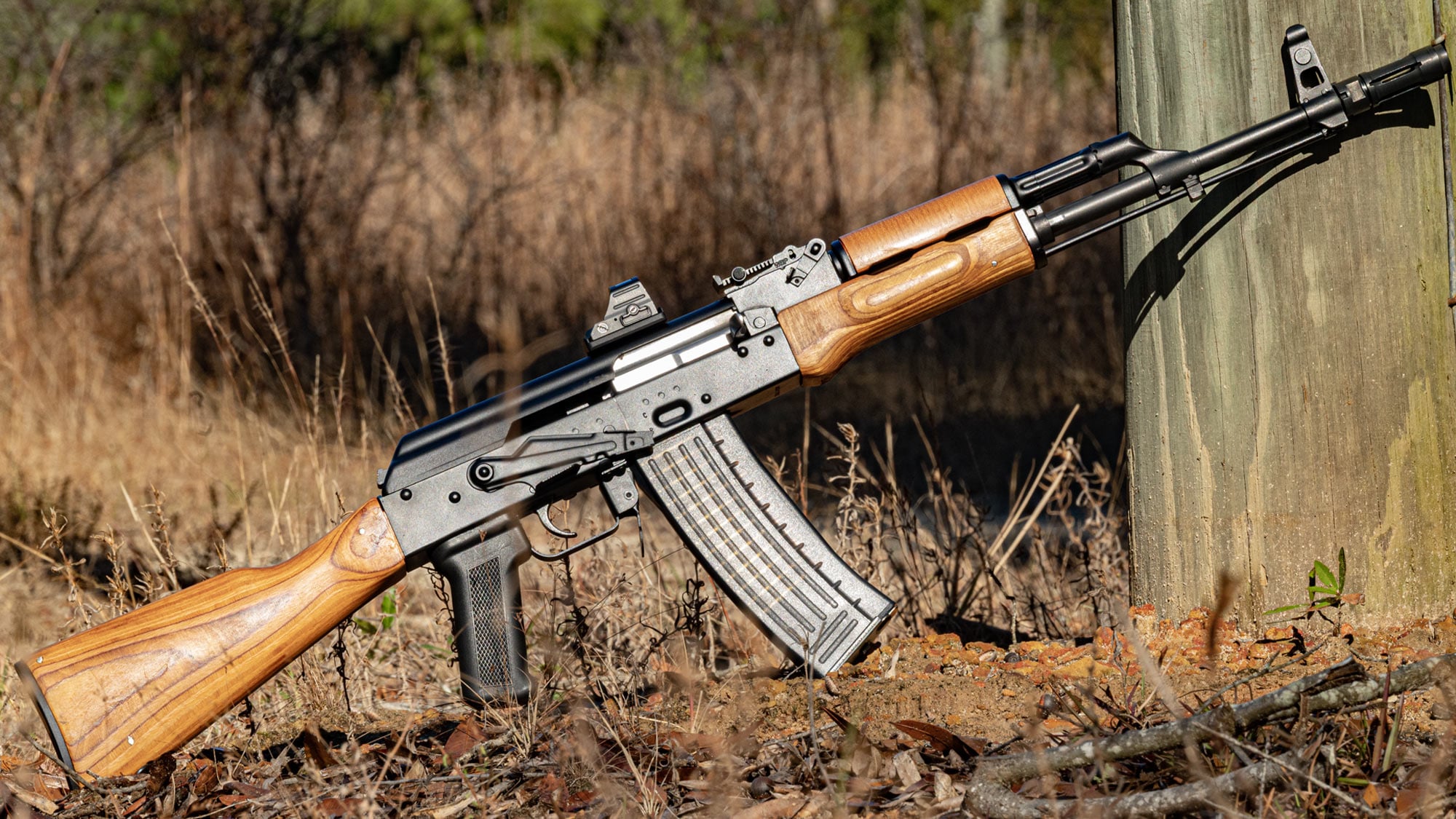
What about 5.56mm NATO ammo? Does that have any practical use for civilian shooters? For competition, practice, and plinking for fun, the 62gr NATO-spec 5.56mm ammo is great. It still has the light recoil impulse synonymous with the lightweight cartridge, and if a shooter has a 20-inch barrel on their rifle, it is ideal for shooting steel.
Why?
Because 55gr M193 has such a high muzzle velocity, it can and will damage steel targets at close range. Yes, even AR500 ones. This is primarily a non-issue since 95% of AR-15 owners have a gun with a barrel shorter than 20 inches.
As far as self-defense, the round is very much middle-of-the-pack in terms of terminal ballistics. By this I mean it won’t tumble and cause great damage to soft tissue, nor will it expand like a ballistic tipped or hollow point round. That said, it won’t penetrate quite as readily as 62gr M855A1, but because of how 5.56mm is designed to damage targets, both make pretty lackluster defensive or hunting rounds.
A better option is 77gr Mk262 ammo from Black Hills. It performs very well from basically any reasonable barrel length, and has been shown to be one of the most accurate bulk-loaded rounds for the AR-15. The downside is that the stuff isn’t cheap. It’s definitely something you want to reserve for a nightstand or truck gun magazine and not just plinking paper or steel at a range.
7.62x51mm NATO
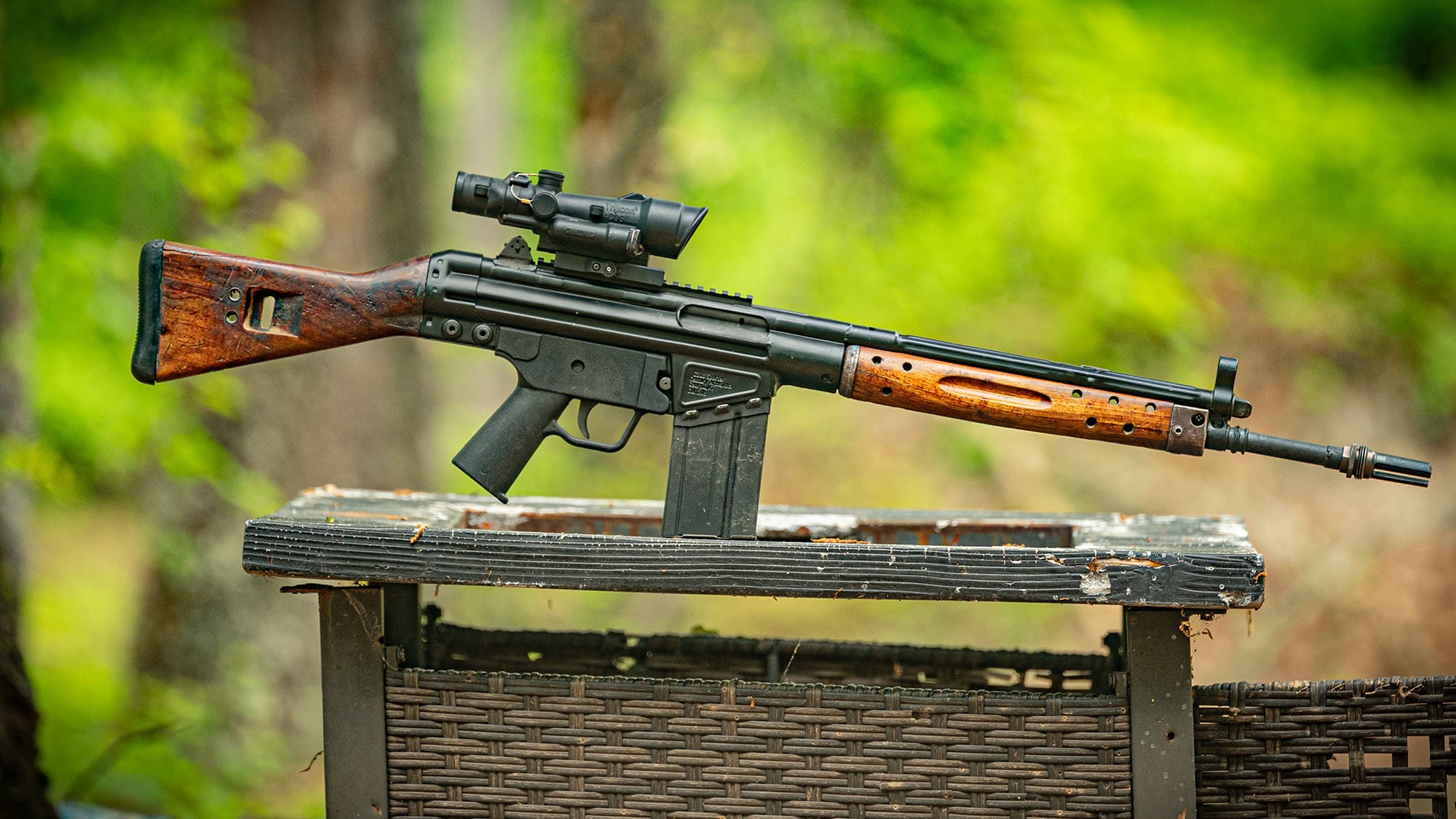
Here's the one big example where the two rounds aren't interchangeable -at least not always. While the two rounds are dimensionally identical externally, the brass casing’s thickness is not. 7.62 NATO is roughly 10% thicker than .308. Does this simply mean that 7.62x51mm has more durable casings? Well, yes, but that’s not really important.
What is important is that this increased thickness translates into less case capacity and, thus, less power/pressure. Does this mean a rifle chambered in 7.62x51mm will kaboom if fed .308 Winchester ammo? No, at least not in a single or a few hundred rounds. However, it can cause metal fatigue, which could conceivably lead to a catastrophic failure.
Is the alternative true? Can 7.62x51mm NATO fire safely in .308 Win chambers? Yes, absolutely. However, if the gun is very tightly tuned for the specific pressure of a .308 Win round, it can mean decreased reliability. However, this is only the case in auto-loading weapons that utilize the expanding gasses of a detonated round to cycle the action. If you’re running a bolt-action or any manually-operated firearm in .308 Win, the only difference will be a slight decrease in velocity and felt recoil.
In summary, it is safe to fire 7.62 NATO in a .308 gun, but not always the other way around. Check your firearm’s manual, and if you’re unsure, don’t use it at all.
NATO Ammo Good to Go?
For nearly all mil-spec modern firearms, NATO-spec ammo is perfectly safe. Though I would still reccomend checking the gun's manual before loading any into the firearm just to be safe. The differences between NATO and non-NATO rounds is sometimes tremendous and othertimes inconsequential, but since we're talking about firearms, you should always err on the side of caution. This will ensure both the longevity of your firearms, and your personal safety. And if nothing else, could prevent a shooter from wasting money buying a large case of ammo that isn't safe to use in their favorite firearm.